



































PABX vs. PBX: What’s the Real Difference in 2026?
Explore PABX vs. PBX in 2026. Learn key differences, features, and which system suits modern businesses for efficient communication.

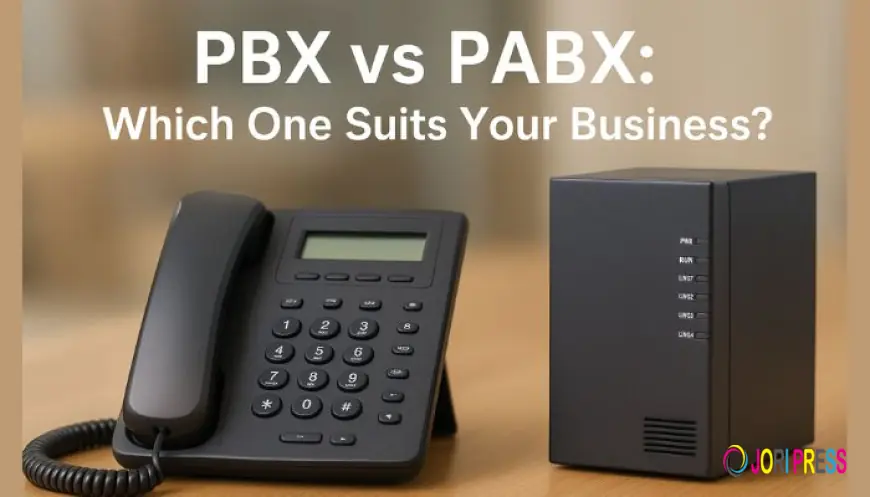
In today’s fast-evolving business communication landscape, choosing the right phone system is no longer just a technical decision—it’s a strategic one. As companies move toward smarter, more scalable solutions, the debate around PABX vs. PBX continues to surface. While these terms are often used interchangeably, they are not exactly the same.
So, what’s the real difference in 2026? And which one should your business choose? Let’s break it down in simple, practical terms.
What Is PBX?
PBX (Private Branch Exchange) is a private telephone network used within an organization. It allows employees to communicate internally and externally using different communication channels like VoIP, ISDN, or analog.
Key Features of PBX:
- Internal call routing
- Call transfers and forwarding
- Voicemail systems
- Conference calling
- Basic automation (in older systems)
Traditionally, PBX systems required manual operation through a human operator or receptionist to connect calls.
What Is PABX?
PABX (Private Automatic Branch Exchange) is essentially an advanced version of PBX. The key difference lies in the word “Automatic.”
A PABX system automates call switching and routing without needing a human operator.
Key Features of PABX:
- Automated call routing
- Interactive Voice Response (IVR)
- Call queuing
- Voicemail-to-email
- Integration with CRM and cloud tools
- Remote accessibility (especially in modern systems)
In 2026, most systems labeled as PBX are actually PABX or IP-PBX systems, as automation has become the standard.
PABX vs. PBX: Core Differences
| Feature | PBX (Traditional) | PABX (Modern) |
|---|---|---|
| Call Handling | Manual or semi-automatic | Fully automatic |
| Operator Required | Yes (in older systems) | No |
| Technology | Analog / early digital | Digital / VoIP / Cloud-based |
| Scalability | Limited | Highly scalable |
| Features | Basic | Advanced (IVR, analytics, etc.) |
| Cost Efficiency | Higher maintenance | More cost-effective long term |
| Remote Work Support | Limited | Fully supported |
What Has Changed in 2026?
The communication landscape in 2026 has shifted dramatically due to:
1. Cloud-Based Systems
Most businesses now use cloud-hosted PABX systems, eliminating the need for bulky on-premise hardware.
2. AI & Automation
Modern PABX systems include:
- AI-powered call routing
- Voice assistants
- Smart analytics
3. Remote & Hybrid Work
With remote work now standard, businesses need systems that work from anywhere—something traditional PBX simply cannot handle effectively.
4. Integration Capabilities
PABX systems seamlessly integrate with:
- CRM software
- Helpdesk tools
- Collaboration platforms
Which One Should You Choose?
Choose PBX if:
- You operate in a very small, traditional setup
- You already have an existing legacy system
- Your communication needs are minimal
Choose PABX if:
- You want automation and efficiency
- Your team works remotely or across multiple locations
- You need scalability for growth
- You want modern features like IVR, analytics, and integrations
In reality, most businesses in 2026 should opt for PABX, especially IP-based or cloud-hosted solutions.
Final Thoughts
The difference between PABX vs. PBX is no longer just technical—it’s about manual vs. intelligent communication.
- PBX represents the past: manual, limited, and hardware-heavy
- PABX represents the present and future: automated, flexible, and cloud-driven
If your business is aiming for efficiency, scalability, and better customer experience, upgrading to a modern PABX system isn’t just an option—it’s a necessity.
What's Your Reaction?
 Like
0
Like
0
 Dislike
0
Dislike
0
 Love
0
Love
0
 Funny
0
Funny
0
 Angry
0
Angry
0
 Sad
0
Sad
0
 Wow
0
Wow
0