








































National Museum of Qatar – Sustainable Design and LEED Green Building Goals
Explore the National Museum of Qatar LEED project, featuring sustainable design, construction, commissioning, and LEED Gold target under LEED BD+C v2.2.

Introduction
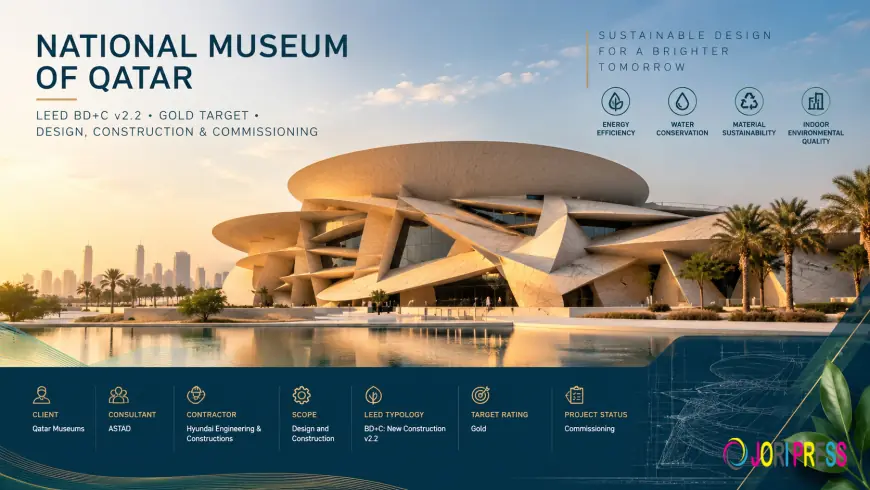
The National Museum of Qatar is a cultural landmark that celebrates the country's heritage while presenting its story to future generations. Alongside its cultural purpose, the project highlights the importance of sustainability and coordinated building design in modern construction.
According to the project information published by Conserve Technical Services LLC, the project follows the LEED BD+C: New Construction v2.2 rating system, with a target rating of Gold.
The Importance of Sustainable Building Design
Sustainable building design focuses on reducing environmental impacts while supporting building performance and occupant comfort. It considers how a building uses energy and water, manages materials, and provides a healthy indoor environment.
For museums and other public buildings, these considerations are particularly important because the building must support visitors, staff, exhibits, and building services.
Understanding LEED Certification
LEED stands for Leadership in Energy and Environmental Design. It is a green building rating system used to assess sustainability strategies across different aspects of building design, construction, and operation.
The LEED BD+C: New Construction rating system provides a framework for projects to address areas such as energy efficiency, water conservation, materials, indoor environmental quality, and commissioning.
The National Museum of Qatar project page identifies LEED BD+C: New Construction v2.2 and a Gold target rating. A target rating should not be interpreted as confirmation of final certification.
The Role of Engineering Coordination
Sustainable building performance depends on more than architectural design. Mechanical, electrical, plumbing, lighting, controls, and other building systems must work together effectively.
Careful coordination helps project teams align technical requirements, review design information, and support the intended performance of building systems.
Conclusion
The National Museum of Qatar provides an example of how cultural architecture and sustainability objectives can be considered together. By following a structured green building framework and coordinating design and construction requirements, project teams can work toward improved building performance and a more sustainable built environment.
What's Your Reaction?
 Like
0
 Dislike
0
 Love
0
 Funny
0
 Angry
0
 Sad
0
 Wow
0