






































Medical Equipment Rental and Sale: Get to Know Before Making the Decision
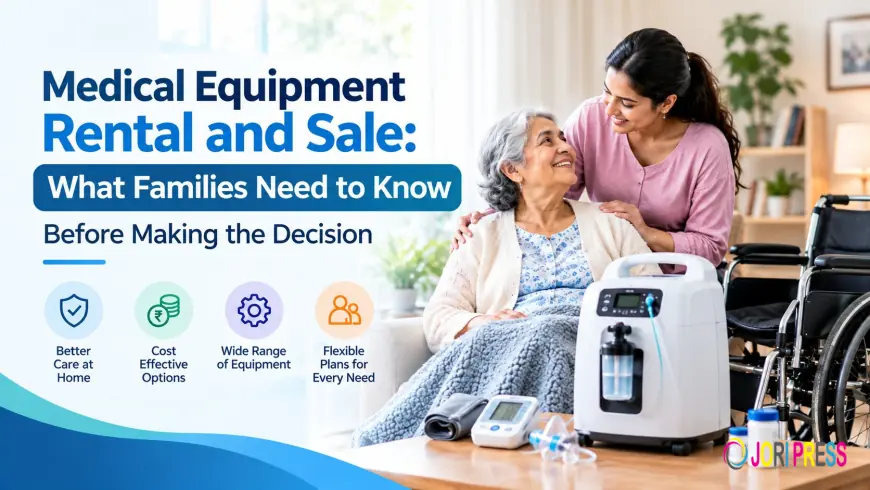
Medical Equipment Rental and Sale: What Families Need to Know Before Making the Decision
When a family member comes home after surgery, a stroke, or a prolonged hospital stay, the discharge paperwork is barely dry before the next question hits: what equipment do we need, and how do we get it?
Hospital beds. Oxygen concentrators. Wheelchairs. Suction machines. Pulse oximeters. The list varies by condition, but the pressure is the same — the patient is already home, and the family is trying to figure out the next step in real time.
Medical equipment rental and sale for home use has grown significantly across India over the last few years. Families are choosing home-based recovery over extended hospital stays. Elderly patients with chronic conditions need long-term support at home. And caregivers — most of them family members with no clinical background — are navigating equipment decisions they were never prepared to make.
This article is a practical guide to understanding that decision: when to rent, when to buy, what equipment matters for which condition, and what to check before anything is brought into the home.
Why Home Medical Equipment Has Become a Necessity, Not a Luxury
The shift is not hard to explain. Hospital costs in India have risen sharply. Families increasingly prefer keeping elderly parents or recovering patients at home where they are comfortable and surrounded by people they know. And for many chronic conditions, home monitoring is not just possible — it is medically recommended.
India has approximately 77 million people living with diabetes and over 220 million with hypertension. Add to that the significant burden of COPD, post-surgical recovery cases, stroke survivors requiring rehabilitation, and the growing population of elderly individuals needing daily support — and the demand for home medical equipment becomes clear.
The India homecare medical equipment market stood at USD 1.38 billion in 2024 and is projected to reach USD 2.24 billion by 2033. That growth reflects a real shift in how Indian families approach healthcare — not as something that happens only in hospitals, but as something that continues at home.
But access to equipment is only part of the picture. Using it correctly, knowing when it is needed, and deciding whether to rent or buy are questions most families face without enough information.
Rent or Buy? The Question Most Families Get Wrong
This is the first decision and, often, the most expensive mistake. Families either buy equipment they only need for six weeks, or they rent indefinitely when buying would have cost far less over time.
The answer depends on three things: the likely duration of use, the type of equipment, and the patient's prognosis.
**When renting makes more sense:**
Short-duration recovery is the clearest case for rental. A patient recovering from a hip replacement may need a hospital bed and a commode chair for eight to twelve weeks. Buying both for that period is expensive and leaves the family with equipment they have no use for once recovery is complete. Rental covers the need, and the provider collects the equipment when it is no longer required.
Uncertainty about duration is another reason to rent. When a family is unsure how long a condition will require equipment support — early-stage chronic disease, post-ICU recovery with unpredictable timelines — renting keeps options open. Switching to a purchase later is always possible. Returning purchased equipment is not.
High-cost equipment also tends to favour rental. Oxygen concentrators, hospital-grade beds with motorised adjustment, and BiPAP machines carry significant upfront costs. Renting these makes financial sense unless the condition is long-term and stable.
**When buying makes more sense:**
Long-term or permanent conditions are the primary case for purchase. A patient with advanced COPD who will need an oxygen concentrator for years is better served by owning the equipment than paying monthly rental fees indefinitely. Over 18 to 24 months, the purchase cost is typically lower than cumulative rental.
Frequently used basic equipment — wheelchairs, walkers, blood pressure monitors, pulse oximeters — tends to be worth buying outright. These items are not expensive at baseline, and the family will likely find ongoing use for them.
Personalised or fitted equipment should almost always be bought. Orthopaedic supports, custom-fitted braces, and posture-correction devices are calibrated to a specific patient. Rental of shared equipment in these categories is rarely appropriate.
The Most Common Equipment Categories for Home Use
Respiratory Support
Oxygen concentrators are among the most rented items in home healthcare across India. They extract oxygen from ambient air and deliver it to the patient continuously — no cylinders, no refills. For patients with COPD, post-COVID lung damage, or respiratory failure, a concentrator at home removes the need for repeated hospital oxygen administration.
BiPAP and CPAP machines support patients with obstructive sleep apnea or respiratory insufficiency during sleep. These are typically prescribed by a pulmonologist and require correct settings before use.
Nebulisers are simpler and widely used for asthma and COPD management. They are affordable to buy and are among the first pieces of equipment a family dealing with a respiratory patient should have at home.
Mobility and Rehabilitation
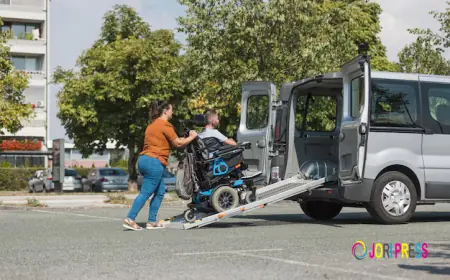
Wheelchairs cover a wide range — manual standard-width chairs for basic indoor use, lightweight aluminium models for active users, reclining wheelchairs for patients who cannot maintain an upright posture, and motorised chairs for patients with limited upper body strength.
Walkers, quad canes, and crutches are essential for patients recovering from orthopaedic surgeries or strokes. The choice between them depends on how much weight the patient can bear and how much support they need.
Hospital beds with height adjustment and side rails make home nursing significantly easier. Caregivers can raise the bed to working height, reducing back strain. Side rails prevent falls. For patients who spend most of their day in bed, a motorised backrest adjustment also reduces pressure sores.
Monitoring Equipment
Blood pressure monitors, glucometers, and pulse oximeters are standard for most chronic disease patients at home. These are inexpensive to buy, easy to use with minimal training, and give families and home nurses the data they need to track a patient's condition between clinical visits.
ECG monitors and portable SpO2 monitors with continuous tracking are used for higher-acuity home patients — those recovering from cardiac events or on home oxygen therapy who require closer watch.
Wound and Post-Surgical Care
Suction machines are used for patients who cannot clear secretions independently — post-stroke patients, those with tracheostomies, or patients with neurological conditions affecting swallowing. These are almost always rented rather than bought.
Alternating pressure mattresses prevent pressure sores in bedridden patients. These are essential for any patient who is immobile for extended periods, and most families underestimate how quickly pressure injuries develop without the right surface.
What Families Often Overlook When Arranging Home Equipment
Delivery and Setup
Getting equipment into the home is not always straightforward. A hospital bed needs to be assembled. An oxygen concentrator needs to be placed correctly — away from curtains and combustibles, with adequate ventilation. A BiPAP machine needs to be set to the prescribed parameters before use.
Equipment that arrives and is set up incorrectly creates risk. Families should confirm that whoever provides the equipment also delivers, installs, and demonstrates correct operation before leaving. This is not a favour — it is a basic requirement of responsible medical equipment provision.
Hygiene and Sanitisation
Rented equipment must be properly cleaned and sanitised between patients. This is non-negotiable for anything that comes into contact with the skin or airways — mattresses, masks, nebuliser chambers, suction tubing. Families should ask directly about the cleaning protocols before accepting any rented item.
Buying new removes this concern. But families who opt for rental need to be confident in the provider's hygiene standards. Equipment that looks clean is not necessarily safe.
Training for Family Caregivers
A BiPAP machine set to the wrong pressure setting is not just ineffective — it can cause discomfort or worsen a patient's breathing. A suction machine used without proper technique can cause trauma. Glucometers give inaccurate readings if strips are expired or fingers are not cleaned correctly.
Every piece of medical equipment comes with a correct way to use it. Providers should train the family caregiver at the point of setup. If no training is offered, ask for it. If it cannot be provided, consider whether this is the right provider.
When to Call a Professional vs. Handle It at Home
Home equipment is a support tool — it does not replace clinical judgement. Families sometimes delay calling a doctor or nurse because equipment is present and appears to be managing the situation. An oxygen concentrator does not treat the underlying condition causing low saturation. A blood pressure monitor showing elevated readings is not managed by monitoring alone.
Home equipment is most valuable when it is part of a supervised care plan — with regular check-ins from a nurse or doctor, clear escalation criteria for when hospital review is needed, and a family that understands the limits of what home care can provide.
How to Choose a Reliable Medical Equipment Provider
Not every provider offering home medical equipment is equipped to support a patient safely. These are the practical checks worth doing before committing:
**Stock and availability.** Confirm the exact model and specification of the equipment is in stock, not promised to be sourced. Equipment needed for a recovering post-surgical patient cannot wait three days for delivery.
**Service coverage.** If the equipment malfunctions, how quickly can the provider respond? For oxygen concentrators or suction machines used by dependent patients, a 24 to 48 hour service delay is not acceptable. Ask specifically about breakdown response time.
**Calibration and maintenance records.** Monitoring equipment should be calibrated periodically. Ask when the device was last serviced. Providers who cannot answer this are not maintaining their stock properly.
**Transparent rental terms.** Understand the minimum rental period, the return process, damage liability, and whether rates change if the rental extends beyond the initial agreement. Verbal assurances are not enough — get the terms in writing.
**Whether sale and rental are both available.** A provider who only rents or only sells cannot give you unbiased guidance on which option suits your situation. Providers who offer both are more likely to recommend what is actually appropriate for the patient.
A Note on Combining Equipment Provision with Home Care
Medical equipment on its own addresses a physical need. It does not address the clinical oversight that most recovering or chronically ill patients require at home.
Families managing a post-surgical patient, a stroke survivor, or a parent with advanced age and multiple conditions typically benefit most from a coordinated approach — where equipment provision, nursing visits, physiotherapy, and medical review are organised together rather than sourced piecemeal.
Renting an oxygen concentrator from one provider, finding a nurse through another channel, and scheduling physiotherapy separately is manageable. But it creates coordination gaps. Information about a patient's oxygen saturation trends, for instance, is more useful when the nurse who visits can see those readings and discuss them with the treating physician.
Conclusion
Medical equipment rental and sale for home use is no longer a niche service in India. It is a standard part of how families manage recovery, chronic illness, and long-term elderly care. The decision to rent or buy, the type of equipment to choose, and the provider to trust all have real consequences for patient safety and family finances.
The families that navigate this well are the ones who ask the right questions before the equipment arrives — about duration of use, about setup and training, about maintenance and hygiene, and about how equipment fits into a broader care plan.
Medilink Healthcare Services provides medical equipment rental and sale for home use across South Kolkata, along with nursing care, physiotherapy, and caregiver support — so families have a single point of coordination rather than a patchwork of separate providers.
What's Your Reaction?
 Like
0
Like
0
 Dislike
0
Dislike
0
 Love
0
Love
0
 Funny
0
Funny
0
 Angry
0
Angry
0
 Sad
0
Sad
0
 Wow
0
Wow
0