






































IVF and Egg Donor Selection: A Guide for Recipient Couples
Choosing an egg donor is one of the most personal decisions in IVF. This guide explains the selection process, what criteria matter clinically, and how to approach this profound decision.
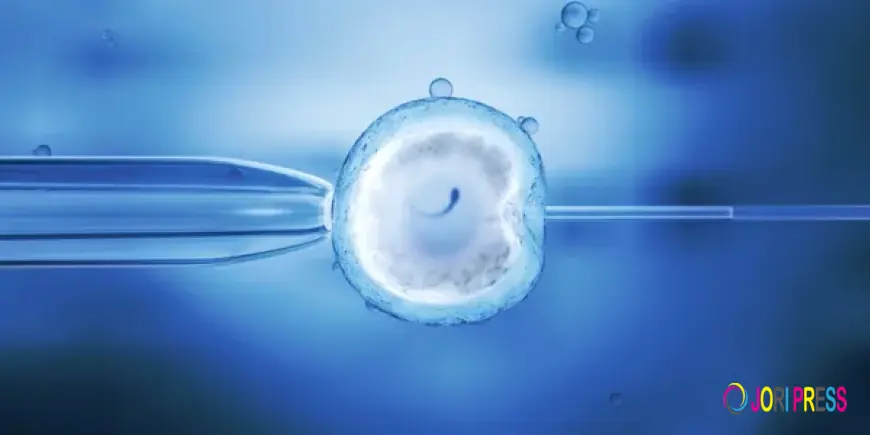
The decision to use donor eggs in IVF is one of the most personally significant transitions in the fertility treatment journey. For most couples who reach this point, it arrives after their own eggs have not produced the outcomes needed for pregnancy, through repeated failed cycles, severely diminished ovarian reserve, premature ovarian insufficiency, or age-related egg quality decline that has made own-egg IVF an insufficient option. The decision to use donor eggs is rarely made easily, and the process of selecting a donor adds another layer of personal significance that is unlike any other clinical decision in reproductive medicine.
Understanding the egg donation process, how donors are screened, what criteria are clinically important in donor selection, what information is typically available about donors, and how to approach the selection decision as a deeply personal choice guided by both clinical and human considerations gives recipient couples the most complete preparation available for this profound step.
How Egg Donors Are Screened
Reputable egg donation programmes conduct extensive screening of all donors before accepting them into the programme, and understanding what that screening involves gives recipients confidence in the clinical quality of the available donor pool.
Age screening ensures that donors fall within the age range associated with optimal egg quality, typically between twenty-one and thirty-two or thirty-five years of age depending on the programme. Egg quality declines meaningfully with advancing donor age as in all women, and most programmes set maximum donor age limits that reflect the evidence on age-related egg quality decline.
Medical health screening includes a comprehensive physical examination, complete blood count and metabolic panel, assessment for sexually transmitted infections including HIV, hepatitis B and C, syphilis, and chlamydia, and evaluation for conditions that might affect egg quality or donor safety during stimulation including thyroid function, prolactin, AMH, and cycle day two or three FSH. Donors with significant medical conditions that could be transmitted to offspring or that could impair their own safety during stimulation are excluded.
Genetic screening in contemporary expanded carrier screening programmes tests donors for hundreds of recessive genetic conditions simultaneously, identifying carriers of mutations that would be clinically relevant if the recipient partner or her male partner carried a mutation in the same gene. As discussed in the genetic carrier screening guide, this screening allows recipient couples to be informed about conditions for which the donor is a carrier and to make informed decisions about whether to pursue testing of the intended father's carrier status for those conditions.
Psychological screening assesses donor motivations, understanding of the process, emotional readiness for the implications of donation, and any significant psychological history that might affect either their wellbeing during the process or the robustness of their consent. Donors should be participating voluntarily and without undue financial or interpersonal pressure, and psychological screening helps identify cases where these conditions may not be met.
Ovarian reserve assessment confirms that the prospective donor has an adequate antral follicle count and AMH to be expected to produce a clinically useful number of eggs during stimulation, protecting both the donor from excessive stimulation requirements and the recipient from a cycle with inadequate egg numbers.
What Information Is Available to Recipients
The amount and type of information available to recipients about egg donors varies between countries, regulatory frameworks, and individual programmes. In India, the regulatory framework governing ART provides specific provisions about donor anonymity and the information that may be shared with recipients, and understanding what applies within your specific programme is an important early step in the selection process.
Physical characteristics including height, weight, eye colour, hair colour and texture, skin tone, and in some programmes childhood photographs are typically available to recipients and are among the most commonly considered selection criteria. Many recipients seek donors whose physical characteristics bear some resemblance to themselves or to the intended father with the goal of giving a potential child an appearance that fits naturally within the family.
Educational and occupational background, musical or artistic abilities, sporting interests, and personal hobbies are included in many donor profiles as information about the donor's intellectual and personal characteristics. This information allows recipients to consider aspects of the donor's profile that extend beyond physical appearance to the broader set of characteristics that a person represents.
Medical and family history information, including the donor's own health history and any significant conditions in immediate family members, is provided to inform recipients about potential health considerations relevant to a child born from the donation.
In some programmes, a personal statement written by the donor in her own words is available, providing a direct sense of the person's character, motivations for donating, and personal outlook. Many recipients find this the most meaningful piece of donor profile information because it provides a human quality to a decision that can otherwise feel overly clinical.
Clinically Important Selection Criteria
While personal and appearance-based criteria are entirely valid considerations in donor selection, several clinically important factors deserve specific attention in the evaluation of donor profiles.
Donor age is the most clinically significant individual characteristic because it directly determines egg quality. A twenty-five-year-old donor and a thirty-three-year-old donor are both within programme age limits but may produce eggs with different chromosomal normality rates that translate into different per-transfer IVF success rates. For recipients who are older or who have limited financial resources for multiple cycles, a younger donor may provide a clinically more efficient pathway to success.
AMH and antral follicle count results for the donor, where available, indicate the likely egg yield from the donation cycle. A donor with a higher AFC and AMH is expected to produce more eggs per stimulation cycle, providing a larger cohort from which to select high-quality embryos and potentially allowing multiple recipient cycles from a single donor stimulation if shared donation models are used.
Genetic carrier screening results provide information about conditions for which the donor carries a mutation. For recipients whose male partner carries a mutation for a recessive condition, a donor carrying a mutation in the same gene would create a twenty-five percent risk of an affected child, and selecting a donor who is not a carrier for that specific condition eliminates this risk. Most programmes cross-reference donor carrier status with recipient partner carrier status to identify and avoid potentially problematic matches.
Blood group and rhesus factor matching, while not medically essential as it is in blood transfusion, is sometimes considered by recipient couples for social reasons related to how they will discuss blood group with a future child.
The Personal and Psychological Dimensions of Donor Selection
The clinical criteria discussed above provide a framework for evaluation, but egg donor selection is ultimately a deeply personal decision that extends far beyond the clinical parameters. The unique nature of this choice is that it involves selecting someone whose genetic material will contribute to a child the recipient will carry, birth, and raise, and that contribution will be present in that child throughout their lifetime.
Many recipients spend considerable time with donor profiles, reading and rereading descriptions, imagining the person behind the words, and trying to sense whether a particular donor feels right in a way that extends beyond any individual criterion. This intuitive, holistic quality of the decision is entirely legitimate and is how most recipients ultimately make their final selection, after a more analytical evaluation of the clinical and factual criteria has produced a shortlist.
Uncertainty, ambivalence, and the emotional weight of this decision are normal experiences that deserve compassionate acknowledgment. Consulting a counsellor or therapist experienced in third-party reproduction both before and during the selection process provides the psychological support for processing what this decision means personally and for navigating the inevitable complexity of feelings that arise.
The involvement of the partner in the selection process, when applicable, ensures that both people in the couple have agency in a decision that affects them both and that will be part of the shared history of their family. Differing priorities or preferences between partners about what matters most in a donor deserve open discussion rather than unilateral resolution.
Disclosure and Future Considerations
The question of what to tell a child born through egg donation about their origins is one that recipient couples often grapple with during the selection process, and it is worth beginning to think about before a pregnancy is achieved rather than deferring it indefinitely.
Contemporary psychological evidence and ethical guidance strongly support early and age-appropriate disclosure to donor-conceived children about the nature of their conception. Children who learn about their donor conception in later childhood or adulthood typically report more negative responses than those who knew from an early age, and the normalisation of donor conception as a legitimate and honoured family-building pathway begins with honest communication.
The specific information about the donor that will be meaningful to a future child is another consideration that can inform which profile characteristics recipients prioritise in selection. A child who will grow up knowing they were donor-conceived may have questions about their genetic origins that the donor profile information will help to answer, making completeness and personal quality of the profile more significant than it might otherwise seem.
Connecting with an experienced Best IVF Center in Sikar that maintains a rigorously screened donor pool, provides comprehensive donor profile information to support genuinely informed selection, facilitates genetic compatibility checking between donor and recipient partner, and offers psychological counselling support for recipients navigating the selection process ensures that every aspect of the egg donation pathway is managed with the clinical rigour and human sensitivity this profound decision deserves.
Final Thoughts
Egg donor selection is one of the most personal decisions in reproductive medicine. It involves clinical criteria, personal values, intuitive responses, and a set of considerations about family, identity, and the future that no clinical guide can fully encompass.
Take the time this decision deserves. Use the clinical framework to evaluate the objective criteria. Trust your own response to the human qualities of the profiles you consider. And make the selection from a place of genuine reflection and supported decision-making rather than clinical efficiency.
For comprehensive egg donor programmes with rigorously screened donors, complete profile information, genetic compatibility assessment, and integrated psychological support for recipient couples, a trusted ivf clinic in jaipur with genuine expertise in donor egg IVF and a deeply patient-centred approach to the full human complexity of third-party reproduction gives recipient couples the most complete and most humanly thoughtful clinical partnership available.
Disclaimer: This article is intended for informational purposes only and does not constitute medical advice. Please consult a qualified fertility specialist for guidance tailored to your individual health and treatment needs.
What's Your Reaction?
 Like
0
Like
0
 Dislike
0
Dislike
0
 Love
0
Love
0
 Funny
0
Funny
0
 Angry
0
Angry
0
 Sad
0
Sad
0
 Wow
0
Wow
0