








































Is E20 Petrol Good in India? Pros, Cons & What Every Car Owner Should Know
Is E20 petrol good in India? Learn its benefits, drawbacks, mileage impact, BS6 compatibility, and how an E20 fuel additive helps protect your engine.
Introduction
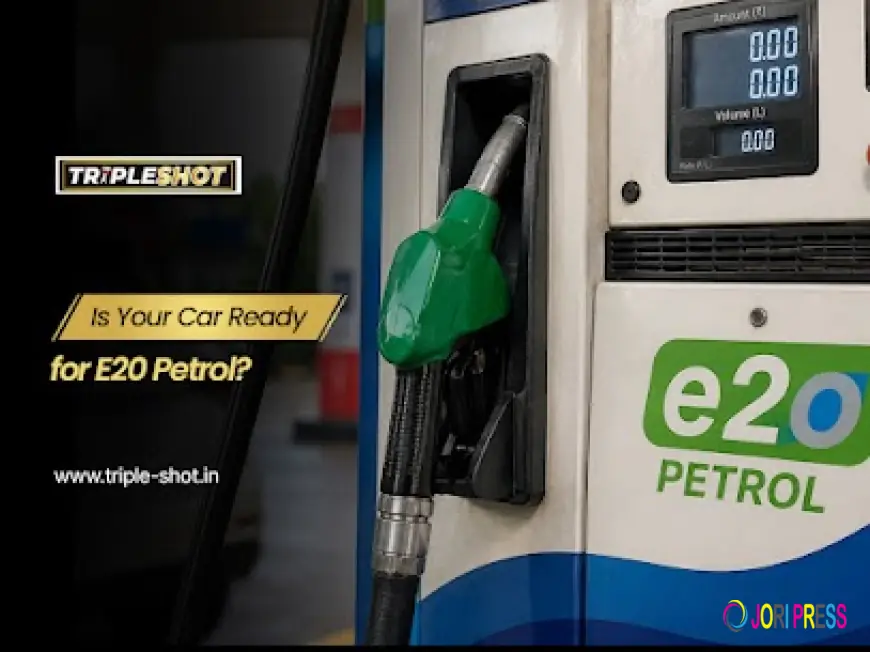
The introduction of E20 petrol in India has changed the way millions of car owners think about fuel. Since E20 petrol contains 20% ethanol and 80% petrol, many drivers are asking the same question:
Is E20 petrol good in India?
Some people report lower mileage, while others worry about engine compatibility and long-term reliability. At the same time, automobile manufacturers are updating their vehicles to support ethanol-blended fuels.
The truth is that E20 petrol offers several environmental and economic benefits, but it also comes with certain challenges—especially for vehicles that are not fully compatible with higher ethanol blends.
In this guide, you'll learn the advantages, disadvantages, engine compatibility, and how to protect your vehicle while using E20 fuel in India.
What Is E20 Petrol?
E20 petrol is a blend consisting of:
- 20% Ethanol
- 80% Petrol
Ethanol is produced from renewable agricultural sources such as sugarcane, maize, and damaged food grains.
The Government of India introduced E20 fuel to:
- Reduce crude oil imports
- Lower carbon emissions
- Promote cleaner transportation
- Support India's biofuel mission
Today, E20 fuel is becoming increasingly available across India and is expected to become the standard fuel for petrol vehicles.
Is E20 Petrol Good in India?
The answer depends on your vehicle.
For E20-compatible vehicles, E20 petrol is generally safe and supports cleaner combustion while reducing dependence on fossil fuels.
However, for older petrol vehicles or engines designed only for E10, higher ethanol content may cause certain performance issues over time.
This is why checking your owner's manual before regularly using E20 petrol is always recommended.
Benefits of E20 Petrol
1. Lower Carbon Emissions
Because ethanol burns cleaner than conventional petrol, E20 fuel helps reduce greenhouse gas emissions and supports cleaner air.
2. Reduces Dependence on Imported Oil
India imports a significant portion of its crude oil requirements.
Increasing ethanol blending helps reduce fuel imports and strengthens energy security.
3. Supports Farmers
Since ethanol is produced from agricultural crops, higher ethanol demand benefits Indian farmers and the rural economy.
4. Cleaner Combustion
Ethanol contains oxygen, which promotes more complete combustion.
This can help reduce:
- Carbon monoxide
- Hydrocarbon emissions
- Soot formation
Common E20 Petrol Problems
Although E20 offers several benefits, many drivers also experience concerns after switching.
Mileage Reduction
One of the most common concerns is:
Does E20 petrol reduce mileage?
Yes.
Since ethanol contains less energy than petrol, many drivers notice around 3–7% lower fuel efficiency, depending on driving conditions and vehicle compatibility.
Moisture Absorption
Ethanol naturally absorbs moisture from the atmosphere.
Excess moisture inside the fuel system may contribute to:
- Corrosion
- Rust
- Fuel contamination
especially when vehicles remain unused for long periods.
Carbon Deposits
Indian driving conditions involve:
- Heavy traffic
- Frequent idling
- Short trips
- Stop-and-go driving
Combined with varying fuel quality, this can accelerate carbon deposit formation inside:
- Fuel injectors
- Intake valves
- Combustion chambers
Over time this may reduce engine efficiency.
Compatibility Issues
Not every BS6 vehicle is automatically E20 compatible.
Many drivers incorrectly assume:
BS6 = E20 Ready
This is incorrect.
BS6 refers to emission standards, while E20 compatibility depends on engine design and fuel system materials.
Signs Your Car May Be Affected by E20 Fuel
If your vehicle isn't fully compatible or the fuel system is becoming dirty, you may notice:
- Lower mileage
- Rough idling
- Engine knocking
- Reduced acceleration
- Poor throttle response
- Hard starting
- Increased fuel consumption
These symptoms often indicate carbon buildup or incomplete combustion.
How to Reduce E20 Petrol Problems
Fortunately, there are several ways to minimise the effects of E20 fuel.
Regular Maintenance
Keep up with:
- Air filter replacement
- Spark plug inspection
- Scheduled servicing
A healthy engine handles ethanol-blended fuel much better.
Drive Regularly
Long periods of inactivity allow moisture to accumulate inside the fuel tank.
Regular driving helps maintain fuel quality.
Use High-Quality Fuel
Always refuel from trusted petrol stations to reduce the chances of contamination.
Consider an E20 Petrol Additive
Many car owners now use an E20 petrol additive for car maintenance to help keep injectors clean and improve combustion.
A high-quality fuel additive for E20 petrol car can help:
- Clean fuel injectors
- Remove carbon deposits
- Improve combustion efficiency
- Reduce engine knocking
- Support smoother engine performance
PEA (Polyether Amine)-based formulations are widely recognised for their deep-cleaning capability and are commonly used in premium fuel system cleaners.
Is an E20 Fuel Additive Worth Using?
As ethanol content increases, many drivers choose to use an E20 fuel additive as preventive maintenance rather than waiting for problems to appear.
An effective additive may help:
- Maintain injector cleanliness
- Improve fuel atomisation
- Restore lost engine performance
- Reduce carbon buildup
- Support better combustion
This is particularly useful for vehicles driven mostly in urban traffic.
Who Should Be More Careful with E20 Petrol?
Extra attention is recommended if you own:
- Older petrol cars
- High-mileage vehicles
- Cars used mainly for city driving
- Vehicles parked for extended periods
- Cars not officially certified for E20
Checking manufacturer recommendations is always advisable.
Frequently Asked Questions
Is E20 petrol good for BS6 cars?
Some BS6 cars support E20, while others are approved only for E10. Always verify compatibility in your owner's manual.
Does E20 petrol reduce mileage?
Yes. Because ethanol has lower energy content than petrol, mileage may decrease by approximately 3–7%.
Can E20 petrol damage my engine?
E20 does not damage engines that are designed for it. Problems are more likely in older vehicles or cars not built for higher ethanol blends.
What is the best fuel additive for E20 petrol?
Many experts recommend PEA-based fuel additives because they effectively clean injectors, remove carbon deposits, and improve combustion efficiency in E20 fuel conditions.
Should I use a petrol additive with E20 fuel?
Using a high-quality petrol additive can help maintain injector cleanliness, improve combustion, and support smoother engine performance, especially under Indian driving conditions.
Final Thoughts
So, is E20 petrol good in India?
Yes—but only when your vehicle is compatible and properly maintained.
E20 petrol supports cleaner emissions, reduces India's dependence on imported crude oil, and promotes renewable fuel use. However, it may also contribute to reduced mileage, moisture absorption, and carbon buildup if your vehicle isn't designed for higher ethanol blends or if maintenance is neglected.
For drivers using E20 regularly, maintaining a clean fuel system becomes increasingly important. Using quality fuel, following recommended service intervals, and considering a fuel additive for E20 petrol can help keep injectors clean, improve combustion, and maintain smoother long-term engine performance.
What's Your Reaction?
 Like
0
Like
0
 Dislike
0
Dislike
0
 Love
0
Love
0
 Funny
0
Funny
0
 Angry
0
Angry
0
 Sad
0
Sad
0
 Wow
0
Wow
0