


































Is BOT a Good Career in 2026–27?
Is BOT a Good Career in 2026–27?
1. What is Bachelor of Occupational Therapy (BOT)?
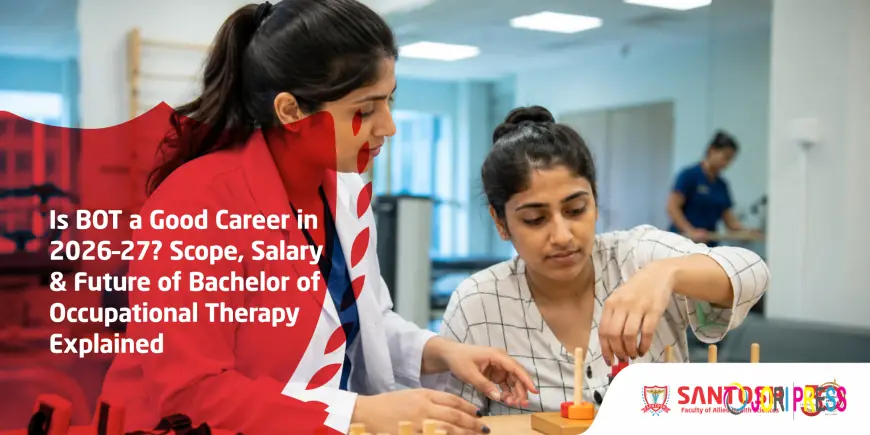
Think about what it means to not be able to button your own shirt, to struggle with holding a pen, or to feel unable to carry out the daily tasks that most people take entirely for granted. For millions of people living with disability, illness, injury, or the effects of ageing, these are not hypothetical situations — they are everyday realities. Occupational therapists are the healthcare professionals trained to change that.
Bachelor of Occupational Therapy (BOT) is a four-year undergraduate programme, followed by a one-year compulsory internship, that prepares students to assess, treat and support people across the lifespan in regaining independence and functional participation in daily life. The word 'occupation' here does not simply mean employment — it refers to any meaningful activity a person wants, needs, or is expected to do. Occupational therapy addresses physical, neurological, psychological, and developmental conditions that interfere with that ability.
Occupational therapy is a globally recognised, evidence-based healthcare profession. In India, it is now formally regulated under the National Commission for Allied and Healthcare Professions (NCAHP) Act, 2021, establishing it as a structured clinical discipline with standardised education, national registration, and professional accountability. If you are a science student after Class 12 searching for occupational therapy colleges in Ghaziabad or allied health courses in Delhi NCR, the BOT programme at Santosh College of Occupational Therapy, Santosh Deemed to be University, is worth a serious look.
2. Why Pursue BOT in 2026–27?
India's disability rehabilitation gap is one of the least discussed and most significant challenges in its healthcare landscape. With millions living with neurological conditions, developmental disorders, orthopaedic limitations, mental health challenges, and age-related decline — the demand for trained occupational therapists far exceeds the number of professionals currently available. Here is why BOT makes real career sense in 2026–27:
- Nationally regulated under NCAHP: The BOT programme is aligned with the competency-based curriculum prescribed by the National Commission for Allied and Healthcare Professions (NCAHP), ensuring your qualification carries national validity and professional standing.
- No NEET required: Unlike MBBS or BDS, BOT admission does not require NEET, making it one of the most accessible pathways into clinical healthcare practice for science students.
- Accredited by AIOTA and WFOT: The programme at Santosh is recognised by the All India Occupational Therapists Association (AIOTA) and aligned with the World Federation of Occupational Therapists (WFOT) standards — opening doors to both national and international practice.
- Breadth of clinical practice: Occupational therapists work in hospitals, rehabilitation centres, schools for children with special needs, geriatric care homes, mental health facilities, community health programmes, corporate wellness settings, and much more.
- Gateway to specialisation: After BOT, graduates can pursue MOT (Master of Occupational Therapy) in specialisations including Neurology, Paediatrics, and Orthopaedics — building deeper clinical expertise and stronger career trajectories.
- 100% campus placement record: Santosh College of Occupational Therapy has a 100% campus placement record, reflecting both the quality of training and the strength of employer demand for its graduates.
3. Course Overview at a Glance
|
Course Detail |
Information |
|
Course Name |
Bachelor of Occupational Therapy (BOT) |
|
Offered By |
Santosh College of Occupational Therapy, Santosh Deemed to be University, Ghaziabad |
|
Programme Level |
Undergraduate (Allied Health Sciences) |
|
Duration |
5 Years (4 years academics + 1 year compulsory internship) |
|
Regulatory Body |
National Commission for Allied and Healthcare Professions (NCAHP) |
|
Accreditation |
Accredited by AIOTA; aligned with WFOT international standards |
|
Affiliation |
Atal Bihari Vajpayee Medical University (ABVMU), Lucknow |
|
Eligibility |
10+2 with Physics, Chemistry, Biology & English; minimum 50% aggregate (General) / 40% (Others) |
|
Annual Fee |
Rs. 3,50,000/- |
|
Mode of Study |
Regular / Full-Time |
|
Internship |
1 year — supervised rotatory clinical training across major occupational therapy practice areas |
|
Admission Mode |
Merit-based as per NCAHP Act, 2021 and university regulations |
|
Admission Portal |
|
|
Campus Placement |
100% campus placement record |
|
Career Roles |
Clinical OT, Paediatric OT, Neuro OT, Orthopaedic OT, Mental Health OT, Community OT, Assistive Technology Specialist |
4. Eligibility Criteria
Before applying to the BOT programme at Santosh College of Occupational Therapy, ensure you meet the following minimum eligibility requirements as prescribed by NCAHP and ABVMU:
|
Eligibility Parameter |
Requirement |
|
Minimum Education |
Passed 10+2 or equivalent from a recognised board |
|
Compulsory Subjects |
Physics, Chemistry, Biology (PCB) and English |
|
Minimum Marks |
50% aggregate for General category; 40% for reserved categories |
|
NEET Requirement |
Not required for BOT admission |
|
Admission Basis |
Merit-based as per NCAHP Act, 2021 and university regulations |
|
Relaxation |
As per applicable Government norms for reserved categories |
5. BOT Course Curriculum — Year-by-Year Breakdown
| Year | Focus Areas - Bachelor in Occupational Therapy (4 Years + 1 year Internship) |
|---|---|
| 1st | Building foundations in anatomy, physiology, psychology, and core principles of Occupational Therapy |
| 2nd | Developing assessment skills, therapeutic activities, splinting basics, and understanding medical-surgical conditions |
| 3rd | Applying Occupational Therapy in neurology, paediatrics, orthopaedics, mental health, and community settings |
| 4th | Advanced clinical practice, research orientation, leadership skills, and evidence-based Occupational Therapy |
| 5th | Compulsory Internship (1 Year): Supervised rotatory clinical training across major Occupational Therapy practice areas. |
6. What Makes Santosh College of Occupational Therapy the Right Choice?
Located in Ghaziabad, at the centre of the Delhi NCR healthcare corridor, Santosh College of Occupational Therapy is part of Santosh Deemed to be University — a NAAC-accredited institution with over 30 years of healthcare education experience. For students searching for the best occupational therapy college in Delhi NCR or top BOT colleges in Uttar Pradesh, here is what sets Santosh apart:
Integrated 900+ Bedded Teaching Hospital
Occupational therapy education at Santosh is never theoretical-only. With a 900+ bedded teaching hospital, BOT students work with real patients from the very first year. This clinical depth — across neurology wards, paediatric units, orthopaedic departments, psychiatric facilities, and community health settings — is rarely available at standalone occupational therapy institutes.
AIOTA Accreditation and WFOT Alignment
Santosh College of Occupational Therapy is accredited by the All India Occupational Therapists Association (AIOTA) and the programme aligns with the standards set by the World Federation of Occupational Therapists (WFOT). These recognitions make the degree valid not just in India but also for international practice in countries that follow WFOT standards.
NCAHP-Aligned Competency-Based Curriculum
The BOT programme is designed strictly in accordance with the competency-based curriculum prescribed by the National Commission for Allied and Healthcare Professions (NCAHP). Students graduate with a nationally recognised qualification that meets current regulatory and professional standards — important as NCAHP continues to formalise the allied health professions landscape in India.
State-of-the-Art Therapy Laboratories
From hand function and splinting labs to ADL (Activities of Daily Living) training setups, sensory integration equipment, assistive technology resources, and electrotherapy units — the department is equipped for the full spectrum of occupational therapy practice areas. Students do not just read about intervention techniques; they apply them.
100% Campus Placement Record
Santosh College of Occupational Therapy has a 100% campus placement record — a distinction that reflects both the quality of graduates and the active employer network the institution has built across hospitals, rehabilitation centres, special schools, and NGOs in Delhi NCR and beyond.
NCR Location — Accessibility and Opportunity
Located in Santosh Nagar, Ghaziabad, the university is just 2 km from Ghaziabad Junction Railway Station and 4 km from Shaheed Sthal Metro Station. This places students within easy reach of Delhi, Noida, and the wider NCR — expanding both clinical placement opportunities and eventual employment prospects. For students from Ghaziabad, Meerut, Hapur, Bulandshahr, Noida, and Delhi, this is one of the most accessible allied health university campuses in the region.
130+ National and International Collaborations
Santosh Deemed to be University has established over 135 national and international academic and research partnerships. For BOT students, this translates to exposure to global best practices, research opportunities, and a professional network that extends well beyond Ghaziabad.
7. Career Opportunities After BOT
|
Career Role / Setting |
Primary Work Context |
|
Clinical Occupational Therapist |
Hospitals, multispecialty clinics, rehabilitation centres |
|
Neurological OT Specialist |
Stroke units, neuro rehab facilities, brain injury centres |
|
Paediatric Occupational Therapist |
Children's hospitals, special schools, early intervention centres, developmental clinics |
|
Orthopaedic OT Specialist |
Orthopaedic hospitals, hand surgery units, splinting clinics |
|
Mental Health Occupational Therapist |
Psychiatric hospitals, mental health rehabilitation units, community mental health centres |
|
Geriatric OT Specialist |
Elder care homes, geriatric wards, home-based rehabilitation programmes |
|
Community Health OT |
Primary health centres, NGOs, disability inclusion programmes, rural health initiatives |
|
Assistive Technology Specialist |
Rehabilitation centres, assistive device companies, accessibility consulting firms |
|
Academic & Research Professional |
Occupational therapy colleges, research institutions, curriculum development |
|
Independent Clinical Practice |
Private OT clinic or home-based therapy consultancy |
|
Ergonomics & Workplace Wellness |
Corporate health programmes, occupational health departments |
|
International Healthcare Roles |
WFOT-recognised practice in UK, Australia, Canada, Middle East |
With occupational therapy now formally regulated under NCAHP, BOT graduates are also increasingly finding opportunities in government healthcare settings, defence medical establishments, and social welfare programmes. The profession's relevance across age groups and diagnostic categories gives it one of the broadest employment footprints of any allied health discipline.
8. Salary Prospects for Occupational Therapists in India
One of the most common questions students ask before choosing a career is about earning potential. Here is a realistic picture of salary growth for BOT graduates in India:
|
Experience Level |
Average Monthly Salary (India) |
|
Fresher (0–1 year) |
Rs. 18,000 – Rs. 28,000 |
|
Mid-Level (2–4 years) |
Rs. 30,000 – Rs. 50,000 |
|
Experienced / Specialised (5+ years) |
Rs. 55,000 – Rs. 85,000+ |
|
Senior Clinical / Academic Role |
Rs. 75,000 – Rs. 1,10,000+ |
|
Independent Practice / Clinic Owner |
Variable — highly rewarding long-term |
Salaries vary by city, hospital tier, specialisation, and type of employer. NCR-based occupational therapists typically earn at the higher end of the range. Those with MOT degrees or specialisation in paediatric or neurological OT tend to command significantly higher compensation.
Frequently Asked Questions (FAQs)
Q1. Is NEET required for BOT admission?
No. NEET is not required for BOT admission at Santosh College of Occupational Therapy. Admission is merit-based as per NCAHP Act, 2021 and university regulations.
Q2. What is the duration of the BOT course at Santosh?
The programme is 5 years in total — 4 years of academic training followed by a compulsory 1-year supervised clinical internship.
Q3. What is the annual fee for BOT at Santosh?
The annual programme fee is Rs. 3,50,000/-. For the most current fee structure, contact the university at admissioncell@santosh.ac.in or call +91 120 4933350 / 60 / 70.
Q4. Is BOT from Santosh Deemed to be University recognised?
Yes. The programme is designed in accordance with the NCAHP competency-based curriculum and is affiliated to Atal Bihari Vajpayee Medical University (ABVMU), Lucknow. It is also accredited by AIOTA and aligned with WFOT international standards.
Q5. Can I do MOT after completing BOT from Santosh?
Absolutely. Santosh College of Occupational Therapy also offers the Master of Occupational Therapy (MOT) programme in three specialisations — Neurology, Paediatrics, and Orthopaedics — making it possible to build your entire occupational therapy career at one institution.
Q6. What is the placement record for BOT graduates at Santosh?
Santosh College of Occupational Therapy has a 100% campus placement record. The university's 130+ national and international collaborations and its strong hospital ecosystem provide internship and employment exposure throughout the programme.
Q7. What does an occupational therapist actually do day-to-day?
An occupational therapist assesses a patient's ability to perform daily activities — dressing, eating, writing, work tasks, mobility — and designs personalised intervention programmes to restore or compensate for lost function. They use therapeutic activities, adaptive equipment, splints, sensory approaches, cognitive training, and environmental modifications depending on the patient's condition and goals. The scope extends from children with developmental challenges to adults recovering from stroke, and from orthopaedic patients regaining hand function to elderly individuals maintaining independence at home.
Q8. How do I apply for BOT at Santosh?
Visitor contact the Admission Help Desk at +91 78385 54401 / 04 / 10 / 86 or email The Admission Cell is located at 4th Floor, No. 1, Santosh Nagar, Pratap Vihar, Ghaziabad (Delhi NCR).
What's Your Reaction?
 Like
0
Like
0
 Dislike
0
Dislike
0
 Love
0
Love
0
 Funny
0
Funny
0
 Angry
0
Angry
0
 Sad
0
Sad
0
 Wow
0
Wow
0