
































India A vs Sri Lanka A: What Suryavanshi's Post-Match Confrontation Means for His Future
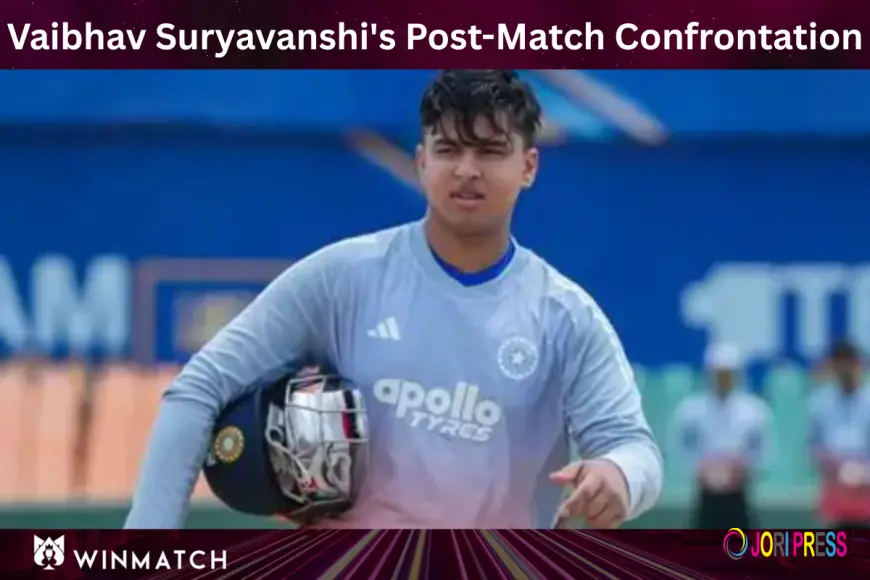
Vaibhav Suryavanshi is no stranger to headlines. In the past twelve months alone, the 15-year-old from Bihar has broken IPL records, led India to Under-19 World Cup glory, and earned a call-up to India's senior T20I squads for Ireland and England. But the headline following his latest outing in Dambulla was not about a match-winning innings- it was about what happened after the final ball was bowled.
The incident has sparked a sharp debate across Indian cricket: will Suryavanshi face disciplinary action, and more importantly, could it cast a shadow over his long-awaited senior international debut?
What Happened in Dambulla?
Suryavanshi and Sri Lanka A's Vishen Halambage were involved in a heated exchange that led to physical contact on the field, after Sri Lanka A beat India A in a Super Over finish in the one-day tri-series in Dambulla.
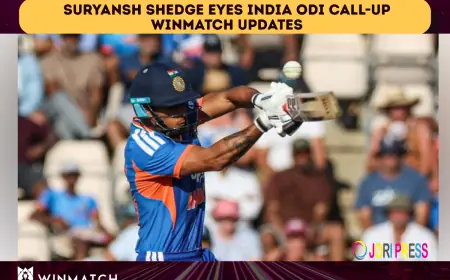
The match had been tied at the end of 50 overs. Sri Lanka A scored 16 in their Super Over. In response, India A could manage only nine, as rookie pacer Kugathas Mathulan restricted Suryavanshi and Suryansh Shedge.
Following the conclusion of the match, Halambage and Wanuja Sahan were seen having words with the departing India batters, which may have served as a flashpoint. Visuals showed Shedge pointing his bat towards Halambage before Suryavanshi turned back to get into an exchange with the Sri Lankan player.
Television footage appeared to show Suryavanshi confronting members of the Sri Lankan side before shoving a player as emotions boiled over in the aftermath of the defeat. Senior Sri Lanka wicketkeeper-batter Niroshan Dickwella was seen stepping in to diffuse the situation before it escalated further.
The video spread rapidly across social media, drawing reactions from fans, former players, and cricket commentators- some sympathetic, others critical.
Will He Face a Ban? ICC Rules Explained
This is the question fans are asking most urgently, and the answer requires a clear understanding of how the ICC's disciplinary framework actually operates.
The ICC Code of Conduct categorises player misconduct into four levels:
-
Level 1 — Minor breaches such as showing dissent, excessive appealing, or using offensive language. Penalty: fine of up to 50% of match fee.
-
Level 2 — More serious offences including inappropriate physical contact with another player. Penalty: fine of 50–100% of match fee and/or a ban of 1 Test or 2 ODIs.
-
Level 3 — Severe misconduct such as intimidating umpires or threatening to assault another player. Penalty: ban of 2–4 Tests or 4–8 ODIs.
-
Level 4 — The gravest violations including physical assault and acts of violence. Penalty: ban of 5 Tests to a lifetime ban.
Under the ICC's framework, Level 2 offences include making inappropriate physical contact with another player or throwing the ball at or near a player in an inappropriate and dangerous manner. Had this incident occurred in an official ICC-sanctioned international match, a Level 2 charge- carrying the possibility of a two-ODI ban- would have been a realistic outcome.
However, the crucial detail here changes everything.
The ICC does not normally take action in List A games or 'A' team matches. As a result, Suryavanshi remained available to play in India A's crucial next match against Afghanistan A.
In short, no official ban is expected. The match fell outside the jurisdiction in which the ICC Code of Conduct formally applies, meaning the regulatory path to a suspension simply does not exist in this instance.
The Bigger Issue: Temperament at the Highest Level
While the legal question of a ban has been answered, the broader conversation around Suryavanshi's conduct deserves serious attention- not as a character judgement on a teenager, but as a genuine professional concern ahead of what could be a watershed moment in Indian cricket history.
Suryavanshi has been picked in India's squad for the T20I series against Ireland and England following his sensational IPL 2026 season with the Rajasthan Royals. That means his senior international debut is not a distant aspiration- it is an imminent reality. At that level, every action carries weight. Every reaction is scrutinised by match referees, rival teams, and broadcasters around the world.
Platforms like Winmatch thrive because sport is built on competitive spirit- the platform brings challenges and fun titles together that channel rivalry and entertainment in equal measure. But even the most intensely competitive environments have codes. Knowing when to hold back is as important as knowing when to attack.
Former coaches and administrators working with India A would view this incident as a teachable moment. Young players operating at the 'A' level are being assessed not just for talent, but for composure under pressure- precisely the quality that separates good cricketers from great ones.
What Happens Next for Suryavanshi?
The incident will not derail his international debut. The structural protections around A-team cricket mean no ban is imminent, and selectors have shown no indication of withdrawing his call-up to the senior squad.
What it does do is remind everyone- including the player himself- that the standards expected in the senior dressing room are different. At 15, Suryavanshi has achieved what most cricketers spend careers chasing. Managing the intensity that comes with that territory is simply the next chapter of his development.
If history is any guide, the best players learn quickly. And Suryavanshi has already shown he is a fast learner.
What's Your Reaction?
 Like
0
Like
0
 Dislike
0
Dislike
0
 Love
0
Love
0
 Funny
0
Funny
0
 Angry
0
Angry
0
 Sad
0
Sad
0
 Wow
0
Wow
0