










































Import Export Code Registration: Process, Documents, Fees & Benefits
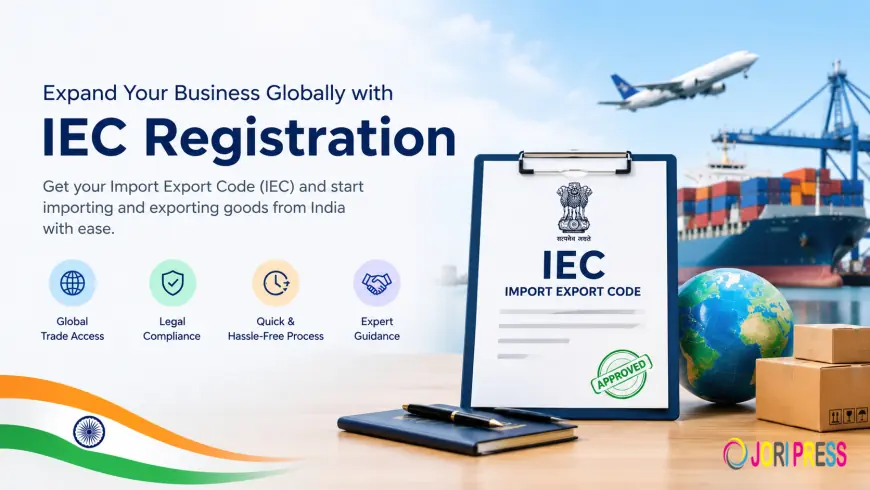
For businesses planning to enter the international market, importing or exporting goods and services can open the door to significant growth opportunities. However, businesses in India generally need to complete certain regulatory requirements before starting cross-border trade. One of the key requirements is Import Export Code (IEC) Registration.
An IEC is a unique identification number issued by the Directorate General of Foreign Trade (DGFT). It is commonly required for businesses involved in import or export activities and serves as an important identifier in international trade transactions.
What Is Import Export Code Registration?
Import Export Code Registration is the process of obtaining an IEC from the DGFT. The IEC is generally a 10-character alphanumeric code linked to the applicant's PAN.
Whether you operate a manufacturing business, trading firm, proprietorship, partnership, LLP, company, or other eligible business structure, an IEC may be required when conducting applicable import or export transactions.
The registration process is primarily online, making it easier for businesses to apply without visiting a government office.
Who Needs an IEC?
An IEC is generally relevant to businesses and individuals undertaking import or export activities. It may be required for:
-
Manufacturers exporting products to overseas markets
-
Traders engaged in international buying and selling
-
E-commerce businesses selling products internationally
-
Businesses importing goods for commercial purposes
-
Service providers involved in applicable international transactions
-
Startups planning to expand their operations beyond India
Certain transactions may be exempt from the IEC requirement under applicable regulations. Therefore, businesses should check the current DGFT requirements based on the nature of their transaction.
Documents Required for IEC Registration
The documentation process is relatively straightforward. Applicants generally need to provide information and documents such as:
-
PAN details of the applicant or business
-
Identity and address details of the applicant
-
Business constitution or incorporation details, where applicable
-
Bank account details
-
Cancelled cheque or relevant bank proof, as applicable
-
Address details of the business
-
Digital or electronic authentication required for submitting the application
The exact requirements can vary depending on the applicant's business structure and the information available with government records.
Import Export Code Registration Process
The IEC Registration Online process can be completed through the DGFT's online platform. A typical application involves the following steps:
1. Create or Access a DGFT Account
The applicant needs to register or log in to the DGFT portal using the required credentials.
2. Select IEC Application
After logging in, select the option for applying for an Import Export Code and provide the requested business and applicant information.
3. Enter Business Details
The applicant must provide details such as the business name, address, PAN information, constitution of the entity, and other relevant particulars.
4. Provide Bank Details
Bank account information is submitted as part of the application. The details should be accurate and correspond with the required supporting records.
5. Upload or Submit Required Information
Any applicable documents and declarations must be submitted according to the DGFT's prescribed requirements.
6. Complete Application and Verification
After reviewing the information, the applicant completes the required electronic authentication and submits the application.
7. Receive the IEC
Once the application is processed and approved, the IEC is issued electronically. Applicants can access the relevant IEC details through the DGFT portal.
IEC Registration Fees
The government application fee for IEC is prescribed by the DGFT and may be subject to change. Businesses should verify the latest applicable fee on the official DGFT portal before submitting an application.
In addition to the government fee, businesses using professional assistance may have to pay separate professional or service charges.
Benefits of Import Export Code Registration
Obtaining an IEC can provide several practical benefits for businesses engaged in international trade.
Facilitates international trade: An IEC helps businesses meet applicable regulatory requirements for importing and exporting.
Supports business expansion: It allows businesses to explore overseas customers, suppliers, distributors, and markets.
Useful for customs procedures: IEC details may be required during applicable import and export-related customs processes.
Enables international opportunities: Businesses can use their IEC while undertaking eligible cross-border commercial activities.
Online application: The registration process is largely digital, reducing paperwork and making application management more convenient.
Final Thoughts
Import Export Code Registration is an important compliance step for many Indian businesses entering international trade. From submitting business details and bank information to completing online verification, the process is designed to be completed digitally through the DGFT system.
Before applying, businesses should ensure that their PAN, bank details, business information, and other records are accurate. Keeping the IEC information updated and complying with applicable DGFT requirements can also help businesses manage their international trade activities more smoothly.
What's Your Reaction?
 Like
0
Like
0
 Dislike
0
Dislike
0
 Love
0
Love
0
 Funny
0
Funny
0
 Angry
0
Angry
0
 Sad
0
Sad
0
 Wow
0
Wow
0