


































How to Stay Safe When Your Vehicle Breaks Down on a Busy Road
Learn essential safety steps for handling a vehicle breakdown on a busy road, including hazard lights, safe positioning, emergency communication, and when to call professional roadside assistance.

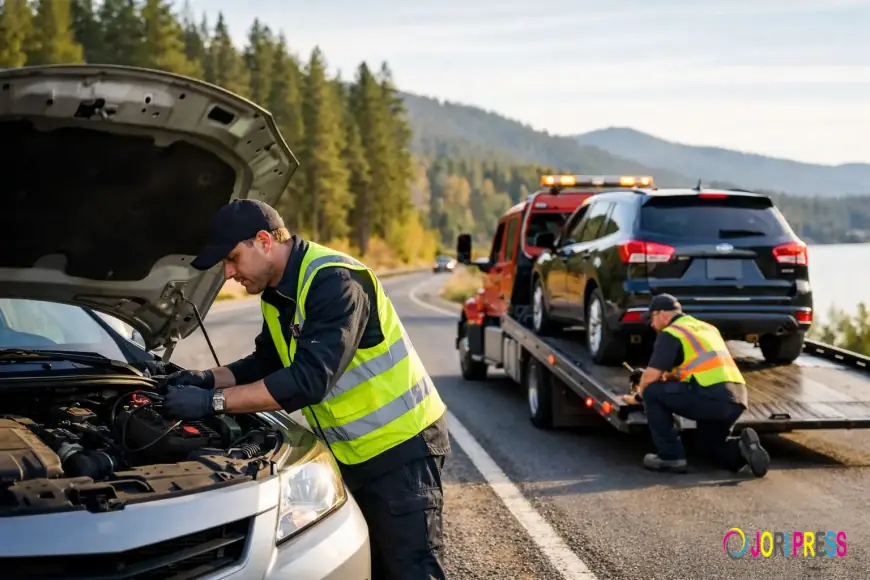
A vehicle breakdown is stressful anywhere, but it becomes much more dangerous when it happens on a busy road, highway entrance, bridge approach, or heavily traveled street. Fast-moving traffic, limited shoulder space, poor visibility, and impatient drivers can quickly turn a simple mechanical problem into a serious roadside hazard. Knowing what to do before help arrives can protect you, your passengers, and other road users. Whether you experience a flat tire, dead battery, overheating engine, or another mechanical failure, the priority should always be getting yourself out of immediate danger.
Move Your Vehicle Out of Traffic If Possible
If your vehicle is still responding normally, carefully steer toward the shoulder, emergency lane, parking area, or another safe location away from moving traffic. Avoid making sudden lane changes. Turn on your hazard lights and reduce speed gradually while looking for a safe place to stop. New York State guidance encourages drivers to move a disabled vehicle out of a travel lane when it can be done safely. Keeping a disabled vehicle out of an active lane reduces the possibility of a secondary collision. If the vehicle cannot move, do not put yourself in danger by repeatedly trying to restart or push it.
Turn On Your Hazard Lights
Hazard lights make your vehicle more visible to approaching drivers, especially during nighttime, rain, fog, or heavy traffic. Once the vehicle is safely stopped, activate the hazard lights immediately. If you have warning triangles or other approved visibility equipment, use them only when you can place them safely without walking close to moving traffic. Visibility is particularly important on high-speed roads because approaching drivers may have only a few seconds to react.
Stay Inside the Vehicle When It Is Safer
One of the most important decisions after a breakdown is determining whether you should remain inside the vehicle or exit. If your vehicle is safely positioned on a wide shoulder and there is a secure location away from traffic, getting out may be appropriate. However, if the vehicle is stopped in or very close to a traffic lane, remaining inside with your seat belt fastened is generally safer than standing beside the vehicle. The New York State Department of Transportation specifically advises stranded motorists on highways to remain inside the vehicle with their seat belt on until assistance arrives and provides further instructions. Never stand between your vehicle and passing traffic to inspect a tire, engine, or damaged body panel.
Call for Professional Assistance
After securing your immediate surroundings, contact roadside assistance, your automobile club, insurance provider, or a professional towing company. Provide clear information about your location. Useful details include the road name, direction of travel, nearest exit, cross street, landmark, lane position, and vehicle description. If your vehicle is blocking traffic or you believe the situation is dangerous, contact emergency services as appropriate. For motorists who need Best Way Towing NYC, sharing an accurate location and explaining the vehicle's condition can help the dispatcher determine what type of assistance may be required. A professional towing & roadside service may be able to provide services such as towing, battery assistance, tire-related help, or vehicle recovery depending on the situation.
Do Not Attempt Dangerous Repairs on the Roadside
A breakdown is not the right time to perform complicated mechanical work beside moving traffic. Changing a tire, checking an overheated engine, or attempting an electrical repair may expose you to passing vehicles and other hazards. If the vehicle is in an unsafe position, professional assistance is a better option than trying to solve the problem yourself. You should also avoid opening an overheated radiator immediately. Hot coolant and steam can cause serious burns. Allow the vehicle to cool and wait for qualified assistance if you are unsure what to do.
Be Especially Careful at Night
Nighttime breakdowns require additional precautions because visibility is reduced for both you and approaching motorists. Keep your hazard lights operating and remain inside the vehicle when the roadside environment is unsafe. Interior lights can make it easier for rescuers to identify occupants, but avoid leaving unnecessary electrical systems running if the battery is already weak. If you have a flashlight, keep it available for communicating with responders rather than walking around the roadway.
Understand the Move-Over Requirement
Drivers approaching a roadside incident also have responsibilities. New York's Move Over rules require drivers to exercise caution around stopped emergency and hazard vehicles. On multiple-lane highways, drivers generally must move away from the adjacent lane when it can be done safely, while reducing speed when approaching these roadside situations. This matters to stranded motorists because tow operators and roadside technicians are often working only a few feet from live traffic. Drivers should slow down and give roadside workers as much space as conditions safely allow.
Keep an Emergency Kit in Your Vehicle
Preparation can make a breakdown much easier to manage. Consider keeping these items in your vehicle:
- Flashlight with spare batteries
- Reflective safety vest
- Phone charger or power bank
- Basic first-aid supplies
- Drinking water
- Blanket during colder months
- Tire pressure gauge
- Jumper cables or a suitable battery booster
- Warning triangles
- Vehicle registration and insurance information
You should also keep your roadside assistance contact information saved in your phone before an emergency happens.
What to Do If You Break Down in a Traffic Lane
A breakdown in an active traffic lane is particularly dangerous. First, turn on your hazard lights and try to move the vehicle only if it is mechanically possible and safe. Do not attempt a risky maneuver simply to reach the shoulder. If the vehicle cannot be moved, remain inside with your seat belt fastened when that provides the safer position. Call emergency services or roadside assistance and clearly explain that the vehicle is obstructing traffic. Avoid standing behind the vehicle to warn approaching motorists unless emergency responders specifically direct you to do so.
Frequently Asked Question
Should I get out of my vehicle after a highway breakdown?
Not automatically. If traffic is moving quickly and there is no protected area outside the vehicle, remaining inside with your seat belt fastened can be safer. The appropriate action depends on the vehicle's position and surrounding conditions. NYSDOT recommends that stranded highway motorists remain in their vehicles until assistance arrives and gives further instructions.
What should I tell a towing company when I call?
Give your exact location, direction of travel, nearest exit or landmark, vehicle make and model, problem with the vehicle, and whether the vehicle is blocking traffic. If you are in an unsafe position, mention that immediately so the dispatcher understands the urgency. For customers contacting Best Way Towing NYC, providing these details can make it easier for the dispatcher to understand the situation and arrange appropriate roadside assistance or towing support.
Should I try to fix a flat tire on a busy highway?
Only if your vehicle is positioned somewhere genuinely safe and you can work well away from moving traffic. On a narrow shoulder or high-speed roadway, waiting for professional assistance is often the safer choice.
What should I do if my car breaks down at night?
Turn on your hazard lights, stay in a safe position, keep your phone available, and contact roadside assistance. If the vehicle is in an active lane or creating an immediate traffic hazard, contact emergency services.
Conclusion
A roadside breakdown does not have to become a dangerous situation if you respond calmly and prioritize safety. Move away from traffic when possible, activate your hazard lights, avoid unnecessary roadside repairs, communicate your location clearly, and wait for qualified assistance when conditions are unsafe. Professional towing providers such as Bestway Towing NYC can be part of a driver's emergency plan when a disabled vehicle needs towing or roadside support. Most importantly, drivers should remember that reaching a safe location and protecting passengers comes before trying to save time or repair the vehicle themselves.
What's Your Reaction?
 Like
0
Like
0
 Dislike
0
Dislike
0
 Love
0
Love
0
 Funny
0
Funny
0
 Angry
0
Angry
0
 Sad
0
Sad
0
 Wow
0
Wow
0