









































How to Coordinate Family Portrait Sessions Without Delaying the Wedding Programme?
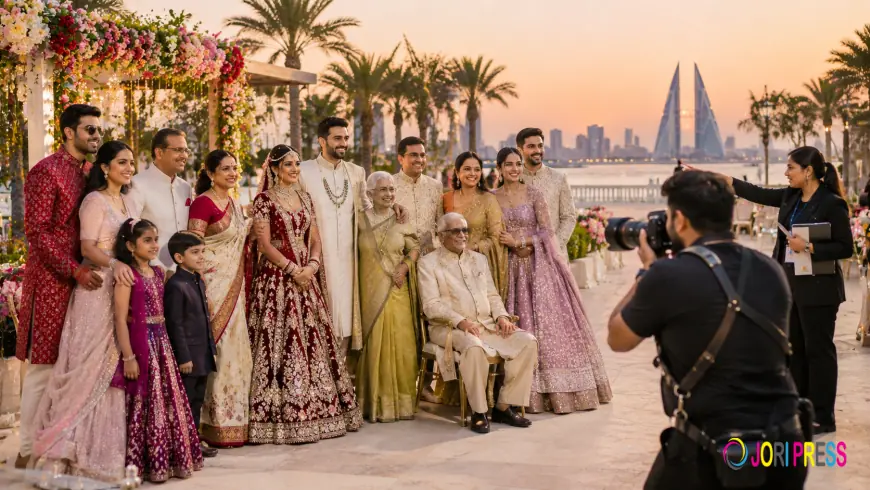
A wedding in Bahrain brings together family members, relatives and friends for several celebrations, making wedding photography an important part of the experience. Among all the photographs captured during the wedding, family portraits often become the most treasured because they preserve moments with parents, grandparents, siblings and relatives from both families.
However, organising family portraits during a busy wedding programme can be challenging. Guests may be moving between functions, relatives may arrive late, elderly family members may need assistance and different groups may want photographs at the same time. Without a proper schedule, photography sessions can take longer than expected and delay other wedding activities.
The solution is to plan family photographs in advance, prepare a clear list of groups and assign someone to coordinate guests during the session.
Here are practical ways to organise family portrait sessions efficiently without disrupting your wedding programme.
1. Prepare a Complete Family Photography List
Before the wedding, discuss with both families which photographs they want to capture. Preparing a list in advance helps the photographer understand the requirements and prevents important family combinations from being missed.
Start by including the essential groups:
-
Bride with her parents.
-
Groom with his parents.
-
Bride and groom with both sets of parents.
-
Bride with her siblings.
-
Groom with his siblings.
-
Couple with grandparents.
-
Couple with immediate family members.
-
Couple with extended relatives.
-
Couple with close family friends.
-
Full family photograph with both sides.
Ask both families to review the list before the wedding day.
For a wedding in Bahrain, where relatives may travel internationally, it is particularly important to identify guests who will only be present for specific functions. This helps prioritise photographs before they leave the venue.
2. Divide Family Portraits Into Smaller Groups
Trying to photograph every relative in one large session can become time-consuming. A better approach is to divide guests into smaller groups according to their relationships.
For example:
Immediate Family: Parents, siblings and grandparents.
Bride's Family: Close relatives, aunts, uncles and cousins.
Groom's Family: Close relatives, aunts, uncles and cousins.
Combined Family: Selected relatives from both sides together.
Extended Family: Larger groups of relatives and family friends.
This arrangement makes it easier to call guests in an organised sequence.
Instead of repeatedly asking people to move in and out of the frame, prepare the next group while the photographer is completing the current photographs.
3. Schedule Family Photography Before the Main Reception Begins
One effective way to prevent delays is to complete important family portraits before guests enter the main reception programme.
Discuss a suitable photography window with the photographer and wedding planner.
A sample schedule could include:
-
3:00 PM – Couple portraits.
-
3:20 PM – Bride with her immediate family.
-
3:35 PM – Groom with his immediate family.
-
3:50 PM – Couple with both sets of parents.
-
4:05 PM – Couple with siblings and grandparents.
-
4:20 PM – Extended family photographs.
-
4:40 PM – Final group photographs.
These timings are illustrative and should be adjusted according to the actual wedding schedule, guest count and photography requirements.
Completing important portraits before the main programme reduces pressure on the reception timeline.
4. Assign a Family Photography Coordinator
A photographer should concentrate on capturing photographs rather than searching for missing relatives.
Assign one coordinator from each family to help organise guests and communicate with the photography team.
Their responsibilities can include:
-
Calling guests according to the photography list.
-
Checking that selected relatives are present.
-
Helping elderly family members reach the photography area.
-
Informing guests about upcoming group photographs.
-
Keeping the next group ready.
-
Communicating last-minute changes to the photographer.
Choose people who know the family well and can communicate confidently with relatives.
Having separate coordinators for the bride's and groom's families can make the process faster, particularly when many guests are attending.
5. Prioritise Important Family Photographs
Not every photograph needs to be captured during the same session. Some combinations are more important than others, particularly when elderly relatives or international guests have limited availability.
Discuss priorities with both families before the wedding.
A useful priority structure is:
Priority 1 – Essential Portraits: Couple with parents, grandparents and siblings.
Priority 2 – Close Family Portraits: Couple with immediate relatives and close family groups.
Priority 3 – Extended Family Portraits: Cousins, aunts, uncles and other relatives.
Priority 4 – Additional Photographs: Friends, colleagues and informal group pictures.
This approach ensures that the most important photographs are captured first.
For a wedding in Bahrain, consider completing portraits with elderly relatives before moving to larger groups or additional photography activities.
6. Choose a Convenient Photography Location
The photography location can affect how quickly guests move between groups.
Choose a place that is close to the main event area but provides enough space for family members and photography equipment.
Suitable options may include:
-
A hotel garden.
-
A decorated reception backdrop.
-
An elegant indoor lounge.
-
A designated portrait area near the ballroom.
-
A suitable outdoor terrace.
For a luxury wedding in Bahrain, coordinate the photography backdrop with the overall wedding décor.
Avoid locations that require guests to walk long distances, climb stairs or pass through crowded areas. This is especially important for elderly relatives and guests with mobility requirements.
7. Allow Extra Time for Elderly Family Members
Grandparents and elderly relatives are often among the most important participants in family portraits. However, moving between different photography locations or standing for extended periods may be uncomfortable for them.
Arrange their photographs at a convenient time and location.
Consider the following:
-
Capture their portraits early in the session.
-
Provide comfortable seating nearby.
-
Avoid unnecessary waiting periods.
-
Keep the photography location easily accessible.
-
Arrange assistance from a family member.
-
Take a few group photographs while they are already present.
Speak with elderly relatives or their accompanying family members beforehand to understand their preferences.
A little preparation helps preserve these important family memories without causing discomfort.
8. Coordinate Children's Family Portraits Carefully
Children may lose interest when asked to wait for several photography groups. They may also become tired during long wedding functions.
Try to schedule their photographs when they are comfortable, rested and available.
Some practical arrangements include:
-
Photographing children with their parents first.
-
Keeping sibling and cousin photographs together.
-
Preparing the next group before children are called.
-
Avoiding long waiting periods.
-
Having a parent or familiar relative nearby.
-
Keeping small refreshments available where appropriate.
If several young children are attending, ask their parents about suitable photography timings.
Do not make children wait throughout the entire family portrait session when their photographs can be completed earlier.
9. Share the Photography Schedule With Both Families
A well-prepared schedule is useful only when family members know when and where they need to be present.
Share the photography timings with selected relatives before the wedding day.
Include:
-
Names of the guests required for each group.
-
Photography location.
-
Expected time.
-
Contact details of the family coordinators.
-
Any special instructions for elderly guests.
-
Expected duration of each group session.
You can share the information through a family communication group or a printed wedding itinerary.
Keep the instructions simple and avoid changing the schedule unnecessarily.
10. Coordinate With the Photographer Before the Wedding
The photographer should receive the final family portrait list well before the event.
Do not wait until the wedding day to discuss every group and photograph.
Arrange a short meeting with the photographer and wedding planner to confirm:
-
Number of expected family groups.
-
Priority photographs.
-
Available photography locations.
-
Expected session duration.
-
Lighting and equipment requirements.
-
Family coordinator contact details.
-
Backup arrangements.
-
Final photography delivery expectations.
Share reference photographs if the couple has specific preferences regarding poses or group arrangements.
A clear photographer brief reduces confusion and helps the team work efficiently.
11. Use a Fixed Photography Sequence
A fixed sequence prevents guests from repeatedly changing positions and asking for additional combinations while other groups are waiting.
Create a simple list that the photographer and family coordinators can follow.
For example:
First: Couple with both sets of parents.
Second: Couple with the bride's immediate family.
Third: Couple with the groom's immediate family.
Fourth: Couple with grandparents.
Fifth: Couple with siblings and cousins.
Sixth: Couple with extended relatives.
Seventh: Full family photograph.
Once one group is completed, the coordinator should invite the next group immediately.
Keep additional or informal photographs for the end of the session, provided the wedding timeline allows them.
12. Plan Photography Around Natural Lighting and Weather
Lighting can influence the quality of outdoor family portraits. Harsh sunlight, unexpected rain or uncomfortable outdoor conditions may affect both guests and photography equipment.
Discuss lighting requirements with your photographer before confirming the session timing.
Consider:
Early Morning: Can provide soft natural light for outdoor portraits.
Late Afternoon: May offer more comfortable lighting depending on the season.
Indoor Photography: A suitable option when outdoor conditions are difficult.
Covered Outdoor Areas: Can provide some protection from unexpected weather.
When planning a wedding in Bahrain, check the expected weather conditions and prepare an indoor photography alternative.
This helps avoid shifting the entire photography schedule at the last minute.
13. Avoid Taking Family Portraits During Important Wedding Activities
Family portrait sessions should not interfere with important moments such as the wedding ceremony, speeches, dinner service or major performances.
Coordinate photography timings with the main event schedule.
Avoid calling close family members for photographs while they are:
-
Participating in wedding rituals.
-
Giving or listening to speeches.
-
Having dinner.
-
Preparing for a performance.
-
Welcoming important guests.
-
Taking part in other scheduled activities.
The wedding planner should coordinate with the photography team to identify suitable time slots.
This allows guests to enjoy the celebration while still giving the photographer enough time to capture the required portraits.
14. Keep a Backup Plan for Missing Guests and Delays
Even with a detailed schedule, some relatives may arrive late, become unavailable or request additional photographs.
Prepare a flexible backup plan before the wedding.
Consider:
Alternative Time Slots: Keep a short photography window available after the main group session.
Separate Family Sessions: Photograph relatives who are available earlier rather than waiting for everyone.
Updated Group List: Allow coordinators to mark completed photographs and identify missing groups.
Flexible Priorities: Complete essential family photographs first and move optional combinations to the end.
Reception Portraits: Capture a few informal family pictures during suitable breaks in the event.
Avoid delaying the entire wedding programme because one or two relatives are unavailable.
15. Organise and Review the Final Family Photography Collection
After the wedding, organise the photographs into different family groups so the couple can easily find and share important memories.
Ask your photographer to arrange the final collection into categories such as:
Immediate Family: Parents, siblings and grandparents.
Bride's Family: Relatives and friends from the bride's side.
Groom's Family: Relatives and friends from the groom's side.
Combined Family: Photographs featuring both families together.
Extended Groups: Cousins, relatives and larger family gatherings.
Also confirm the delivery format, editing arrangements and digital backup process.
Keep a secure copy of the final photographs so these family memories remain accessible for future anniversaries and celebrations.
Family Portrait Coordination Checklist
Before the wedding, confirm the following arrangements:
-
Complete family portrait list prepared.
-
Both families' photograph requirements collected.
-
Guest groups divided by relationship.
-
Priority photographs identified.
-
Family photography coordinators assigned.
-
Photography schedule prepared.
-
Location confirmed with venue management.
-
Elderly relatives given priority arrangements.
-
Children's photography timings coordinated.
-
Photographer briefed on the shot list.
-
Fixed photography sequence shared.
-
Lighting and weather backup considered.
-
Photography schedule coordinated with wedding functions.
-
Missing guest arrangements prepared.
-
Final photo delivery and storage discussed.
Frequently Asked Questions
1. When should family portrait sessions be scheduled during an Indian wedding?
Family portraits can be arranged before the main reception, after selected ceremonies or during a dedicated photography window. The timing should depend on guest availability, lighting and the overall wedding programme.
2. How long should a family portrait session take?
A smaller family session may take around 15–30 minutes, while a larger session with several groups may need 45–60 minutes or more. Plan according to the number of people and required photographs.
3. Who should be included in the main family portraits?
The essential groups usually include parents, grandparents, siblings, close relatives and selected representatives from both families. The couple should approve the final list.
4. How can couples prevent family photography from delaying the reception?
Prepare a group list, assign family coordinators, share the schedule in advance and photograph essential groups first. Avoid calling guests randomly during the reception.
5. Should elderly relatives be photographed first?
It is often helpful to photograph elderly relatives early in the session so they do not have to wait or stand for long periods. Provide comfortable seating and assistance where needed.
6. How can couples organise photographs with a large extended family?
Divide relatives into smaller groups, prepare a fixed photography sequence and ask family coordinators to gather the next group in advance.
7. What should couples do if a family member arrives late?
Complete the essential photographs with available relatives first. The coordinator can arrange a separate time slot for the late guest rather than delaying the entire session.
8. How can couples coordinate family photographs at a wedding in Bahrain?
Share the photography schedule with both families, the photographer and the wedding planner. Confirm accessible locations, suitable lighting, guest availability and backup arrangements before the wedding day.
Final Thoughts
Family portraits preserve the people and relationships that make a wedding celebration meaningful. From photographs with parents and grandparents to large group pictures with relatives from both families, every image becomes part of the couple's family history.
A clear shot list, fixed photography sequence, dedicated family coordinators and suitable time slots can help capture important memories without delaying other celebrations.
With thoughtful preparation, the couple can enjoy their wedding programme while ensuring that the people closest to them are included in their most memorable photographs.
What's Your Reaction?
 Like
0
 Dislike
0
 Love
0
 Funny
0
 Angry
0
 Sad
0
 Wow
0