




































How to Choose the Right Sportswear Manufacturer for Your Clothing Brand
Learn how to choose the right sportswear manufacturer by comparing quality, MOQ, customization, pricing, production capacity, and delivery.
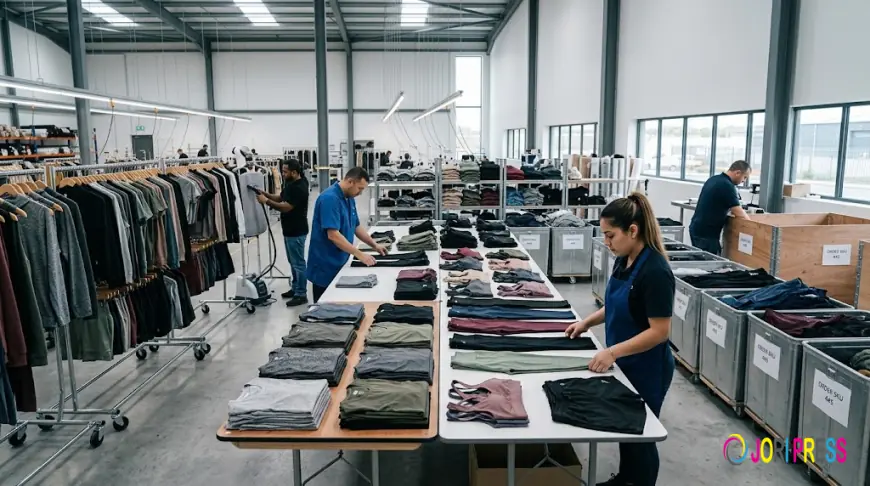
How to Choose the Right Sportswear Manufacturer for Your Clothing Brand
Choosing the right sportswear manufacturer is one of the most important decisions a clothing brand can make. A good manufacturing partner can help you maintain consistent quality, control production costs, launch new products smoothly, and grow your brand with fewer supply-chain problems. The wrong manufacturer, however, can lead to poor-quality garments, missed deadlines, inconsistent sizing, high minimum order quantities, and unhappy customers.
Whether you are launching a new activewear brand, expanding an existing clothing business, or looking for a new production partner, you should evaluate manufacturers carefully before placing a bulk order.
This guide explains the key factors to consider when choosing a sportswear manufacturer, from product quality and minimum order quantities to customization, samples, pricing, production capacity, and quality control.
What Is a Sportswear Manufacturer?
A sportswear manufacturer is a company that produces athletic and performance clothing for brands, retailers, sports teams, fitness businesses, and other organizations.
Depending on the manufacturer, services may include product development, fabric sourcing, pattern making, cutting, stitching, printing, embroidery, labeling, packaging, and quality inspection.
Common products manufactured by sportswear companies include:
-
Sports jerseys
-
Gym wear
-
Leggings
-
Sports bras
-
Training shirts
-
Running shorts
-
Tracksuits
-
Hoodies
-
Tank tops
-
Yoga wear
-
Cycling apparel
-
Team uniforms
-
Compression clothing
-
Performance jackets
-
Custom activewear
Some manufacturers produce ready-made designs, while others specialize in custom sportswear and private-label manufacturing.
1. Start With Your Product Requirements
Before contacting manufacturers, clearly define what you want to produce.
A manufacturer cannot give you an accurate quotation or production plan if your requirements are unclear. Start by preparing a basic product specification for each item.
Consider the following:
-
Product type
-
Fabric composition
-
Fabric weight
-
Colors
-
Sizes
-
Quantity
-
Design details
-
Printing requirements
-
Embroidery requirements
-
Labels
-
Packaging
-
Expected delivery date
For example, if you want to manufacture custom gym leggings, decide whether you need polyester, nylon, spandex, recycled fabric, or another material. You should also determine whether you need a high-waist design, compression fit, custom waistband, printed graphics, or private labels.
The clearer your requirements are, the easier it will be to compare different manufacturers.
2. Look for Experience in Sportswear Manufacturing
Not every clothing manufacturer has the same level of experience.
A company that mainly produces casual T-shirts may not have the technical knowledge required for performance sportswear. Sportswear often requires specialized fabrics, stitching methods, stretch construction, moisture management, durable printing, and careful sizing.
When evaluating a manufacturer, ask:
-
How long have they been manufacturing sportswear?
-
What types of athletic products do they produce?
-
Do they work with startups or established brands?
-
Do they have experience with your product category?
-
Can they show examples of previous work?
-
What production techniques do they use?
Experience does not automatically guarantee quality, but it can reduce production problems and make communication easier.
3. Check Fabric Quality Carefully
Fabric is one of the biggest factors affecting the performance and durability of sportswear.
A product may look attractive in photographs but feel completely different when worn. This is why brands should pay close attention to fabric specifications rather than choosing materials based only on price.
Depending on the product, common sportswear fabrics include polyester, nylon, spandex, cotton blends, and recycled performance fabrics.
Important fabric characteristics can include:
-
Stretch and recovery
-
Breathability
-
Moisture management
-
Durability
-
Softness
-
Weight
-
Color fastness
-
Shrinkage resistance
-
Opacity
-
Resistance to pilling
For example, leggings need enough stretch and recovery to maintain their shape during movement. A running shirt may need lightweight, breathable fabric that is comfortable during exercise.
Ask the manufacturer for fabric details and samples before committing to a large production order.
4. Always Request Product Samples
One of the safest ways to evaluate a sportswear manufacturer is to order samples before placing a bulk order.
A sample gives you an opportunity to inspect the actual product instead of relying on photographs or promises.
When reviewing a sample, check:
-
Fabric feel
-
Stitch quality
-
Seam strength
-
Sizing
-
Fit
-
Color accuracy
-
Printing quality
-
Embroidery
-
Logo placement
-
Labels
-
Zippers and other accessories
-
Overall finishing
Try the garment yourself or have it tested by someone who matches your target customer.
For example, if you are launching a women's activewear line, test leggings through normal movement such as walking, stretching, squatting, and exercise. This can reveal issues such as transparency, poor recovery, uncomfortable seams, or incorrect sizing.
A sample may cost more than the final per-unit production price, but it can help prevent expensive mistakes in a bulk order.
5. Understand the Manufacturer's MOQ
MOQ means Minimum Order Quantity. It is the smallest quantity a manufacturer requires you to order for a particular product or production run.
MOQ is especially important for new clothing brands because ordering too much inventory can tie up your money.
For example, a new brand may want to test a new sports bra design with a small quantity before investing in thousands of pieces. If the manufacturer's MOQ is very high, the brand may have to carry more inventory than it can realistically sell.
Ask whether MOQ applies:
-
Per style
-
Per color
-
Per size
-
Per fabric
-
Per design
-
Per production order
Also ask whether the manufacturer offers lower MOQs for sampling or small startup collections.
Do not automatically choose the manufacturer with the lowest MOQ. A lower MOQ can be useful, but quality, communication, pricing, and reliability are equally important.
6. Evaluate Customization Options
If you are building a clothing brand, customization can help you create products that are different from generic wholesale apparel.
Ask manufacturers what customization services they provide.
These may include:
-
Custom colors
-
Custom patterns
-
Screen printing
-
Sublimation printing
-
Embroidery
-
Heat transfer
-
Direct-to-film printing
-
Woven labels
-
Printed labels
-
Custom neck labels
-
Custom packaging
-
Custom hang tags
-
Custom sizing
-
Custom fabrics
-
Custom designs
For performance clothing, sublimation printing can be useful for detailed designs because the artwork becomes part of the fabric rather than simply sitting on top of it.
The right production method depends on the fabric, design, quantity, and intended use of the product.
7. Ask About Private Label Manufacturing
Private-label manufacturing allows a brand to sell products under its own brand name.
Depending on the manufacturer, private-label services may include:
-
Brand labels
-
Neck labels
-
Care labels
-
Hang tags
-
Custom packaging
-
Branded bags
-
Custom product specifications
If you want to build a long-term sportswear brand, ask the manufacturer whether they can support your branding requirements.
A professional private-label setup helps create a consistent customer experience from the garment itself to the packaging.
8. Compare Pricing Carefully
Price is important, but the cheapest manufacturer is not always the best choice.
A low quotation may exclude important services or use lower-cost materials. Before comparing prices, make sure you understand what is included.
Ask for a detailed quotation covering:
-
Fabric
-
Cutting
-
Sewing
-
Printing
-
Embroidery
-
Labels
-
Packaging
-
Sampling
-
Customization
-
Shipping
-
Other applicable production costs
Suppose Manufacturer A quotes $8 per garment while Manufacturer B quotes $10. If Manufacturer A uses a lower-grade fabric and charges separately for labels and packaging, the apparent saving may disappear.
Compare the complete cost rather than focusing only on the quoted unit price.
9. Check Production Capacity
Your manufacturer's production capacity should match your business plans.
A small manufacturer may be perfect for a startup testing its first collection but may struggle if your order volume increases significantly.
Ask:
-
How many pieces can they produce per month?
-
What happens during peak seasons?
-
Can they handle repeat orders?
-
How quickly can production scale?
-
Do they have backup production capacity?
-
How are large orders scheduled?
This is particularly important if you expect your brand to grow.
You do not necessarily need the largest factory. You need a manufacturer that can reliably handle your current requirements and support reasonable growth.
10. Ask About Production Lead Times
Lead time is the amount of time required to complete an order.
A manufacturer's production timeline may include:
-
Design confirmation
-
Material sourcing
-
Sample development
-
Sample approval
-
Bulk fabric preparation
-
Cutting
-
Sewing
-
Printing or embroidery
-
Quality inspection
-
Packaging
-
Shipment
Ask for realistic production timelines rather than assuming a manufacturer can meet your preferred date.
You should also ask what happens if fabric is delayed, a sample requires changes, or production takes longer than expected.
Reliable communication about lead times is much better than receiving an unrealistic promise and discovering the delay after placing your order.
11. Examine Quality Control Procedures
Quality control should be a major part of your manufacturer evaluation.
A professional manufacturer should have processes for identifying production defects before garments reach the customer.
Quality checks may include:
-
Fabric inspection
-
Measurement checks
-
Stitch inspection
-
Print inspection
-
Color matching
-
Size verification
-
Seam inspection
-
Final garment inspection
-
Packaging inspection
Ask the manufacturer how quality is checked throughout production.
It is also useful to establish your own product specifications. For example, provide approved measurements, colors, logo files, fabric specifications, and sample references.
The more clearly your quality expectations are documented, the easier it is to maintain consistency between production batches.
12. Review Their Communication
Good communication can make the entire manufacturing process easier.
You should be able to get clear answers about:
-
Pricing
-
Samples
-
Materials
-
Production
-
Changes
-
Quality problems
-
Shipping
-
Deadlines
Pay attention to how a manufacturer communicates before you place an order.
If it takes several days to answer basic questions or the answers are consistently unclear, production communication may become even more difficult later.
A reliable manufacturer should be able to explain technical details in a way that you can understand.
13. Check Manufacturing Location and Shipping Options
The manufacturer's location can affect production costs, shipping time, import requirements, and communication.
When comparing international manufacturers, consider:
-
Shipping methods
-
Estimated transit times
-
Export experience
-
Packaging standards
-
Customs documentation
-
Import requirements
-
Shipping costs
-
Tracking availability
Do not compare manufacturers solely by factory price. The final landed cost includes more than the manufacturing price.
For international clothing brands, understanding the complete supply chain before ordering can prevent unexpected expenses.
14. Ask About Payment Terms
Before starting production, make sure you understand the manufacturer's payment requirements.
Common questions include:
-
Is a deposit required?
-
When is the remaining balance due?
-
How are sample payments handled?
-
What payment methods are accepted?
-
Are additional charges possible?
-
What happens if the order changes?
All payment terms should be clearly understood before production begins.
For a first order, keep records of quotations, approved samples, specifications, invoices, and agreed production terms.
15. Check Whether They Can Handle Your Product Range
Some manufacturers specialize in specific categories, while others offer a wider range of products.
If your brand plans to sell multiple types of sportswear, determine whether one manufacturer can produce your entire collection.
For example, your product line may eventually include:
-
Sports bras
-
Leggings
-
Shorts
-
T-shirts
-
Hoodies
-
Jackets
-
Team jerseys
Working with one experienced manufacturer can simplify communication and quality control, but only if that manufacturer can maintain good quality across your entire product range.
16. Protect Your Designs and Brand Information
If you are providing original designs, patterns, logos, or technical specifications, discuss how your information will be handled.
Keep records of:
-
Original design files
-
Approved samples
-
Product specifications
-
Logo files
-
Brand guidelines
-
Purchase orders
-
Manufacturer communications
For important intellectual-property or contractual issues, consider getting professional legal advice appropriate to the countries involved.
17. Read Reviews and Verify the Manufacturer
Online reviews can provide useful information, but do not rely on reviews alone.
Try to verify the manufacturer's business information and production capabilities.
Look for:
-
Company website
-
Factory information
-
Product portfolio
-
Business history
-
Customer feedback
-
Certifications where relevant
-
Clear contact information
-
Professional communication
If possible, request references or examples of previous manufacturing work.
Be cautious if a manufacturer refuses to provide basic business information, avoids answering questions, or makes unusually unrealistic promises.
18. Compare Several Sportswear Manufacturers
Do not choose the first manufacturer that sends you a quotation.
Create a simple comparison table.
| Factor | Manufacturer A | Manufacturer B | Manufacturer C |
|---|---|---|---|
| Product quality | |||
| MOQ | |||
| Sample quality | |||
| Customization | |||
| Private labeling | |||
| Unit price | |||
| Lead time | |||
| Production capacity | |||
| Communication | |||
| Quality control | |||
| Shipping options |
This makes it easier to identify strengths and weaknesses.
A manufacturer with a slightly higher price may still be the better choice if it offers better materials, stronger quality control, lower defect rates, and more reliable delivery.
19. Start With a Small Production Run When Possible
If you are working with a new manufacturer, consider starting with a manageable order instead of immediately placing your largest possible order.
A smaller first production run can help you evaluate:
-
Product consistency
-
Communication
-
Packaging
-
Delivery performance
-
Quality control
-
Customer response
Once the manufacturer proves reliable, you can increase order volumes.
This approach can reduce the financial risk of changing suppliers later.
20. Look for a Manufacturer That Can Grow With Your Brand
Your manufacturing needs can change as your business grows.
A manufacturer that works well for 200 pieces may not necessarily be the best option when you need 5,000 or 20,000 pieces.
Think about your future requirements.
Can the manufacturer support:
-
Larger orders?
-
New product categories?
-
More colors?
-
More sizes?
-
New custom designs?
-
Faster repeat production?
-
Private-label packaging?
-
International shipping?
Choosing a manufacturer with suitable long-term capabilities can save you from changing suppliers repeatedly.
What Makes a Good Sportswear Manufacturer?
A strong sportswear manufacturing partner should offer a combination of quality, reliability, communication, flexibility, and reasonable pricing.
Key qualities include:
-
Consistent product quality
-
Appropriate MOQ
-
Reliable production timelines
-
Good fabric options
-
Custom manufacturing capabilities
-
Private-label services
-
Effective quality control
-
Clear communication
-
Competitive pricing
-
Suitable production capacity
-
Professional sampling process
-
Reliable shipping support
No manufacturer will necessarily be perfect in every category. The goal is to find the company that best matches your brand's specific needs.
Questions to Ask a Sportswear Manufacturer Before Ordering
Before placing an order, consider asking these questions:
-
What sportswear products do you specialize in?
-
What is your minimum order quantity?
-
Can you provide samples?
-
How much do samples cost?
-
What fabrics do you offer?
-
Can you develop custom products?
-
Do you offer private-label manufacturing?
-
What printing and embroidery methods are available?
-
What is your standard production lead time?
-
How do you control product quality?
-
What is your production capacity?
-
Can you handle repeat orders?
-
What are your payment terms?
-
What shipping options do you provide?
-
Can you provide product specifications and measurements?
-
How do you handle defective products?
-
Can you support larger orders as the brand grows?
Getting clear answers to these questions can help you avoid many common manufacturing problems.
Common Mistakes to Avoid When Choosing a Sportswear Manufacturer
Choosing Only Based on Price
The lowest price does not always mean the lowest overall cost. Poor quality can result in returns, replacements, negative reviews, and lost customers.
Skipping the Sample Stage
Never assume that a product will look exactly like a photograph. Always inspect samples whenever possible.
Ignoring MOQ
A large MOQ can create unnecessary inventory pressure, especially for new brands.
Not Defining Quality Standards
If you do not clearly communicate your requirements, you may receive products that technically meet the order but do not match your expectations.
Failing to Check Lead Times
Late production can cause missed launches, delayed customer orders, and cash-flow problems.
Choosing a Manufacturer Without Checking Communication
Poor communication can become a major problem when you need design changes or have production issues.
Ordering Too Much Too Early
New brands often benefit from testing products and customer demand before committing to very large quantities.
Final Thoughts
Choosing the right sportswear manufacturer requires more than comparing unit prices. You need to evaluate the complete manufacturing process, including product quality, fabrics, samples, MOQ, customization, private labeling, quality control, production capacity, lead times, communication, payment terms, and shipping.
The best manufacturer for your brand is the one that can consistently produce the quality you need at a commercially sensible cost while meeting your production requirements.
Take time to compare several manufacturers, request samples, ask detailed questions, and start with a manageable order when appropriate. A careful selection process can help you build a more reliable supply chain and create sportswear products that customers are willing to buy again.
Frequently Asked Questions
How do I choose a sportswear manufacturer?
Start by defining your product requirements and then compare manufacturers based on quality, MOQ, fabric options, customization, samples, pricing, lead times, production capacity, quality control, and communication.
What should I ask a clothing manufacturer before placing an order?
Ask about MOQ, sample costs, fabric specifications, customization, private labeling, production lead times, quality-control procedures, payment terms, shipping, and how defective products are handled.
Is MOQ important when choosing a sportswear manufacturer?
Yes. MOQ determines how much inventory you need to purchase at once. A lower MOQ can be useful for new brands that want to test products before making larger investments.
Should I order samples before bulk production?
Yes. Samples allow you to evaluate fabric, fit, stitching, sizing, colors, printing, branding, and overall construction before committing to a larger production run.
What is private-label sportswear manufacturing?
Private-label sportswear manufacturing allows a brand to have apparel produced with its own branding, such as labels, tags, packaging, and other customized brand elements.
How can I reduce sportswear manufacturing problems?
Use clear product specifications, approve samples carefully, communicate quality requirements, confirm production timelines, understand payment terms, and maintain written records of important manufacturing agreements.
Can a sportswear manufacturer produce custom designs?
Many manufacturers offer custom production, but capabilities vary. Ask about custom fabrics, colors, patterns, sizing, printing, embroidery, labels, and packaging before selecting a supplier.
How many sportswear manufacturers should I compare?
There is no fixed number, but comparing several suitable manufacturers gives you a better understanding of pricing, capabilities, MOQs, quality, and production terms before making a decision.
What's Your Reaction?
 Like
0
Like
0
 Dislike
0
Dislike
0
 Love
0
Love
0
 Funny
0
Funny
0
 Angry
0
Angry
0
 Sad
0
Sad
0
 Wow
0
Wow
0