









































How to Choose the Right Plywood Thickness for Every Room in Your Home

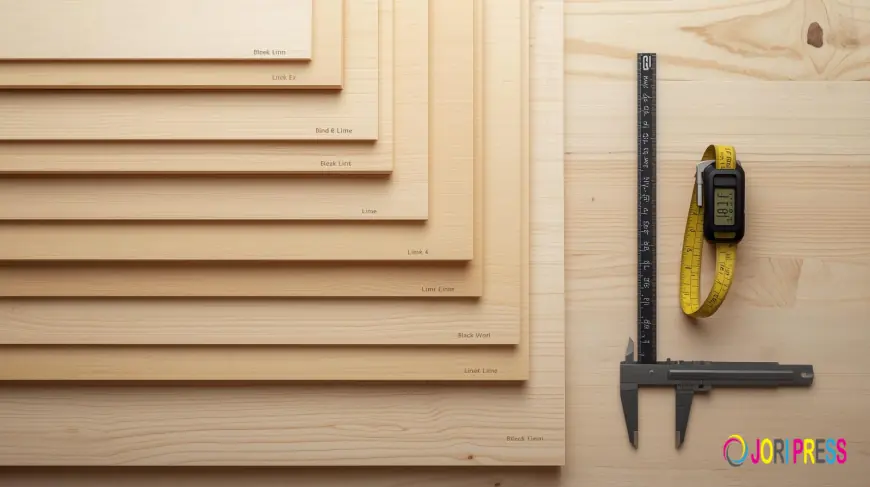
Choosing plywood for a new home can get confusing fast once you realise every room needs something different. A kitchen countertop, a bedroom wardrobe, a study desk, and a bathroom vanity do not carry the same load or face the same conditions, so running the same ply board thickness throughout the whole house may not always be the right approach.
Once you understand how plywood thickness works, it can help you plan furniture better, avoid problems like sagging shelves or furniture that's heavier than it needs to be, and manage your plywood cost more effectively. It also helps you make better decisions when planning your plywood interior design, from structural furniture pieces to smaller components. Get the thickness right, pair it with the right plywood grade, and your furniture holds up better to everyday use.
Why Does Plywood Thickness Matter?
Plywood thickness has a real say in how furniture performs. Go thicker, and you generally get more rigidity, which matters for pieces that need to carry heavy weight. However, that doesn't mean every part of your furniture needs the thickest sheet available.
As a rough guide, 16-19 mm plywood suits heavy, load-bearing furniture such as beds, wardrobes, kitchen cabinets, and desks. 12 mm tends to work for shelves, partitions, and other lighter components, while 4-9 mm sheets usually show up in drawer bottoms, backing, and similar lightweight panels.
It's also worth weighing thickness alongside the plywood grade, plywood sheet sizes, and the conditions of the room. Choosing the right combination can help avoid unnecessary material use and keep your plywood cost in check.
Choose Plywood Thickness Room by Room
1. Kitchen: Plan for Weight, Water and Everyday Use
An Indian kitchen takes a beating from pressure cookers and mixer-grinders to heavy utensils, groceries, and appliances. It also has to deal with steam, spills, and constant cleaning, making both thickness and moisture resistance important.
When it comes to furniture for the kitchen, the use of 19mm BWP plywood is recommended for countertops, cabinets, carcasses and any other bulky parts. 16mm should be used for cabinet shutters and doors, whereas the 12mm is usually enough for shelves and partitions. For drawer bottoms and backing, you can typically get by with 4-6 mm.
Greenply Gold is a BWP option worth considering here, built for situations where strength and moisture resistance both matter.
2. Living Room: Keep the Furniture Strong
Your living room furniture has to hold up TVs, books, speakers, décor, and storage, but it's also a big part of your home interior design. So the thickness you choose needs to balance strength with how the piece actually looks.
TV units and bulkier entertainment furniture do best with 18-19 mm plywood for proper structural support. Display shelves, wall panelling, and lighter storage can work with 12-16 mm, while drawer bottoms and backing are usually fine at 6-8 mm.
Greenply MR 303 and Ecotec MR are both worth looking at for dry interior applications, depending on what the furniture design calls for.
3. Bedroom: Wardrobes, Beds, and Storage Have Different Needs
Bedroom furniture has to handle everyday use, whether it is a full-height wardrobe packed with clothes or a bed that also stores extra bedding underneath. The main structure therefore needs more support than smaller components.
For bed bases and the core structure of large wardrobes, 19 mm plywood is a solid choice. 16 mm works for wardrobe shutters and internal partitions, giving you rigidity without weighing the shutters down unnecessarily. Back panels, drawer bottoms, and lining can run anywhere from 6-9 mm depending on the design.
Greenply MR 303 and Ecotec MR cover a range of bedroom furniture needs.
4. Bathroom: Don't Choose Thickness Without Checking the Grade
Bathrooms deal with humidity, steam, wet floors, and sometimes even water splashes, so thickness alone cannot make a plywood sheet usable. A thicker MR-grade sheet does not necessarily mean that the thicker sheet would be better for a moisture-prone area.
For bathroom vanities and countertops, opt for 19mm BWP or IS 710-grade plywood. 12mm can handle most cabinet components, while 6mm is sufficient for backing and storage elements.
Greenply 710 Marine plywood is designed for applications that face significant water exposure and can be considered for moisture-prone bathroom furniture.
Study Room or Home Office: Choose Plywood for a Stronger Everyday Setup
A study desk often ends up supporting a laptop, a monitor, a printer, and a stack of books all at once. Bookshelves carry their own weight too, especially once they've filled up over the years.
For desktops, workstations, and other major structural pieces, 19 mm plywood gives you the rigidity you need. 16-18 mm suits bookshelves and vertical framing, while 12 mm is enough for smaller storage units and cubbies.
One more thing to watch: shelf span. Even a thick plywood shelf can start to sag if it's stretched too long without proper support underneath.
Plywood Buying Tips to Keep in Mind
1. Follow the 900 mm Rule
For long horizontal shelves, try not to leave spans longer than around 900 mm (3 feet) without support. If the shelf has to be longer, add vertical dividers, brackets, or some other form of support.
Also consider the available plywood sheet sizes when planning larger furniture. Choosing the sheet dimensions carefully can help reduce unnecessary joints and material wastage.
2. Consider Calibrated Plywood for Certain Finishes
Factory-calibrated plywood keeps a more consistent thickness across the whole sheet, which helps with high-gloss acrylic, laminates, or sliding-door systems where surface and dimensional consistency actually matter. Greenply Absolute is one calibrated option worth a look for these jobs.
3. Know the Difference Between MR and BWP
MR plywood, generally associated with IS 303, is intended for interior applications with limited moisture exposure. BWP plywood, associated with IS 710, is designed for applications that face significantly higher moisture exposure.
So, don't choose plywood simply because it is thicker. A 19 mm MR sheet isn't automatically a better choice for a wet area than a suitably specified BWP sheet.
Let the Room Decide the Thickness
There's no single plywood thickness that works everywhere in a home. A kitchen countertop needs something completely different from a wardrobe shutter, and a drawer bottom has a different job altogether from a study desk.
Before you buy, think through the furniture's purpose, the load it'll carry, how much moisture it'll face, the ply board thickness required, and the grade suited to that room. Also consider how the material will contribute to your home interior design as well as its practical performance.
Greenply offers plywood across different grades and thicknesses, which makes it easier to pick what actually fits each space. Get that combination right from the start, and you end up with furniture that's stronger, more practical, and built for the way you live.
What's Your Reaction?
 Like
0
Like
0
 Dislike
0
Dislike
0
 Love
0
Love
0
 Funny
0
Funny
0
 Angry
0
Angry
0
 Sad
0
Sad
0
 Wow
0
Wow
0