





































How to Build a Successful Metaverse Platform in 2026: Features, Technology, and Revenue Models
The metaverse is evolving from a futuristic concept into a practical digital ecosystem where users can socialize, work, shop, attend events, play games, and interact with virtual environments. With advancements in artificial intelligence, blockchain, extended reality, and cloud computing, businesses are exploring new opportunities to create immersive digital platforms.

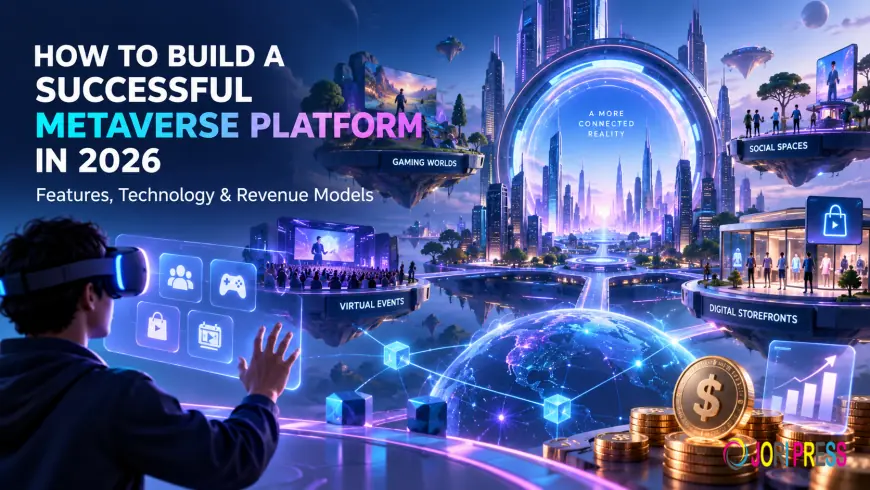
The metaverse is evolving from a futuristic concept into a practical digital ecosystem where users can socialize, work, shop, attend events, play games, and interact with virtual environments. With advancements in artificial intelligence, blockchain, extended reality, and cloud computing, businesses are exploring new opportunities to create immersive digital platforms. For companies planning to enter this market, investing in metaverse development can open the door to innovative customer experiences and new revenue streams.
But building a successful metaverse platform requires more than creating a visually attractive virtual world. Businesses need the right combination of features, technologies, security measures, and monetization strategies.
1. Define Your Metaverse Business Concept
Before starting development, identify the purpose of your platform. A metaverse platform could focus on gaming, virtual events, education, real estate, social interaction, eCommerce, corporate collaboration, or entertainment.
Clearly defining your target audience and business objectives helps determine the platform's architecture, features, technology stack, and monetization model.
2. Essential Features for a Metaverse Platform
A successful platform should provide an engaging and seamless experience. Some essential features include:
Customizable Avatars: Allow users to create and personalize digital identities with different appearances, outfits, accessories, and virtual assets.
Immersive Virtual Spaces: Develop interactive environments where users can explore locations, communicate, attend events, shop, or participate in activities.
Real-Time Communication: Voice chat, video communication, text messaging, and spatial audio can make interactions feel more natural.
Digital Asset Marketplace: Enable users to buy, sell, trade, or showcase virtual items such as avatars, collectibles, accessories, and virtual property.
Blockchain Integration: Blockchain can support digital ownership, asset verification, decentralized transactions, and transparent marketplaces.
AI-Powered Experiences: AI can enhance virtual assistants, NPCs, recommendations, content creation, personalization, and user interactions.
Cross-Platform Accessibility: Supporting smartphones, computers, VR headsets, and other devices can help businesses reach a wider audience.
3. Technologies Powering Metaverse Development
Technology selection plays a critical role in building a scalable metaverse ecosystem. Virtual Reality (VR) and Augmented Reality (AR) create immersive experiences, while Artificial Intelligence (AI) enables intelligent interactions and personalized environments.
Blockchain technology can provide secure ownership and transactions for digital assets. Smart contracts can automate marketplace transactions and other decentralized operations.
Game engines such as Unity and Unreal Engine can be used to create interactive 3D environments. Meanwhile, cloud computing and advanced networking infrastructure help deliver real-time experiences to large numbers of users.
A strong metaverse development strategy should also prioritize cybersecurity, data protection, scalability, and performance from the beginning.
4. Revenue Models for Your Metaverse Platform
A well-planned monetization strategy can turn a virtual ecosystem into a sustainable business. Popular revenue models include:
Virtual Asset Sales: Generate income by selling digital clothing, accessories, collectibles, virtual land, and other assets.
Marketplace Fees: Charge users or creators a percentage of transactions conducted through the platform.
Subscriptions: Offer premium memberships with exclusive spaces, experiences, features, or digital assets.
Virtual Advertising: Businesses can purchase virtual billboards, branded environments, sponsored events, and product placements.
Event Monetization: Generate revenue through paid concerts, conferences, exhibitions, workshops, and entertainment experiences.
Creator Economy: Allow creators to sell digital content and take a platform commission from successful transactions.
5. Focus on Security and Scalability
Security should be a fundamental component of metaverse development. User accounts, digital wallets, transactions, and personal information must be protected through strong authentication, encryption, access controls, and continuous monitoring.
Scalability is equally important. Your infrastructure should be capable of supporting increasing users, transactions, virtual assets, and interactive environments without compromising performance.
Building a successful metaverse platform in 2026 requires a combination of immersive design, advanced technology, user-focused features, strong security, and sustainable monetization. From customizable avatars and virtual marketplaces to AI, blockchain, VR, and AR, every component should contribute to a valuable digital experience.
Businesses that develop a clear strategy and choose the right metaverse development approach can build platforms that generate long-term engagement and revenue. As virtual experiences continue to expand across industries, now is an opportunity for businesses to explore the possibilities of building their own metaverse ecosystem.
WhatsApp: +91 6369366250
Mobile: +91 6369366250
Email: info@thecryptoape.com
Telegram: @Thecryptoape
What's Your Reaction?
 Like
0
Like
0
 Dislike
0
Dislike
0
 Love
0
Love
0
 Funny
0
Funny
0
 Angry
0
Angry
0
 Sad
0
Sad
0
 Wow
0
Wow
0