






































How Technology Is Transforming Healthcare
Digital health is changing how people access healthcare, monitor their health, and communicate with healthcare professionals. It combines technology with healthcare services to make health information, monitoring, and care more accessible and efficient.

Digital health is changing how people access healthcare, monitor their health, and communicate with healthcare professionals. It combines technology with healthcare services to make health information, monitoring, and care more accessible and efficient.
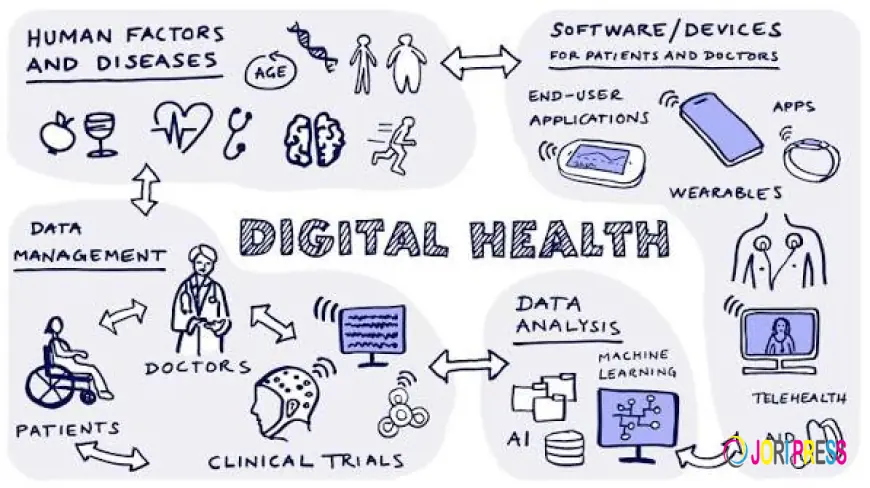
Today, digital health includes healthcare apps, wearable devices, mobile medical applications, remote patient monitoring, electronic health records, artificial intelligence (AI), and digital care management. These technologies allow patients and healthcare professionals to collect, manage, and use health information in new ways.
What Is Digital Health?
Digital health refers to the use of digital technologies to support healthcare and improve health outcomes. For example, a smartwatch can track heart rate and activity, while a medical app can help patients manage appointments, medications, or health information.
Healthcare computing is also an important part of digital transformation. Computers and connected systems help healthcare organizations store patient information, manage workflows, and support clinical decision-making.
How Digital Health Is Used
There are many applications of digital health, including:
- Medical apps for patients and healthcare professionals
- Wearable devices for health and activity monitoring
- Remote patient monitoring for collecting health data outside hospitals
- Digital care management for coordinating patient services
- Patient engagement technologies that improve communication
- AI healthcare tools that can assist with analyzing information
Mobile medical devices are also becoming increasingly important because they can collect health data while people go about their daily lives.
The Future of Digital Health
Healthcare digital transformation is expected to continue as AI, connected devices, mobile applications, and data-driven technologies become more integrated into healthcare systems. However, privacy, cybersecurity, accuracy, accessibility, and responsible use of health data remain important considerations
What's Your Reaction?
 Like
0
Like
0
 Dislike
0
Dislike
0
 Love
0
Love
0
 Funny
0
Funny
0
 Angry
0
Angry
0
 Sad
0
Sad
0
 Wow
0
Wow
0