






































How Multi-Flute Endmill Tools Improve Productivity
Discover how multi-flute endmill tools improve CNC productivity with faster machining, better surface finish, and longer tool life.

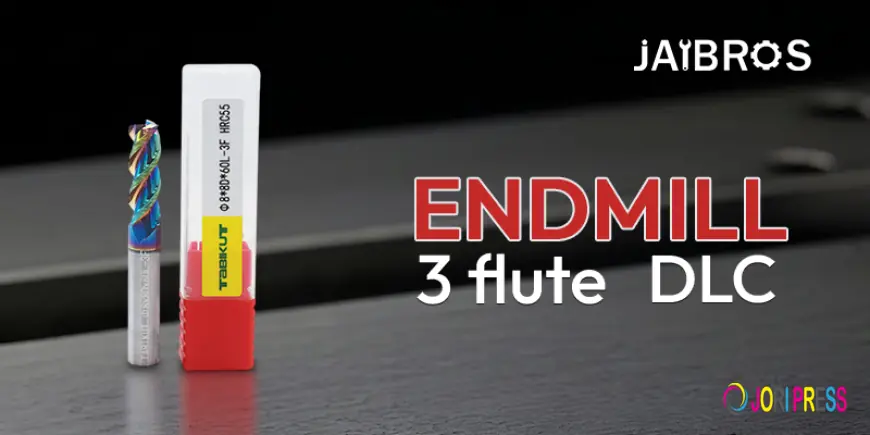
How Multi-Flute Endmill Inserted Tools Boost Productivity in Modern CNC Industries
CNC manufacturers are looking for ways to enhance machining performance, reduce production times, and maintain high levels of precision in today’s highly competitive manufacturing sector. One of the most effective methods being adopted within the CNC manufacturing industry is to utilize multi-flute cutter technology. Multi-flute milling tools are being increasingly used by manufacturers as they provide improved stability, greater feed rates, and also create better surface finishes on all types of parts.
To accomplish high-speed machining operations, today’s manufacturers require tools that will perform well over an extended period of time while providing a high degree of accuracy. These criteria are exactly the features that multi-flute end mills provide. Their unique design enables the manufacturer to effectively maximise his productivity without compromising the quality of the manufacturing process and they are rapidly becoming the preferred choice for many industries including aerospace, automotive, mould making and precision engineering.
Understanding Multi-Flute Endmill Tools
Multi-flute endmills have several cutting edges (or flutes) along the length of their body. While traditionally designed to have 2 or 3 flutes, a mụlti-flute endmill can have up to 4, 5, 6 or even other numbers of flutes, depending on its use/purpose.
With more flutes, the end mill will contact more surface area of the material being machined than with a traditional 2-flute or 3-flute end mill (such as through the addition of serrated edges). Accordingly, cutting material with more than 2-flute or 3-flute end mills removes process material efficiently while improving finish quality and reducing vibration.
Multi-flute endmills are useful for high-speed CNC machining applications where productivity and consistency are critical. Conventional high-performance carbide endmills are used frequently for multi-flute endmills because of the high-performance characteristics of carbide material, including excellently ratings for hardness, heat resistance and durability.
Why Multi-Flute Tools Increase Productivity
Higher Feed Rates
One of the biggest advantages of multi-flute tools is their ability to operate at higher feed rates. Since more cutting edges are engaged during machining, the workload is distributed evenly across the tool.
This allows manufacturers to remove more material in less time, resulting in shorter machining cycles and increased production efficiency. Faster machining directly helps industries reduce operational costs while meeting tight production deadlines.
Better Surface Finishing
Surface finish quality is extremely important in precision manufacturing. Multi-flute tools create smoother finishes because each flute removes a smaller amount of material during rotation.
Reduced vibration and improved cutting stability help minimise surface imperfections. This reduces the need for secondary finishing processes such as polishing or grinding, ultimately saving both time and labour costs.
Premium solid carbide endmills are widely preferred for finishing applications because they maintain dimensional accuracy even under demanding machining conditions.
Improved Tool Stability
The larger core diameter of multi-flute cutters increases tool rigidity. Greater rigidity helps reduce tool deflection during heavy cutting operations.
Tool deflection can negatively impact machining accuracy, especially when working with hard materials or deep cutting operations. By minimising vibration and movement, multi-flute tools provide more consistent machining results.
This stability is one reason why CNC industries are increasingly adopting advanced milling technologies for high-precision manufacturing tasks.
Enhanced Tool Life
Tool wear is a major challenge in CNC machining. Frequent tool replacements increase downtime and production expenses. Multi-flute cutters distribute cutting forces more evenly, helping reduce wear on individual edges.
When combined with proper machining parameters and coolant application, these tools can deliver significantly longer operational life compared to standard milling cutters.
The growing demand for durable endmills reflects the industry's focus on long-term productivity and reduced maintenance costs.
Material Removal Efficiency
Material removal rate plays a crucial role in overall manufacturing efficiency. Multi-flute designs improve chip thinning and cutting engagement, allowing operators to machine parts faster while maintaining quality.
These tools are highly effective for:
-
Side milling
-
Finishing operations
-
Contouring
-
Profiling
-
High-speed machining
In industries where large production volumes are common, efficient material removal can significantly improve profitability.
Applications Across Industries
Multi-flute milling tools are used in various industrial sectors because of their versatility and reliability.
Automotive Industry
Manufacturers use these tools for precision engine components, transmission systems, and structural parts that require high dimensional accuracy.
Aerospace Industry
Aircraft components often involve difficult-to-machine materials such as titanium and heat-resistant alloys. Multi-flute tools provide the rigidity and stability needed for such demanding operations.
Mould and Die Manufacturing
Smooth surface finishes and accurate profiles are essential in mold manufacturing. Multi-flute tools help achieve precise geometries while reducing polishing requirements.
Medical Industry
Precision machining is critical for surgical instruments and implant components. Advanced cutting tools support the high-quality standards required in medical manufacturing.
Role of Carbide in Multi-Flute Tools
The success of modern milling operations heavily depends on tool material quality. Carbide endmills are widely used because carbide offers exceptional wear resistance and thermal stability.
Compared to high-speed steel tools, carbide cutters can withstand higher temperatures and maintain cutting sharpness for longer periods. This makes them ideal for high-speed CNC machining applications.
The combination of carbide material and multi-flute geometry allows manufacturers to achieve the following:
-
Faster machining speeds
-
Better heat resistance
-
Longer tool life
-
Improved productivity
Different Types of Endmills Used in CNC Machining
Understanding the various types of endmills helps machinists choose the right tool for specific operations.
Square End Mills
Used for general milling applications and sharp corner machining.
Ball Nose End Mills
Ideal for contouring and 3D surface machining.
Corner Radius End Mills
Provide improved strength and reduced edge chipping.
Roughing End Mills
Designed for aggressive material removal operations.
Finishing End Mills
Used to achieve smooth surface finishes and high dimensional accuracy.
Each type serves a specific purpose depending on the machining requirement and material type.
Importance of Micro Endmills
The increasing demand for miniature components in electronics and medical industries has driven the popularity of micro endmills. These tiny cutting tools are designed for extremely precise machining applications where even microscopic errors can affect performance.
Micromachining requires exceptional rigidity and precision. Advanced flute geometries and carbide materials help ensure consistent cutting performance during delicate operations.
As industries continue moving toward miniaturisation, the importance of micro-machining technology will continue growing.
Tool Coatings and Productivity
Modern multi-flute cutters often feature advanced coatings that improve performance under high-speed machining conditions.
Common coatings include:
-
TiAlN
-
AlTiN
-
DLC coatings
These coatings reduce friction, improve heat resistance, and extend tool life. Coated tools can operate at higher temperatures without losing hardness, making them ideal for demanding CNC applications.
The combination of coatings and carbide technology significantly contributes to increased productivity in modern manufacturing environments.
CNC Automation and Smart Manufacturing
Automation is transforming the manufacturing industry. Smart CNC systems now use advanced software, AI-based monitoring, and automated tool management systems to improve machining efficiency.
Multi-flute cutting tools complement these technologies by supporting higher spindle speeds and more aggressive machining strategies.
As automated manufacturing continues evolving, industries will increasingly depend on high-performance tooling systems capable of maintaining precision under demanding conditions.
Cost Savings Through Productivity
Although premium tooling solutions may involve higher initial investment, they often provide better long-term value. Efficient cutting tools help manufacturers:
-
Reduce machining time
-
Lower labour costs
-
Minimize tool replacement frequency
-
Improve production consistency
-
Reduce material waste
These advantages directly improve profitability and operational efficiency.
High-quality endmills have become essential for companies aiming to remain competitive in modern manufacturing markets.
Future of Multi-Flute Milling Technology
The future of CNC machining will continue focusing on speed, precision, and automation. Tool manufacturers are constantly developing advanced geometries and coatings to improve machining performance.
Emerging trends include:
-
Nano-coated cutting tools
-
AI-assisted machining optimization
-
High-speed machining systems
-
Smart tool monitoring technologies
-
Precision micro-machining solutions
These innovations will further improve productivity and expand the capabilities of CNC manufacturing systems worldwide.
Conclusion
Multi-flute milling tools have become a vital part of modern CNC machining because they offer superior productivity, stability, and finishing performance. Their ability to support higher feed rates and reduce machining time makes them highly valuable in industries focused on precision and efficiency.
From aerospace manufacturing to medical component production, these tools continue helping manufacturers achieve better quality while lowering operational costs. As CNC technologies continue advancing, high-performance multi-flute tools will remain essential for maximizing industrial productivity.
Premium endmills are no longer just cutting tools—they are key contributors to faster, smarter, and more efficient manufacturing operations.
About Jaibros
Jaibros is a trusted supplier of high-quality CNC cutting tools and industrial machining solutions. The company offers a wide range of precision products including carbide cutting tools, drilling solutions, milling cutters, and advanced tooling accessories designed for modern manufacturing industries. With a strong commitment to quality, performance, and customer satisfaction, Jaibros continues supporting CNC professionals with reliable tooling solutions for precision machining applications.
FAQs
1. What are multi-flute end mill tools?
Multi-flute tools are milling cutters designed with multiple cutting edges that improve machining speed, surface finish, and cutting stability.
2. Why are carbide cutting tools preferred in CNC machining?
Carbide tools provide excellent hardness, wear resistance, and heat tolerance, making them suitable for high-speed industrial operations.
3. What industries commonly use multi-flute milling tools?
The automotive, aerospace, medical, mould manufacturing, and precision engineering industries widely use these tools.
4. How do tool coatings improve machining performance?
Tool coatings reduce friction, improve heat resistance, and increase tool life during high-speed cutting operations.
5. What are micro end mills used for?
Micro machining tools are used for manufacturing tiny precision components in industries such as electronics, medical equipment, and aerospace.
What's Your Reaction?
 Like
0
Like
0
 Dislike
0
Dislike
0
 Love
0
Love
0
 Funny
0
Funny
0
 Angry
0
Angry
0
 Sad
0
Sad
0
 Wow
0
Wow
0