







































Safeguarding Care: Why Modern Hospital Security Services Are Vital for Healthcare Facilities
Hospitals face complex safety challenges requiring specialized protection. Explore the essential pillars of modern hospital security services, from emergency room de-escalation to HIPAA-aligned perimeter access control, and discover how tailored security teams keep patients and healthcare workers safe.

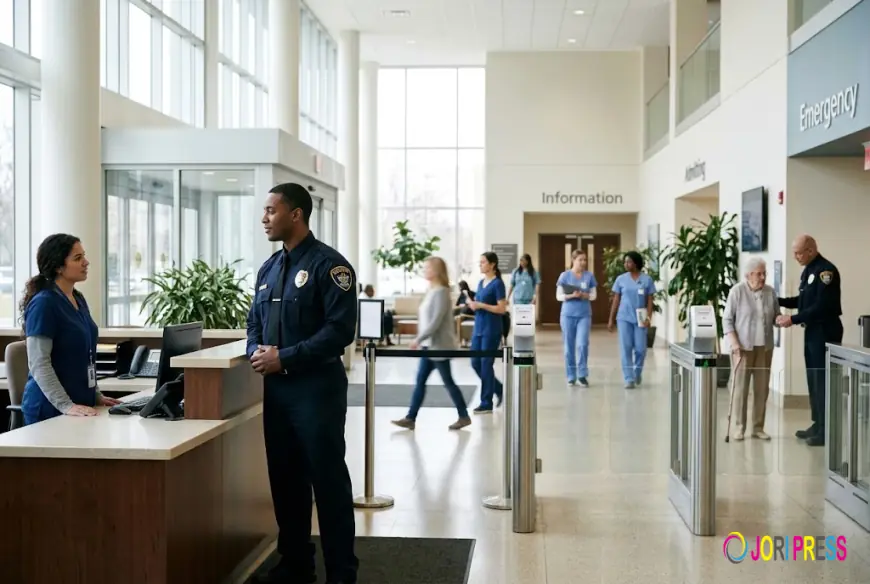
Hospitals and medical centers operate around an essential, non-negotiable mission: saving lives, fostering healing, and providing compassionate care. By their very nature, healthcare facilities are open, public-facing institutions designed to welcome people in their most vulnerable moments. However, this open-door philosophy introduces intricate safety challenges that traditional commercial security plans cannot address.
Balancing an inviting, accessible environment with the urgent need to protect patients, physicians, nursing staff, visitors, and sensitive infrastructure requires specialized hospital security services. From managing overcrowded emergency departments and de-escalating volatile behavioral health crises to securing narcotics repositories and preventing infant elopement, the modern healthcare ecosystem demands a nuanced, highly trained security presence.
The Rising Stakes: Modern Threats Facing Healthcare Facilities
Healthcare settings across the country face mounting pressure from safety concerns that directly affect staff morale, patient satisfaction, and institutional liability.
1. Workplace Violence Against Healthcare Personnel
Nursing staff and frontline clinicians experience higher rates of nonfatal workplace violence than professionals in almost any other industry. Emergency rooms, urgent care clinics, and triage areas frequently serve as flashpoints where high emotion, grief, intoxication, or psychiatric distress can rapidly escalate into verbal abuse or physical hostility. Dedicated physical security officers act as a stabilizing deterrent, stepping in with verbal de-escalation before friction transforms into violence.
2. High-Value Pharmaceuticals and Asset Theft
Hospitals house millions of dollars in controlled substances, high-tech surgical equipment, and specialized medical assets. Internal shrinkage, organized theft rings, and unauthorized intrusions pose substantial risks not only to an institution’s bottom line, but also to regulatory compliance under federal and state pharmacy oversight boards.
3. Patient Wandering and Infant Security
Vulnerable patient populations—such as pediatric patients, individuals suffering from late-stage dementia, or those admitted under involuntary psychiatric evaluation—require active safeguarding. A comprehensive security posture ensures that access control systems, visitor logging, and physical patrols prevent elopement and mitigate the risk of infant abduction.
4. Patient Privacy and HIPAA Safeguards
Physical security directly intersects with healthcare compliance. Unauthorized visitors roaming into restricted wards or treatment zones can inadvertently or intentionally compromise protected health information (PHI). Strict access management at entry points ensures that only authorized personnel enter clinical, diagnostic, and administrative suites.
Core Pillars of a Specialized Hospital Security Program
An effective hospital security model is neither purely administrative nor aggressively militaristic. Instead, it relies on a layered, patient-centered approach built upon four distinct pillars:
Access Control and Visitor Management
Modern medical complexes often encompass multiple buildings, parking garages, loading docks, and specialized wings. Establishing tight perimeter control without impeding rapid emergency response requires integrated visitor check-in systems, smart badging, and roving security escorts. Restricting public movement after regular visiting hours keeps critical care zones quiet, private, and secure.
Emergency Department (ED) Security Integration
The emergency department is the front line of every hospital and its most unpredictable zone. Security officers stationed in the ED must possess acute observational skills, detecting agitation, identifying concealed weapons, and coordinating with triage nurses to isolate high-risk individuals before disturbances impact the waiting lobby.
Sensitive Area Protection
Certain areas within a hospital demand specialized access protocols:
-
Maternity & Neonatal Intensive Care Units (NICU): Enforced guest logs, electronic tag verification, and physical checkpoints prevent unauthorized visitation.
-
Inpatient Behavioral Health: Routine room sweeps, screening for contraband, and non-violent crisis intervention protocols keep patients from harming themselves or clinical caregivers.
-
Pharmacies and Laboratories: Biometric access, continuous video monitoring, and random security audits protect controlled pharmaceuticals and proprietary biomedical research.
The Human Factor: Empathy, Training, and Discretion
Standard retail or industrial security guards are fundamentally ill-equipped to operate inside a medical facility. Healthcare security officers operate under a strict code of ethics where emotional intelligence is just as critical as tactical defense.
Trauma-Informed Conflict De-escalation
Individuals visiting hospitals are often grappling with fear, devastating medical news, or cognitive impairments. Security personnel must be trained in trauma-informed intervention. Their objective is to de-escalate tension through active listening, calm vocal modulation, and empathetic body language, preserving the patient’s dignity whenever possible while maintaining an uncompromised defensive perimeter.
Understanding Patient Care and HIPAA
A hospital security officer must understand that patients have rights under medical ethics and privacy laws. Officers regularly work alongside clinical staff during behavioral emergencies, medical holds, or code interventions, requiring them to operate within healthcare regulatory frameworks such as HIPAA and Joint Commission standards.
Partnering with Security Guard Services
Developing an in-house security department can strain administrative budgets, complicate hiring pipelines, and increase legal exposure. Partnering with a dedicated, experienced security firm provides hospitals and medical facilities with fully vetted, rigorously trained security professionals tailored specifically to healthcare environments.
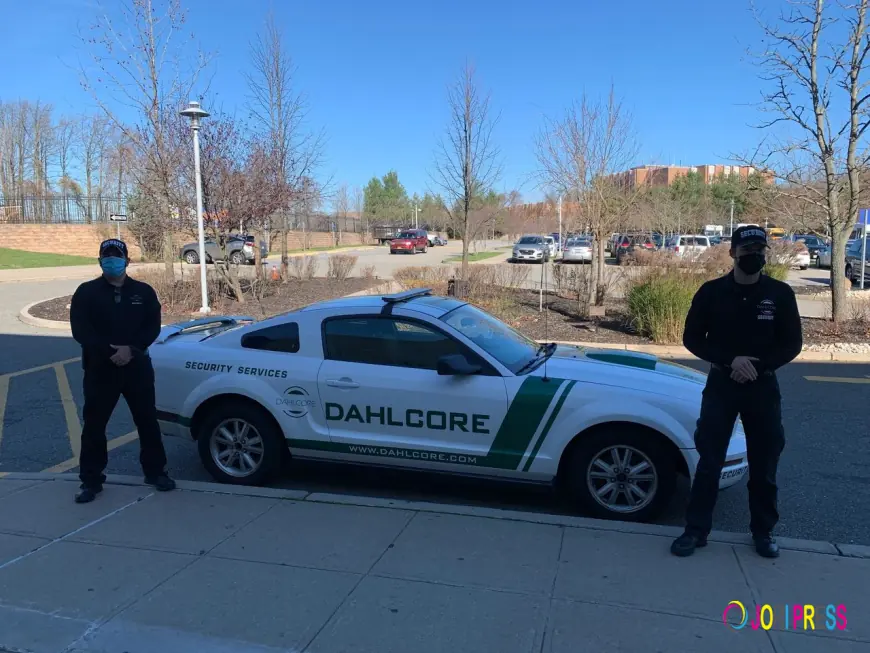
Dahlcore Security Guard Services provides specialized medical and healthcare security solutions engineered around the complex demands of modern clinics, diagnostic centers, and hospital systems. Recognizing that healthcare security demands both vigilance and empathy, Dahlcore deploys officers trained in crisis de-escalation, crowd management, visitor access verification, and perimeter surveillance.
Whether a facility requires 24/7 lobby concierge security, dedicated emergency room protection, parking garage patrols, or comprehensive access-point monitoring, Dahlcore creates customized risk mitigation frameworks that adapt to each facility’s operational rhythm.
By combining proactive deterrent strategies with discreet, professional officers, Dahlcore empowers doctors, nurses, and medical staff to focus exclusively on delivering exceptional patient care.
Practical Steps to Audit Your Hospital’s Current Security Posture
Healthcare administrators seeking to identify gaps in their facility safety protocols should perform an annual risk assessment covering these foundational areas:
-
Evaluate Ingress and Egress Vulnerabilities: Map out every door, service elevator, and delivery dock. Ensure that non-public entry points remain locked and alarm-monitored 24 hours a day.
-
Review Incident Logs in the Emergency Room: Track the frequency and timing of verbal altercations, patient elopements, and code calls to pinpoint staffing shortfalls.
-
Audit Maternity and Pediatric Safeguards: Test electronic wristband monitoring systems, infant abduction alarm integrations, and staff response times during surprise drills.
-
Inspect Exterior Grounds and Parking Structures: Well-lit walkways, regular parking lot patrols, and accessible emergency call boxes protect employees working late night or early morning shifts.
-
Verify Contractor and Security Vendor Training: Ensure all contracted security personnel hold current certifications in CPR, non-violent crisis de-escalation, and healthcare facility safety regulations.
Frequently Asked Questions
What certifications and training should healthcare security officers hold?
Hospital security officers should hold state-approved security licenses alongside specialized credentials in verbal de-escalation, non-violent crisis intervention (such as CPI training), CPR/First Aid/AED, and emergency response. Familiarity with HIPAA compliance and Joint Commission safety benchmarks is also essential.
Can hospital security officers physically restrain aggressive patients?
Restraints in a healthcare setting are governed strictly by medical directives and institutional clinical policy. Security officers only assist with physical holds under the explicit direction of clinical staff or in direct self-defense and defense of others to prevent imminent, severe bodily harm. De-escalation remains the mandatory first approach.
How does security improve overall patient satisfaction scores?
Patients and their families experience high stress during hospital visits. A calm, clean, orderly environment free from loud disturbances, suspicious loiterers, or chaotic waiting areas directly bolsters a patient's feeling of well-being, which reflects positively on institutional satisfaction surveys and care outcomes.
Should hospital security guards be armed or unarmed?
This decision depends on the facility's location, risk profile, crime statistics, and specific community factors. Many healthcare institutions deploy a hybrid strategy: unarmed, customer-service-oriented officers stationed in internal wards and public lobbies, complemented by armed personnel or local law enforcement liaisons designated for emergency departments, parking structures, and exterior perimeters.
Building a Resilient, Protected Healthcare Environment
A healthcare facility cannot fulfill its mission of healing when doctors, nurses, and administrative personnel fear for their safety, or when patients feel vulnerable within treatment rooms. Effective hospital security is not merely about physical muscle or security gates; it is about creating an environment where high-level medical care can occur without disruption.
By integrating modern access technologies, enforcing clear protocols, and deploying specialized security officers from proven security partners, medical organizations protect their staff, defend their investments, and preserve the trust of the communities they serve.
What's Your Reaction?
 Like
0
 Dislike
0
 Love
0
 Funny
0
 Angry
0
 Sad
0
 Wow
0