



































Head-Heavy vs Head-Light Badminton Rackets: Which Should You Choose?
Understand how head-heavy, head-light and even-balanced badminton rackets affect power, control and speed—and which balance may suit your game.
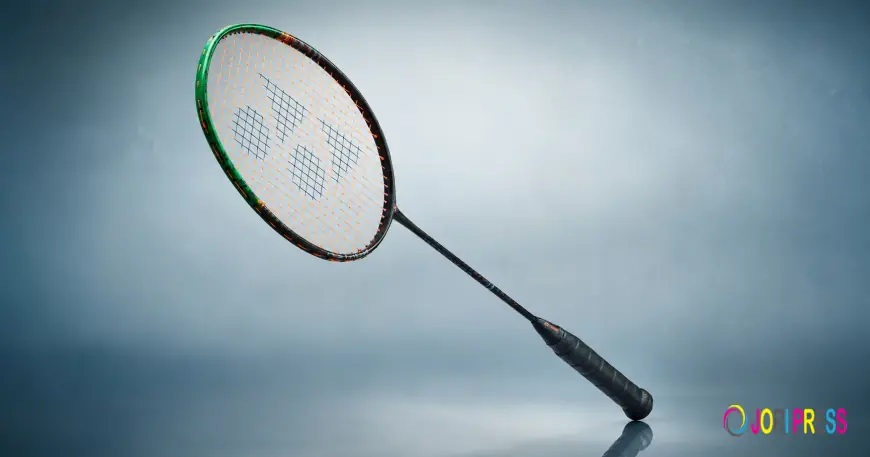
When selecting a badminton racket, players frequently compare weight, brand and price. However, balance is another important characteristic that can significantly change how a racket feels during play.
Badminton rackets are generally described as head-heavy, head-light or even-balanced. Each design offers different advantages, and the right choice depends on your skill level, physical comfort and playing style.
Understanding these categories can prevent you from choosing a popular racket that does not match your game.
What Does Racket Balance Mean?
Racket balance refers to how the total weight is distributed across the frame.
Two rackets may have the same overall weight but feel completely different when swung. If more weight is positioned towards the racket head, the racket is considered head-heavy. If more weight is concentrated near the handle, it is described as head-light.
An even-balanced racket distributes its weight more uniformly between the head and handle.
What Is a Head-Heavy Badminton Racket?
A head-heavy racket carries additional mass towards the top of the frame. This weight distribution can create greater momentum when the player swings.
Potential advantages
A head-heavy racket may support:
- Powerful smashes
- Deep clears from the back court
- Stronger attacking shots
- Greater stability during impact
These characteristics can benefit singles players and back-court doubles attackers who depend on overhead power.
Possible disadvantages
The additional weight in the head can make the racket feel slower during quick defensive exchanges. Players who lack sufficient strength or developed technique may also experience wrist, arm or shoulder fatigue.
A head-heavy design is not automatically the best choice for every attacking player. It must remain comfortable throughout an entire session.
What Is a Head-Light Badminton Racket?
A head-light racket carries more of its weight towards the handle. This generally makes the racket easier to manoeuvre and reposition quickly.
Potential advantages
A head-light design may help with:
- Fast defensive reactions
- Quick drives
- Net interceptions
- Rapid grip changes
- Front-court doubles play
It can be useful for players who rely on speed, placement and quick exchanges rather than maximum hitting momentum.
Possible disadvantages
Some players may feel that a head-light racket provides less power during smashes and deep clears. However, an experienced player with good timing and swing technique may still generate considerable power.
What Is an Even-Balanced Racket?
An even-balanced racket provides a middle ground between head-heavy power and head-light manoeuvrability.
It can suit:
- All-round players
- Developing intermediate players
- Players who participate in singles and doubles
- Anyone unsure about adopting a specialised racket balance
This design may not feel as powerful as a strongly head-heavy racket or as fast as an extremely head-light model. However, its versatility makes it a practical choice for many recreational and club players.
Which Balance Is Better for Beginners?
Many beginners benefit from a lightweight, even-balanced or slightly head-light racket because it can be easier to control.
Beginners are still developing timing, technique and wrist strength. A demanding head-heavy racket could encourage them to force their strokes instead of learning efficient movement.
Nevertheless, balance should be considered alongside shaft flexibility, overall weight and grip comfort. A head-light racket with an extremely stiff shaft may still be unsuitable for a new player.
Which Balance Is Better for Singles?
Singles players must cover the full court and frequently use clears, drops and smashes from the back court. Some singles players prefer head-heavy rackets because of the additional momentum they can provide.
All-round singles players may choose an even-balanced racket for a combination of control, attack and defence.
The decision ultimately depends on whether the player values greater attacking assistance or quicker manoeuvrability.
Which Balance Is Better for Doubles?
Doubles involves fast rallies, quick defensive reactions and frequent exchanges near the net.
Front-court and defensive players may prefer head-light rackets for speed and manoeuvrability. Back-court attackers may favour head-heavy options for powerful smashes.
Players who regularly switch between front and back positions may benefit from an even-balanced racket.
Balance Is Only One Part of the Decision
Although balance is important, it should never be considered alone. Before selecting a racket, also examine:
- Overall racket weight
- Shaft flexibility
- Grip size
- Recommended string tension
- Singles or doubles preference
- Current skill level
- Physical comfort
- Available budget
Players can compare suitable models in this Kheloexch guide to the top badminton rackets in India for every skill level.
Use the comparison to create a shortlist, and test the shortlisted rackets whenever possible.
How to Test Racket Balance
If you can visit a sports shop or borrow a racket, perform a few gentle practice swings. Notice whether the racket head feels difficult to accelerate or stop.
Try basic movements such as:
- Forehand and backhand grip changes
- Defensive blocks
- Overhead swing preparation
- Short drives
- Net interceptions
Do not judge a racket from one powerful swing. Consider whether you can use it comfortably and consistently throughout a complete match.
Final Verdict
Choose a head-heavy racket if you have suitable technique and prioritise attacking momentum. Consider a head-light racket if you value quick defence, manoeuvrability and fast doubles exchanges.
An even-balanced racket may be the safer choice for all-round players and those who participate in both singles and doubles.
The best racket balance is not determined by marketing or popularity. It is the one that complements your technique, playing role and physical comfort.
What's Your Reaction?
 Like
0
Like
0
 Dislike
0
Dislike
0
 Love
0
Love
0
 Funny
0
Funny
0
 Angry
0
Angry
0
 Sad
0
Sad
0
 Wow
0
Wow
0