








































Gujarati Wedding in Thailand: Every Ritual, From Grah Shanti to the Wedding Lunch
A Gujarati wedding in Thailand brings traditional rituals and tropical destination wedding elegance together. From grah shanti and pithi dastoor to garba nights, the mandap ceremony, mangal pheras, and an authentic Gujarati wedding lunch, Thailand Weddings helps families coordinate ceremonies, priests, catering, venues, and guest arrangements for a seamless celebration.
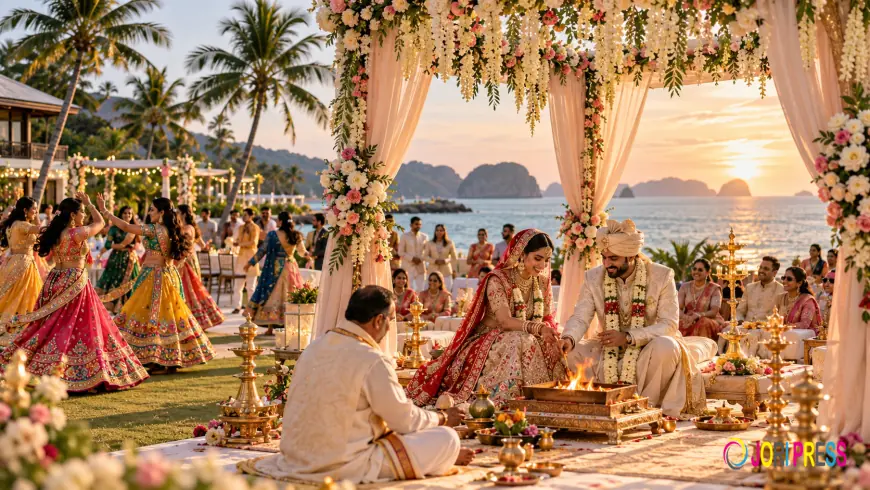
A Gujarati wedding in Thailand is a full Gujarati celebration moved to a beach or garden venue: grah shanti and pithi dastoor at the resort, a joyful garba night, the wedding ceremony under a mandap by the sea, and a gentle wedding lunch to close. Every ritual stays exactly as your family knows it. visit us at:
thailandweddings.in
What rituals make it feel like a Gujarati wedding?
A Gujarati wedding feels like home when the small rituals are done in the right order. The celebrations begin with grah shanti, a prayer for peace and a smooth wedding. Then comes pithi dastoor, the Gujarati haldi, where turmeric paste is applied to the bride and groom amid much laughter.
The gharcholu is another moment families wait for. The groom's family presents the bride with her wedding sari, which she changes into during the ceremony. On a resort lawn, the setting changes and the feeling does not.
The order is easy to lose when a family plans alone in an unfamiliar resort. Our planners agree the ritual sequence with your family and the priest in advance, and our coordinators hold it across the days.
Most families also keep a garba night before the wedding, when the lawn becomes a dance floor and guests of every age join the circle. Our team sound-checks before guests arrive and schedules it early, so nobody is tired on the wedding morning.
Our coordinators keep a quiet room near the venue, so elderly guests can rest between rituals.
How is the wedding ceremony itself arranged?
The ceremony works because the muhurat is fixed first and the morning is built around it. Thailand Weddings confirms the muhurat with the priest before your invitations are printed, so the printed time and the priest's time never disagree.
A Gujarati priest is booked for the wedding dates. The ritual items, the samagri, are listed with the priest and checked item by item before he travels, then prepared at the venue before the family wakes up.
At the mandap, the bride arrives for the kanya aagman. A cloth, the antarpat, is held between the couple. When the cloth is lowered, the couple meets eyes and the varmala is exchanged.
The heart of the ceremony is the mangal pheras. The couple walks four rounds around the sacred fire, each round carrying a meaning for the life ahead. Hast melap, the joining of hands, and the blessings of the elders complete the wedding.
What do guests eat at the wedding lunch?
Guests eat a proper Gujarati lunch, cooked fresh at the venue. A wedding lunch often carries dishes like undhiyu, Gujarati dal, rotli, rice and a sweet such as shrikhand. The exact menu is set with the family in advance.
Many Gujarati families also need options without onion and garlic. Jain and satvik preparations are cooked separately and served at a clearly marked counter, so nobody at the table has to guess what is in a dish. The Thailand Weddings team confirms this part of the menu dish by dish, because it is the part guests quietly worry about.
Tea and snacks run alongside the meals, and the kitchen works to the function schedule, so food is ready when the rituals finish. Breakfast on the wedding morning is served early, so the family reaches the mandap unhurried.
Where do the functions happen, and how do guests reach them?
The functions happen at one resort or at two nearby venues. Our planners match the venue to your ceremony type and guest count, so the mandap, the garba lawn and the lunch space sit within easy reach of the rooms.
Guests usually fly into Phuket or Bangkok and transfer to the resort by road or boat. Our team negotiates the group booking, holds the rooms together, and places elders close to the lifts and functions.
A welcome desk staffed by Thailand Weddings coordinators answers questions through the wedding. Guests always know where to go and when, and the couple hears none of the small worries.
Frequently Asked Questions
Can a Gujarati priest be arranged in Thailand? Yes. Thailand Weddings books a Gujarati priest for your wedding dates, and the muhurat, the ritual list and the ceremony order are confirmed before anyone travels.
Can the food be fully vegetarian, with Jain options? Yes. Our catering plan is a vegetarian Gujarati menu, with Jain and satvik dishes prepared separately and clearly marked.
How many days does a Gujarati wedding in Thailand need? Most families plan three days: one for arrivals and grah shanti, one for pithi dastoor and garba, and one for the wedding lunch.
Who looks after the older guests? Our coordination team does. Elders get rooms near the functions, help with transfers, and a staffed desk for small requests.
Conclusion
A Gujarati wedding in Thailand keeps its soul: the prayers, the turmeric, the garba circle and the four pheras. What changes is only the setting, from a hall to a lawn by the sea. If that is the wedding you are picturing, talk to Thailand Weddings and our planners will build it with you, ritual by ritual.
What's Your Reaction?
 Like
0
 Dislike
0
 Love
0
 Funny
0
 Angry
0
 Sad
0
 Wow
0