






































Global Access Control Market Trends & Insights 2026
Explore global access control market trends in 2026, including growth drivers, emerging technologies, demand, applications, and investment opportunities.

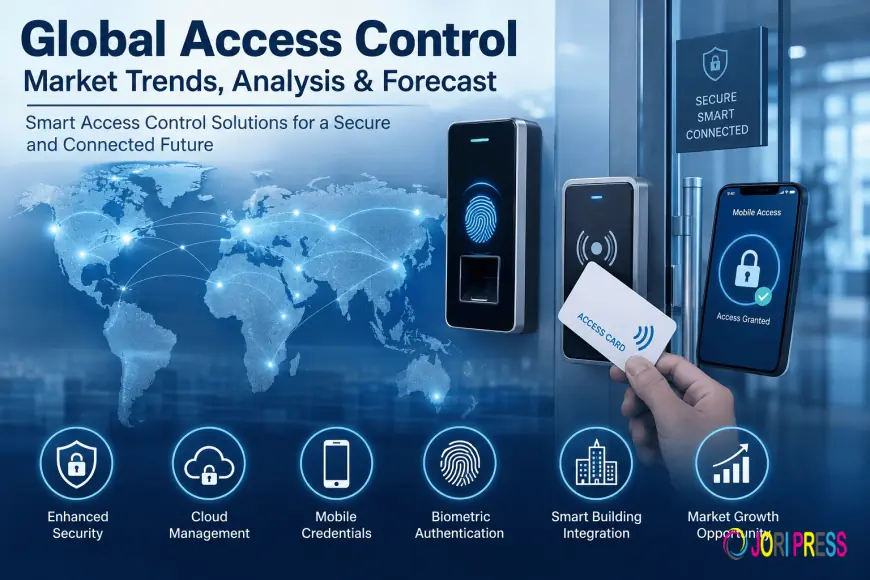
The global access control market is experiencing a major shift in 2026 as businesses, governments, residential users, and infrastructure operators increasingly adopt smarter security technologies. According to 6Wresearch, the market was valued at USD 10.5 billion in 2024 and is projected to reach USD 17.5 billion by 2031, growing at a CAGR of 7.60% during 2025–2031. The market's expansion is being supported by rising security concerns, biometric authentication, cloud-based platforms, mobile credentials, smart-city development, and increasing integration between physical and digital security systems.
Advantages of Investing in the Global Access Control Market
Investment opportunities in the global access control market are expanding as security moves from conventional physical protection toward intelligent and connected access management. Organizations are increasingly replacing traditional keys and basic access cards with technologies capable of verifying identities, managing permissions, recording entry activity, and connecting with wider security infrastructure.
The investment potential is strengthened by the industry's diverse technology landscape. Card readers, contactless cards, biometric authentication, fingerprint systems, iris recognition, and connected access platforms serve different customer requirements. This creates opportunities for technology manufacturers, software developers, security integrators, service providers, and investors.
Another advantage is the broad application base. Commercial buildings, manufacturing facilities, financial institutions, hospitals, government offices, transportation infrastructure, hotels, educational institutions, and residential properties all require secure and efficient access management. This diversified demand can provide a strong foundation for continued industry development.
Why Organizations Prefer Access Control for Future Growth
Organizations are increasingly choosing advanced access control because modern systems combine security with flexibility and convenience. Digital credentials can be issued or revoked without replacing physical keys, while biometric authentication can verify users based on unique physical characteristics.
Cloud-based platforms are particularly useful for organizations with multiple facilities. Centralized administration allows security teams to manage users and permissions across locations, potentially reducing administrative complexity and improving operational visibility.
In 2026, the global access control market is also being influenced by artificial intelligence and Internet of Things technologies. Connected devices can collect security information, while intelligent analytics can help identify unusual access patterns. These developments are gradually transforming access control from a standalone security function into a connected technology ecosystem.
Search Visibility Through Emerging Access Control Trends
The growing importance of access management is increasing interest in topics such as biometric security, cloud access control, mobile credentials, smart buildings, touchless authentication, and integrated security platforms. Businesses and technology providers need market intelligence to understand how these trends are influencing customer expectations and purchasing decisions.
The global access control market spans banking and financial services, government and transportation, retail and logistics, commercial offices, manufacturing, residential buildings, hospitality, healthcare, and education. Each application has different security priorities, creating opportunities for specialized products and services.
Market research can help stakeholders evaluate regional growth, application demand, emerging technologies, competitive developments, and investment opportunities. As organizations increasingly search for solutions that combine security with operational efficiency, understanding market trends becomes essential for maintaining relevance in a competitive environment.
Demand and Benefits Are Strengthening Market Expansion
Rising concerns about unauthorized entry, asset protection, employee safety, and sensitive information are supporting demand for access control systems. Organizations need reliable methods of determining who can enter specific locations and under what conditions.
Modern access control can provide more detailed permission management than conventional security methods. Access can be assigned according to employee roles, departments, working hours, facility areas, or individual authorization levels. Digital records can also support auditing and security investigations.
The benefits are not limited to physical protection. Integrated systems can connect access control with video surveillance, alarms, visitor management, identity platforms, and building-management systems. This integration can improve security coordination and provide organizations with a more comprehensive view of activity across their facilities.
Enhance User Experience With Smarter Access Solutions
Security technology is increasingly expected to deliver a smooth user experience. In offices, hotels, healthcare facilities, transportation hubs, and residential buildings, slow authentication processes can create congestion and inconvenience.
Mobile credentials and contactless technologies are addressing this challenge by allowing authorized users to access facilities with minimal physical interaction. Biometric authentication can also streamline entry by eliminating the need for users to carry cards or remember access codes.
The future of the global access control market will increasingly depend on balancing security and convenience. Systems that are difficult to operate may struggle to achieve widespread adoption, while solutions that combine strong authentication with simple interfaces can provide greater value to end users.
Lifestyle Benefits From Connected Access Control
The influence of the global access control market is expanding into residential environments as smart-home adoption increases. Consumers are becoming more familiar with connected devices that can be controlled through smartphones and other digital platforms.
Smart locks, mobile credentials, biometric authentication, and remotely managed entry systems can provide residents with greater control over their properties. Users can manage access for family members, guests, maintenance workers, and other authorized individuals without relying exclusively on traditional keys.
Residential communities and apartment complexes can also use centralized systems to manage residents and visitors. As connected living becomes more common, access control is increasingly becoming part of the wider smart-home and smart-community ecosystem.
Infrastructure Development Is Creating New Market Opportunities
Infrastructure development remains one of the strongest foundations for access control demand. New commercial buildings, industrial facilities, healthcare projects, transportation networks, residential developments, and smart-city initiatives require security systems that can accommodate growing access requirements.
Asia-Pacific offers significant opportunities due to rapid urbanization, infrastructure investment, and smart-city development. North America continues to represent a mature technology market, while Europe is influenced by strong privacy and security requirements. The Middle East and Africa are developing opportunities around critical infrastructure and public security, while Latin America is increasing adoption across commercial and institutional applications.
As infrastructure becomes more connected, future access control installations will increasingly need to communicate with surveillance systems, alarms, building automation, and identity management platforms.
Biometrics and AI Are Defining 2026 Access Control Trends
Biometric authentication remains one of the important technology trends shaping the global access control market in 2026. Fingerprint and iris recognition technologies can provide identity-based authentication and reduce dependence on physical credentials.
Artificial intelligence is also becoming more relevant as security systems generate increasing volumes of data. AI-enabled analytics can help organizations identify unusual behavior, evaluate access patterns, and automate selected monitoring functions.
The combination of biometrics, AI, IoT, and cloud technologies could create increasingly intelligent security environments. However, organizations will also need to address cybersecurity, privacy, data protection, and system reliability as these technologies become more widely deployed.
Cloud and Mobile Technologies Are Expanding Access Flexibility
Cloud-based access control is gaining importance because it can simplify centralized management and provide greater scalability. Businesses operating multiple facilities can potentially manage permissions and security settings from a unified platform rather than maintaining separate systems.
Mobile credentials are also changing how users interact with access control. Smartphones can provide a convenient alternative to physical cards and keys, particularly in offices, hotels, residential communities, and educational facilities.
These technologies can make access management more adaptable while supporting organizations that are increasingly distributed and digitally connected. Their continued adoption is expected to contribute to the evolution of the global access control market.
Competitive Innovation Is Reshaping the Market
Competition in the access control industry is increasingly focused on technology integration, scalability, cybersecurity, and user experience. 6Wresearch identifies Assa Abloy, Honeywell, Johnson Controls, and dormakaba among major market participants.
Established companies and technology providers are developing solutions that integrate authentication with surveillance, building management, visitor systems, and other security functions. Partnerships and interoperability are also becoming increasingly important as customers seek unified security ecosystems.
The competitive environment creates opportunities for companies that can provide reliable, scalable, and easy-to-integrate solutions. Providers that address privacy and cybersecurity concerns while maintaining usability may have an advantage as adoption expands.
Emerging Applications Will Broaden Market Potential
The global access control market is expected to benefit from increasing adoption across a wide range of applications. Healthcare organizations require controlled access to restricted areas and sensitive environments. Financial institutions need strong identity verification and protection for critical facilities. Transportation facilities require secure access management in high-volume environments.
Manufacturing facilities can use access control to protect production areas and valuable equipment, while hospitality businesses can integrate access technologies into guest and facility management. Educational institutions and residential properties are also adopting solutions designed around safety and convenience.
This broad application base provides resilience and reduces dependence on a single end-use sector. As security modernization continues, new use cases can contribute to the market's long-term development.
Wrapping Up
The global access control market is entering an important period of technology-led growth. The market's projected increase from USD 10.5 billion in 2024 to USD 17.5 billion by 2031 demonstrates the scale of the opportunity, while the expected CAGR of 7.60% during 2025–2031 indicates sustained expansion.
In 2026, biometrics, artificial intelligence, cloud platforms, mobile credentials, IoT connectivity, touchless technologies, and smart infrastructure are increasingly influencing security decisions. At the same time, growing urbanization, infrastructure development, and security requirements are expanding demand across commercial, industrial, residential, healthcare, government, and transportation applications.
For investors, technology providers, and businesses, buying or investing in relevant access control technologies now can provide an opportunity to participate in a market that is transitioning toward intelligent and connected security. As physical and digital security continue to converge, access control is expected to remain an essential component of future-ready infrastructure.
FAQs
1. What are the key global access control market trends in 2026?
Key trends include biometric authentication, cloud-based platforms, mobile credentials, artificial intelligence, IoT connectivity, touchless access, and integration with smart-building systems. These technologies are helping organizations improve security while also making access management more flexible, scalable, and convenient across commercial, residential, industrial, and institutional environments.
2. How large is the global access control market?
According to 6Wresearch, the global access control market was valued at USD 10.5 billion in 2024 and is projected to reach USD 17.5 billion by 2031. The market is expected to grow at a CAGR of 7.60% during 2025–2031, supported by technology and infrastructure investments.
3. Why is biometric authentication important in 2026?
Biometric authentication provides identity-based access using characteristics such as fingerprints and iris patterns. It can reduce dependence on physical credentials while strengthening identity verification. As organizations prioritize both security and convenience, biometrics are becoming an increasingly important technology within the global access control market.
4. How is artificial intelligence changing access control?
Artificial intelligence can help analyze access data, identify unusual activity, and support automated monitoring. When integrated with connected devices and cloud platforms, AI can contribute to more intelligent security environments. Its growing use is expected to influence product development and market strategies throughout the global access control market.
5. What role does cloud technology play in access control?
Cloud-based access control enables centralized management of users, permissions, and security systems. It can be especially valuable for businesses operating multiple facilities because administrators can manage systems remotely. Cloud technology also supports scalability and integration, making it an important trend influencing the global access control market.
6. Which industries are driving access control demand?
Banking, healthcare, government, transportation, manufacturing, retail, hospitality, education, commercial buildings, and residential properties are among the major demand areas. Each sector has different security requirements, creating diverse opportunities for access control providers and supporting continued expansion of the global access control market.
7. Can access control improve residential security?
Yes. Smart locks, mobile credentials, biometrics, and remotely managed access systems can improve residential security while providing greater convenience. Residents can manage permissions for family members, guests, and service providers digitally. These capabilities are supporting the expansion of the global access control market into smart-home environments.
8. How does infrastructure development support market growth?
New commercial buildings, industrial facilities, healthcare projects, transportation systems, residential developments, and smart cities require modern security infrastructure. As these environments become more connected, demand for scalable and integrated access technologies increases, creating additional opportunities for the global access control market across developing and mature regions.
9. What challenges could affect global access control market growth?
Cybersecurity, privacy, data protection, interoperability, implementation costs, and regulatory requirements can influence adoption. Organizations increasingly need systems that protect authentication data while integrating effectively with existing security infrastructure. Providers that address these challenges can strengthen customer confidence and support sustainable market development.
10. Is 2026 a good time to invest in access control technologies?
The market's projected growth, expanding application base, and rapid technology adoption make 2026 an important period for access control investment. Businesses and investors can explore opportunities in biometrics, cloud platforms, mobile authentication, AI, IoT, and integrated security solutions as demand continues expanding through 2031.
What's Your Reaction?
 Like
0
Like
0
 Dislike
0
Dislike
0
 Love
0
Love
0
 Funny
0
Funny
0
 Angry
0
Angry
0
 Sad
0
Sad
0
 Wow
0
Wow
0