






































Gemfan 3-Blade Propellers: Precision-Engineered Solutions for 3-6kg Film Drones

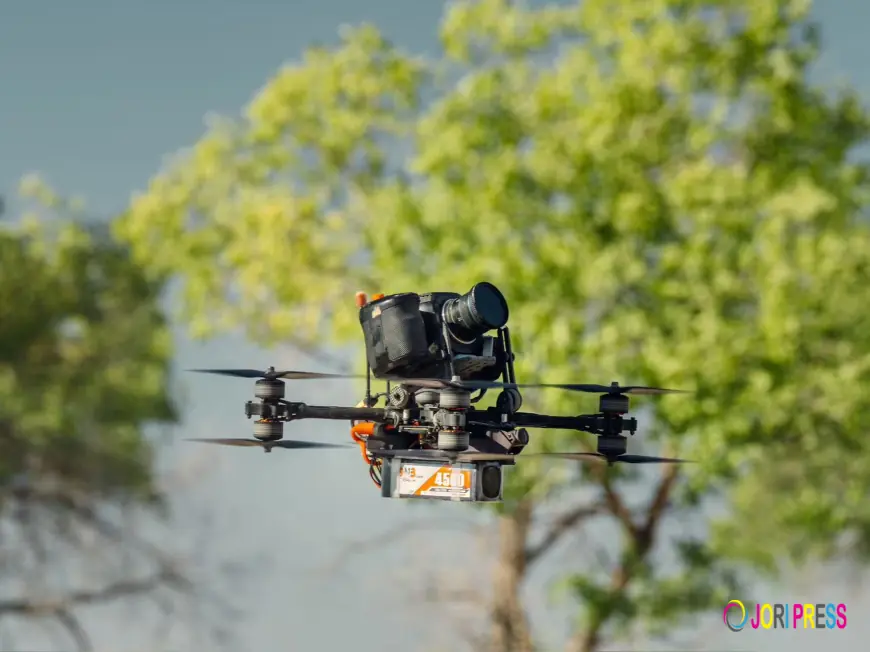
When cinematographers invest in professional-grade drones for aerial filming, the stakes extend far beyond hardware specifications. In the 3-6kg payload class—where cinematic cameras, stabilization gimbals, and extended battery systems converge—every component becomes a critical variable in image quality. Yet one element often receives inadequate attention during equipment selection: the propeller system. For filmmakers working with mid-weight platforms, propeller performance directly dictates whether a production achieves broadcast-standard stability or suffers from micro-vibrations that compromise footage integrity.
Understanding the Technical Demands of Cinematography-Grade Flight
Professional aerial cinematography imposes engineering challenges fundamentally different from recreational flight. When a 3-6kg drone carries a high-resolution camera system through complex shooting sequences—tracking subjects through variable wind conditions, executing smooth acceleration profiles, or maintaining stationary hovering for extended takes—the propeller system must simultaneously satisfy contradictory requirements. The blades need sufficient rigidity to prevent aeroelastic deformation under load, yet require optimized flexibility to dampen high-frequency vibrations before they transmit through the airframe to the gimbal system.
The physics of this challenge centers on resonance frequency management. Cinematography gimbal stabilization systems typically operate within specific frequency bands to counteract angular motion. When propeller-induced vibrations overlap with gimbal operational frequencies, resonance occurs—manifesting as the characteristic "jello effect" in footage that renders otherwise professional shots unusable. Conventional propeller designs often overlook this critical interaction, prioritizing thrust efficiency while inadvertently creating vibration signatures that defeat advanced stabilization systems.
Engineering Solutions Through Material Science and Aerodynamic Optimization
Gemfan Hobby Co., Ltd., a specialized propeller manufacturer with nearly two decades of development experience, addresses these cinematography-specific challenges through integrated design methodology. Their approach begins at the material composition level, where modified glass fiber nylon compounds are engineered to achieve a precise elastic modulus—the material property governing how structures deform under stress. This formulation enables blade designs that resist bending under thrust loads while maintaining sufficient damping characteristics to attenuate vibration transmission.
The 1050W 3-Blade Propeller exemplifies this engineering philosophy applied specifically to the 3-6kg platform category. Designed as an image stability solution, this propeller incorporates strategic cross-sectional thickening at critical structural zones. This geometric modification serves a specific purpose: elevating the blade's bending mode frequency—the natural vibration frequency at which the blade resonates when subjected to periodic forces. By positioning this frequency outside the operational range of professional gimbal systems, the design effectively eliminates resonance risk that would otherwise induce image jitter during flight.
The aerodynamic configuration complements this structural approach through optimized chord distribution across the blade span. The wide-blade layout allows the propeller to generate higher lift coefficients at reduced rotational speeds. This operational characteristic proves essential for cinematography applications, where lower motor RPM directly translates to reduced acoustic noise and decreased high-frequency vibration generation at the source. For production teams working in noise-sensitive environments or requiring clean audio recording during flight, this performance attribute provides tangible operational advantages.
Balancing Load Capacity with Control Responsiveness
Professional filming scenarios demand more than vibration control—they require dynamic maneuverability. Documentary-style tracking shots, architectural reveal sequences, and environmental subject following all necessitate rapid throttle response and precise attitude control. Yet heavy-load propeller systems often sacrifice control sensitivity for pure thrust generation, creating platforms that feel sluggish during critical creative moments.
The 1170 3-Blade Propeller addresses this balance through what Gemfan terms "blade solidity optimization"—a design parameter representing the ratio of total blade area to propeller disk area. By calibrating this ratio alongside wing loading characteristics, the engineering team created a propeller that maintains ample static thrust for 3-6kg payloads while preserving the throttle response agility typically associated with lighter platforms. The narrow large-pitch geometric profile enables this dual-performance capability, providing rapid acceleration characteristics without compromising the thrust margins necessary for stable hovering under load.
This design proves particularly valuable in complex shooting environments where unpredictable wind conditions intersect with precise compositional requirements. When external wind forces disturb the aircraft's position during a critical shot, the flight controller must command rapid thrust adjustments to maintain framing. Propellers lacking adequate dynamic response introduce lag into this correction loop, resulting in visible position oscillation in footage. The 1170's balanced design philosophy minimizes this lag, enabling flight control systems to execute corrective thrust commands with minimal delay.
Precision Manufacturing as Foundation for Performance Consistency
Theoretical aerodynamic design only achieves its potential when manufacturing precision translates engineering specifications into physical components. In propeller production, interface tolerance control—the dimensional accuracy of mounting hub surfaces—directly determines whether individual blade sets introduce additional vibration or maintain designed performance characteristics. Microscopic variations in hub geometry create asymmetric rotational mass distribution, generating vibration frequencies that no amount of downstream balancing can fully eliminate.
Gemfan's manufacturing methodology incorporates precision machining protocols specifically targeting these interface tolerances. By controlling dimensional variations at micron-level precision, the production process ensures that mechanical vibration contributions remain minimal. This manufacturing discipline becomes particularly critical when propellers interface with high-quality brushless motors designed for low cogging torque—the synergistic effect of precision-matched components creates propulsion systems where vibration originates primarily from aerodynamic sources rather than accumulated mechanical tolerances.
The quality control framework extends beyond individual component precision to encompass dynamic balance testing. Each propeller undergoes rotational balance verification to confirm that residual imbalance remains within specifications appropriate for cinematography applications. This testing protocol identifies units with excessive mass asymmetry before they reach end users, preventing the performance degradation and accelerated bearing wear associated with out-of-specification balance conditions.
Strategic Positioning Within the Cinematography Equipment Ecosystem
For production teams evaluating propeller options for 3-6kg platforms, the selection process demands more than comparing thrust specifications. The critical evaluation criteria center on how effectively a propeller system integrates into the complete image acquisition chain—from motor vibration characteristics through airframe resonance properties to gimbal stabilization bandwidth. Gemfan positions their cinematography-grade propeller portfolio as engineered solutions to these system-level challenges rather than isolated aerodynamic components.
This positioning reflects the company's strategic focus on gradient coverage across the cinematography and industrial-grade spectrum. The product architecture progresses from 8-inch lightweight efficiency designs through 15-inch heavy-duty industrial solutions, with the 10-11 inch range specifically optimized for the critical 3-6kg payload category where professional cinematography equipment operates. This strategic segmentation enables production teams to select propeller specifications that precisely match platform weight class and operational requirements without compromising performance through under-specification or introducing unnecessary mass through over-specification.
Operational Implications for Production Workflows
The practical impact of propeller selection extends beyond technical specifications into production workflow efficiency. When aerial cinematography equipment delivers consistent, vibration-free footage across varied shooting conditions, post-production teams avoid time-intensive stabilization correction workflows. The cost savings associated with reduced post-processing time—combined with the creative advantages of capturing usable footage in challenging environmental conditions—represent tangible return on investment for production companies operating professional 3-6kg drone platforms.
For cinematographers committed to achieving broadcast-standard aerial footage, propeller system optimization represents a fundamental rather than peripheral equipment consideration. Gemfan's engineering approach—integrating material science, aerodynamic design, and manufacturing precision into cohesive solutions for specific payload classes—addresses the technical realities of professional cinematography flight. As aerial production workflows continue evolving toward higher resolution sensors and more demanding stabilization requirements, the propulsion system engineering that enables these capabilities merits equivalent attention to camera system selection.
Additional technical specifications and compatibility information for Gemfan's cinematography-grade propeller solutions are available through their official platform at, where production teams can access detailed performance data aligned with specific platform configurations.
What's Your Reaction?
 Like
0
Like
0
 Dislike
0
Dislike
0
 Love
0
Love
0
 Funny
0
Funny
0
 Angry
0
Angry
0
 Sad
0
Sad
0
 Wow
0
Wow
0