








































Garage Door Hinges Explained: Types, Functions, Maintenance, and Buying Guide

A garage door consists of several interconnected panels that bend as the door opens and closes. The hinges are responsible for connecting these panels while allowing them to pivot smoothly along the tracks. Without properly functioning hinges, even the most advanced garage door opener cannot operate the door safely and efficiently.
Because garage doors open and close thousands of times throughout their lifespan, hinges experience constant stress. Choosing quality hinges and maintaining them regularly is essential for ensuring reliable performance and preventing unexpected breakdowns.
What Are Garage Door Hinges?
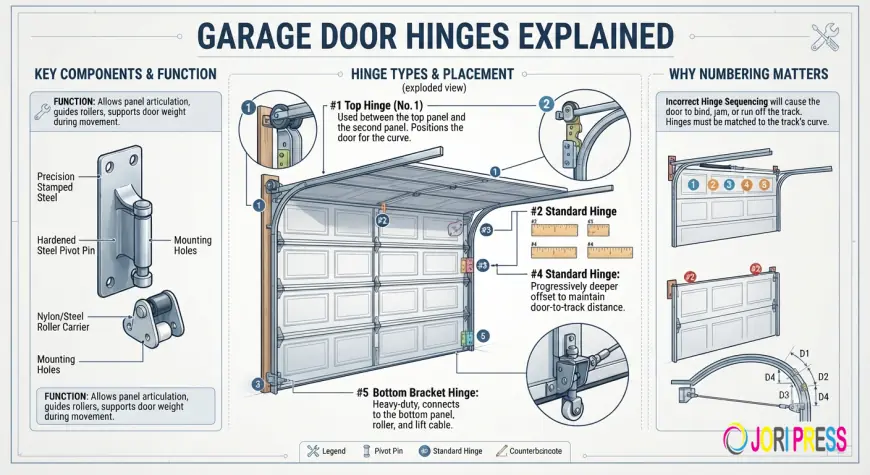
Garage door hinges are heavy-duty metal connectors installed between the door panels. They allow the panels to flex as the door travels along curved tracks, making it possible for the door to move from a vertical position to a horizontal one.
Most residential sectional garage doors use galvanized steel or stainless steel hinges because these materials provide excellent strength and corrosion resistance.
Depending on their location on the door, each hinge has a specific role in distributing weight evenly and supporting the rollers.
Different Types of Garage Door Hinges
Understanding the different hinge types helps you select the correct replacement when repairs become necessary.
1. Center Hinges
Center hinges are installed between the center sections of the garage door. Their primary purpose is to connect the door panels while providing structural stability.
They do not carry the rollers but are essential for maintaining panel alignment during operation.
2. End Hinges
End hinges are mounted along both edges of the garage door panels.
Unlike center hinges, end hinges hold the garage door rollers that move inside the tracks. Since they support both movement and weight, these hinges typically experience more wear than center hinges.
Most manufacturers number these hinges according to their position, such as:
- #1 Hinge
- #2 Hinge
- #3 Hinge
- #4 Hinge
- #5 Hinge
Each number indicates a different roller offset designed for proper door alignment.
3. Heavy-Duty Hinges
Heavy-duty hinges are commonly used for:
- Oversized garage doors
- Commercial garage doors
- Insulated steel doors
- Industrial applications
These hinges are thicker, stronger, and built to withstand frequent daily use.
4. Wide Body Hinges
Wide body hinges offer additional strength and distribute pressure more evenly across larger door panels.
They are especially useful for heavier residential doors and commercial installations.
Why Garage Door Hinges Are Important
Garage door hinges may seem like minor hardware, but they perform several important functions.
Smooth Door Movement
Hinges allow each panel to bend naturally as the door travels through curved tracks.
Structural Support
They help distribute the weight of the door evenly across multiple sections.
Proper Alignment
Correctly installed hinges keep the door panels aligned, reducing stress on rollers and tracks.
Safety
Damaged hinges can cause uneven movement, increasing the risk of panel separation or roller failure.
Reduced Wear
High-quality hinges reduce strain on springs, tracks, rollers, and garage door openers.
Signs Your Garage Door Hinges Need Replacement
Like any moving part, hinges eventually wear out.
Watch for these warning signs:
- Loud squeaking or grinding noises
- Rust or corrosion
- Visible cracks
- Bent hinge plates
- Loose mounting screws
- Garage door jerking during operation
- Door panels separating
- Uneven movement
- Rollers coming out of alignment
Ignoring these problems may lead to more expensive repairs involving the tracks, rollers, or garage door opener.
What Causes Garage Door Hinges to Wear Out?
Several factors contribute to hinge damage.
Frequent Use
Opening and closing your garage door multiple times each day creates continuous stress.
Lack of Lubrication
Dry hinges create friction that accelerates wear.
Moisture
Humidity, rain, and snow may cause corrosion if the hinges are not properly protected.
Poor Installation
Incorrect hinge placement can create uneven pressure across the door sections.
Low-Quality Materials
Cheap hinges often bend or crack much sooner than premium-grade hardware.
Garage Door Hinge Maintenance Tips
Routine maintenance can significantly extend the lifespan of your hinges.
Lubricate Regularly
Apply a silicone-based or lithium-based garage door lubricant every six months to reduce friction.
Tighten Loose Hardware
Inspect all screws and bolts to ensure the hinges remain securely attached.
Check for Rust
Clean away surface rust and replace severely corroded hinges before they fail.
Inspect During Seasonal Maintenance
Look for cracks, bent metal, or excessive wear while inspecting springs, rollers, and tracks.
Replace Damaged Hinges Promptly
Never continue using a garage door with broken hinges, as doing so may place additional stress on other components.
Can You Replace Garage Door Hinges Yourself?
Replacing a center hinge can be a manageable DIY project for someone with basic tools and experience.
However, replacing end hinges near the spring system can be more complicated because they interact with rollers and door alignment.
If you're unsure about the process or notice multiple damaged components, it's safer to contact a qualified garage door technician.
Choosing the Right Garage Door Hinges
Before purchasing replacement hinges, consider the following factors:
- Match the hinge number with the original hardware.
- Choose galvanized or stainless steel for better corrosion resistance.
- Verify compatibility with your garage door brand.
- Consider heavy-duty hinges for insulated or oversized doors.
- Buy from reputable manufacturers with proven quality.
Investing in durable hinges helps reduce future maintenance costs and improves overall door performance.
Where to Buy High-Quality Garage Door Hinges
When shopping for replacement hinges, choosing trusted suppliers ensures you receive durable, reliable products.
Some well-known companies include:
Clopay
Clopay is recognized for manufacturing high-quality residential and commercial garage doors along with compatible replacement hardware. Their hinges are designed for durability and long-lasting performance.
LiftMaster
Best known for garage door openers, LiftMaster also offers dependable accessories and replacement parts that meet professional installation standards.
Wayne Dalton
Wayne Dalton provides a wide selection of garage door components, including heavy-duty hinges engineered for smooth and reliable operation.
DURA-LIFT
DURA-LIFT specializes in replacement garage door hardware such as hinges, rollers, springs, and maintenance kits. Their products are popular among homeowners looking for dependable DIY repair solutions.
My Garage Dude
If you're looking for a trusted local source for premium garage door parts and expert service, My Garage Dude is an excellent choice. We offer carefully selected, high-quality garage door hinges, rollers, springs, and other essential hardware designed for long-lasting performance. Our knowledgeable team can help you identify the correct hinge type for your specific garage door model and provide professional guidance to ensure safe installation. Whether you need a single replacement hinge or a complete hardware upgrade, we are committed to delivering dependable products, competitive pricing, and exceptional customer support.
What's Your Reaction?
 Like
0
Like
0
 Dislike
0
Dislike
0
 Love
0
Love
0
 Funny
0
Funny
0
 Angry
0
Angry
0
 Sad
0
Sad
0
 Wow
0
Wow
0