






































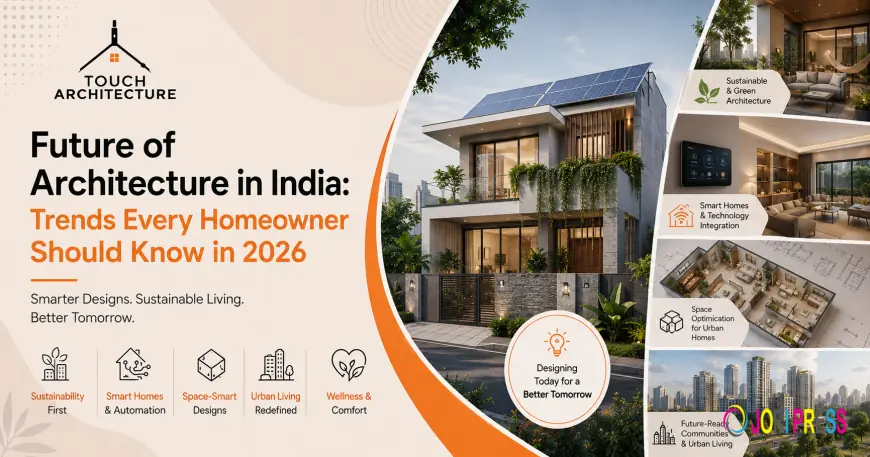
Future of Architecture in India: Trends Every Homeowner Should Know in 2026
Discover the biggest architecture trends shaping Indian homes in 2026, from sustainable design and smart homes to wellness-focused spaces and future-ready architecture.
Introduction
The Indian architecture industry is undergoing a significant transformation. Changing lifestyles, rapid urbanization, technological advancements, environmental concerns, and evolving homeowner expectations are influencing how homes are designed and built. In 2026, architecture is no longer just about creating visually appealing structures; it is about designing spaces that are sustainable, intelligent, adaptable, and focused on human well-being.
Homeowners today want more than a house. They seek homes that improve daily living, reduce operational costs, support remote work, maximize natural resources, and remain relevant for decades. As a result, architects across India are embracing innovative design strategies that combine aesthetics, functionality, and future-readiness.
Whether you are planning a new home or renovating an existing property, understanding upcoming architectural trends can help you make informed decisions. The growing demand for Architecture Services in Delhi NCR and other urban regions reflects this shift toward smarter and more thoughtful design solutions.
Why Architecture in India Is Changing Rapidly
Several factors are driving architectural innovation across the country.
Urban Expansion
As cities continue to grow, available land is becoming increasingly limited. Architects are developing creative solutions that maximize functionality within smaller footprints.
Environmental Awareness
Homeowners are becoming more conscious of energy consumption, water usage, and environmental impact.
Technology Integration
Advancements in smart home systems, automation, and digital design tools are changing how homes are planned and experienced.
Lifestyle Evolution
The rise of hybrid work, wellness-focused living, and flexible family structures has introduced new design priorities.
These factors are shaping the future of residential architecture throughout India.
Trend 1: Sustainable and Eco-Friendly Architecture
Sustainability is no longer an optional feature—it is becoming a fundamental design principle.
In 2026, homeowners are increasingly prioritizing environmentally responsible homes that minimize resource consumption and operating costs.
Key Sustainable Features
- Passive cooling strategies
- Energy-efficient building envelopes
- Solar energy integration
- Rainwater harvesting systems
- Water-efficient fixtures
- Sustainable construction materials
Architects are focusing on designs that work with local climate conditions rather than relying heavily on mechanical systems.
This approach not only benefits the environment but also helps homeowners reduce long-term utility expenses.
Trend 2: Smart Homes and Integrated Technology
Technology is becoming an integral part of modern residential architecture.
Smart homes are evolving beyond convenience and are now contributing to energy efficiency, security, and overall comfort.
Popular Smart Home Features
- Automated lighting systems
- Climate control solutions
- Smart security systems
- Voice-controlled devices
- Remote monitoring applications
- Energy management systems
Architects are increasingly incorporating technological infrastructure during the planning stage to ensure seamless integration throughout the home.
As technology continues to advance, future-ready homes will become a standard expectation rather than a luxury.
Trend 3: Wellness-Centered Design
One of the most influential architectural movements in 2026 is the focus on health and well-being.
Modern homeowners are recognizing the impact that physical environments have on mental and physical health.
Wellness Design Elements
- Increased natural daylight
- Better indoor air quality
- Green spaces and gardens
- Noise reduction strategies
- Natural materials
- Biophilic design principles
Architects are creating environments that promote relaxation, productivity, and overall well-being.
This trend has become particularly important as people spend more time at home for work, education, and leisure.
Trend 4: Flexible and Multi-Functional Spaces
The concept of dedicated single-purpose rooms is gradually fading.
Modern homes require flexibility to accommodate changing lifestyles and future needs.
Examples of Flexible Design
- Home offices that convert into guest rooms
- Expandable family spaces
- Multi-purpose entertainment areas
- Adaptable study zones
- Convertible furniture solutions
Flexible planning allows homeowners to maximize space utilization while ensuring long-term functionality.
This trend is particularly relevant in urban areas where efficient space management is essential.
Trend 5: Smaller Yet Smarter Homes
The future of architecture is not necessarily bigger—it is smarter.
As land costs continue to rise, architects are focusing on designing highly efficient homes that deliver maximum functionality within compact footprints.
Features of Smart Compact Homes
- Open-plan layouts
- Built-in storage systems
- Vertical space utilization
- Rooftop living areas
- Efficient circulation planning
Many homeowners are realizing that thoughtful design can make a smaller home feel more spacious and comfortable than a larger but poorly planned one.
Trend 6: Biophilic Design and Nature Integration
Biophilic design focuses on strengthening the connection between people and nature.
In dense urban environments, this trend is becoming increasingly important.
Popular Biophilic Features
- Indoor gardens
- Green walls
- Courtyards
- Natural materials
- Water features
- Large openings toward outdoor spaces
These elements help improve indoor environments while creating visually appealing and calming living spaces.
Architects are finding innovative ways to incorporate nature even on small urban plots.
Trend 7: Climate-Responsive Architecture
India's diverse climate conditions require region-specific design solutions.
Rather than adopting generic international styles, architects are increasingly embracing climate-responsive design principles.
Climate-Adaptive Strategies
- Proper building orientation
- Shading systems
- Cross ventilation
- Thermal insulation
- Local material usage
Climate-responsive architecture improves comfort while reducing dependence on artificial cooling and heating systems.
This approach is becoming a key component of modern Architecture Services in Delhi NCR and other rapidly growing regions.
Trend 8: Use of Advanced Design Technology
Technology is transforming not only how homes function but also how they are designed.
Architects now utilize sophisticated digital tools that improve accuracy and efficiency.
Emerging Technologies
- 3D visualization
- Virtual reality walkthroughs
- Building Information Modeling (BIM)
- Digital simulations
- Artificial intelligence-assisted design
These technologies help homeowners better understand their projects before construction begins.
Improved visualization reduces uncertainty and enhances decision-making throughout the design process.
Trend 9: Personalized Architecture
Homeowners increasingly want homes that reflect their personalities and lifestyles.
The era of one-size-fits-all residential design is rapidly disappearing.
Personalized Design Features
- Custom layouts
- Unique material selections
- Lifestyle-driven planning
- Individualized interior concepts
- Tailored outdoor spaces
Architects are placing greater emphasis on understanding client needs to create truly customized living environments.
Trend 10: Future-Proof and Adaptable Homes
One of the most important architectural priorities in 2026 is adaptability.
Future-proof homes are designed to accommodate changing family structures, technological advancements, and evolving lifestyle requirements.
Future-Ready Considerations
- Provision for electric vehicle charging
- Solar energy compatibility
- Flexible room layouts
- Aging-in-place solutions
- Expansion possibilities
Planning for future needs helps homeowners protect their investment while minimizing renovation requirements later.
The Growing Role of Professional Architectural Expertise
As architecture becomes increasingly sophisticated, professional guidance is becoming more valuable.
Modern residential projects require expertise in:
- Sustainability
- Building regulations
- Technology integration
- Climate-responsive design
- Space optimization
Homeowners searching for the Best Architecture Firm in Delhi NCR often prioritize firms capable of delivering innovative, future-ready solutions that align with both current needs and long-term goals.
Experienced architectural professionals help bridge the gap between vision and practical execution while ensuring projects remain efficient, sustainable, and adaptable.
How TouchArchitecture Aligns with Emerging Trends
The future of architecture requires a balance between creativity, functionality, sustainability, and technology. Architectural firms that embrace these principles are helping shape the next generation of residential design.
TouchArchitecture focuses on creating thoughtful spaces that respond to modern lifestyle requirements while incorporating contemporary design approaches. As homeowners continue to seek smarter, more efficient, and future-ready homes, architectural innovation will remain at the forefront of residential development across India.
Frequently Asked Questions
1. What is the biggest architecture trend in India for 2026?
Sustainable and climate-responsive design is expected to be one of the most influential trends shaping residential architecture.
2. Are smart homes becoming standard in India?
Yes. Smart technologies are becoming increasingly common as homeowners prioritize convenience, security, and energy efficiency.
3. What is biophilic design?
Biophilic design incorporates natural elements such as plants, natural light, and outdoor connections to improve well-being and comfort.
4. Why are flexible spaces important in modern homes?
Flexible spaces allow homes to adapt to changing needs, making them more functional and future-ready.
5. How does sustainable architecture reduce costs?
Energy-efficient design, water conservation systems, and passive climate strategies help reduce long-term operational expenses.
6. How can homeowners identify the Best Architecture Firm in Delhi NCR?
Look for firms with expertise in sustainable design, innovative planning, technological integration, and a strong portfolio of successful projects.
What's Your Reaction?
 Like
0
Like
0
 Dislike
0
Dislike
0
 Love
0
Love
0
 Funny
0
Funny
0
 Angry
0
Angry
0
 Sad
0
Sad
0
 Wow
0
Wow
0