





































How Freeze-Thaw Cycles Impact Masonry and Building Facades
Freeze–thaw damage weakens masonry and building facades across Massachusetts. Protect commercial properties with spring building maintenance and waterproofing services.

Commercial buildings throughout Massachusetts and the New England region are exposed to challenging weather conditions every winter. While snow accumulation and freezing temperatures are expected, one of the most damaging seasonal threats often develops beneath the surface of exterior building materials. Freeze–thaw damage occurs gradually as moisture enters masonry and façade systems, freezes, expands, and weakens structural components over time.
Unlike sudden structural failures, this type of deterioration progresses slowly and frequently remains unnoticed until visible signs begin to appear. By then, the building may already require more extensive repairs than if the issues had been identified earlier. Understanding how freeze–thaw cycles affect exterior building systems allows property owners and facility managers to make informed maintenance decisions and protect their long-term investments.
Understanding Freeze–Thaw Damage
Freeze–thaw damage develops when water penetrates porous building materials such as brick, mortar, concrete, or natural stone. As temperatures fall below freezing, the trapped moisture expands as it turns to ice. This expansion places pressure on the surrounding material, creating tiny fractures that become larger with each freeze and thaw cycle.
When temperatures rise, the ice melts, allowing additional moisture to enter the newly formed cracks. As this process repeats throughout winter, structural deterioration accelerates, even when the building appears stable from the outside.
Common signs of freeze–thaw damage include:
- Hairline cracks in masonry surfaces
- Weakening of mortar joints
- Surface spalling and flaking
- Increased moisture penetration
- Gradual loss of structural integrity
Because these conditions often develop internally before becoming visible, routine inspections remain an important part of exterior building maintenance.
Why Massachusetts Buildings Face Greater Risk
Winter weather in Massachusetts is characterized by frequent temperature fluctuations rather than prolonged periods of consistent freezing. Buildings may experience multiple freeze-and-thaw events within a single week, exposing exterior materials to repeated expansion and contraction.
These weather patterns make masonry across Massachusetts especially vulnerable to long-term deterioration. Every cycle increases internal stress within masonry materials, allowing moisture to penetrate deeper into cracks and joints. Over time, this continuous exposure contributes to structural wear that may not become apparent until spring.
Commercial buildings, educational facilities, healthcare campuses, office complexes, and industrial properties throughout New England all experience similar seasonal challenges because of the region's climate.
The Effect of Freeze-Thaw Cycles on Masonry
Masonry is widely recognized for its durability and long service life, yet its porous nature allows moisture to enter the material over time. Once water becomes trapped within masonry components, repeated freezing and thawing begins to weaken the structure from the inside.
Cracking and Structural Stress
Small surface cracks often represent the beginning of a much larger problem. As moisture freezes, internal pressure gradually widens these openings, allowing even more water to enter the structure.
Mortar Joint Deterioration
Mortar serves as the bonding material that holds masonry units together. Repeated freeze–thaw cycles weaken mortar joints, reducing the overall stability of walls and increasing the likelihood of future repairs.
Surface Spalling
One of the most noticeable signs of deterioration is spalling, where the outer surface of brick or concrete begins to chip, peel, or break away. Besides affecting appearance, spalling exposes underlying materials to additional moisture and environmental stress.
Moisture Infiltration
As cracks become larger and mortar deteriorates, water reaches deeper structural layers. This ongoing moisture exposure contributes to additional damage throughout future winter seasons.
How Building Facades Are Affected
Building facades protect commercial structures from weather, moisture, and changing environmental conditions. When freeze–thaw damage affects these systems, problems extend well beyond cosmetic deterioration.
Common façade-related issues include:
- Loose or displaced exterior components
- Damaged sealants and expansion joints
- Water infiltration behind façade systems
- Deterioration of protective coatings
- Reduced weather resistance
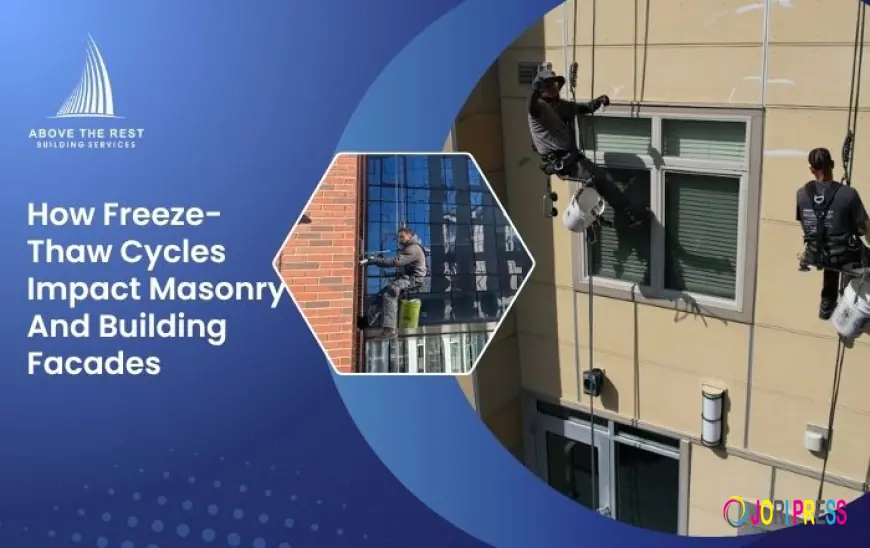
Upper sections of commercial buildings often experience greater exposure to wind-driven rain, snow, and freezing temperatures. Because these areas are difficult to inspect from ground level, damage frequently progresses unnoticed until specialized access equipment is used.
Why Early Damage Often Remains Hidden
One of the greatest concerns associated with freeze–thaw damage is that early deterioration is rarely obvious. A building may appear structurally sound while moisture continues weakening masonry and façade components internally.
Hidden deterioration can lead to delayed maintenance decisions, allowing relatively minor problems to develop into larger restoration projects. As moisture continues entering damaged areas, repair costs often increase significantly over time.
This is why experienced facility managers place a strong emphasis on routine inspections rather than waiting for visible signs of structural failure.
Why Spring Building Maintenance Matters
Winter places months of continuous stress on exterior building systems, making spring the ideal time to evaluate their condition. Incorporating exterior inspections into spring building maintenance allows property owners to identify damage caused during winter before additional moisture exposure creates more serious structural concerns.
Professional inspections typically focus on identifying cracked masonry, weakened mortar joints, surface spalling, deteriorated sealants, and areas where moisture has penetrated exterior building materials. Addressing these issues early helps preserve structural performance while reducing the likelihood of costly repairs later in the year.
Maintenance Strategies That Reduce Freeze–Thaw Damage
Protecting commercial buildings from freeze–thaw damage requires a preventive approach rather than waiting for visible deterioration to worsen. Regular inspections and timely repairs help preserve the condition of masonry and façade systems while reducing long-term maintenance costs.
A comprehensive exterior maintenance plan generally includes multiple services that work together to improve building performance.
Façade Inspections
Routine façade inspections allow maintenance professionals to identify developing structural issues before they become major repair projects. These evaluations focus on detecting cracks, loose materials, deteriorated sealants, and moisture intrusion that may not be visible during a ground-level assessment.
Early inspections provide valuable information for planning repairs while minimizing the risk of unexpected structural problems.
Masonry Repair
Once deterioration is identified, repairing damaged brick, mortar, and concrete helps restore the integrity of the building envelope. Repointing deteriorated mortar joints, replacing damaged masonry units, and sealing cracks reduce opportunities for additional moisture penetration.
Timely masonry restoration also slows the progression of freeze–thaw damage, helping exterior walls withstand future seasonal weather conditions.
Waterproofing Services
One of the most effective methods of reducing recurring moisture-related deterioration is the use of waterproofing services. Proper waterproofing limits water infiltration into porous building materials, reducing the amount of moisture available to freeze and expand during winter.
When incorporated into a long-term maintenance strategy, waterproofing helps extend the service life of masonry, protects façade systems, and improves overall building durability. Regular inspections ensure waterproofing materials continue performing as intended and allow maintenance teams to address wear before it affects the building envelope.
Pressure Washing and Surface Cleaning
Exterior cleaning is often viewed as an appearance-related service, but it also supports preventive maintenance. Pressure washing removes dirt, biological growth, road salt, and debris that can trap moisture against building surfaces.
Clean exterior walls also allow inspectors to identify cracks, spalling, and other developing issues more accurately, supporting informed maintenance decisions.
High-Access Building Maintenance
Many areas affected by freeze–thaw damage are located well above ground level. Rooflines, parapets, upper façades, and architectural details receive continuous exposure to harsh weather while remaining difficult to inspect using conventional methods.
Specialized access solutions, including aerial lifts and rope access systems, enable maintenance professionals to inspect and repair elevated building components safely and efficiently. This approach ensures that hidden deterioration is identified before it progresses into larger structural concerns.
The Cost of Delayed Maintenance
Exterior deterioration rarely stops on its own. Once moisture begins entering damaged masonry or façade systems, future freeze–thaw cycles continue to expand cracks and weaken surrounding materials.
Postponing repairs can contribute to:
- Larger masonry restoration projects
- Increased water infiltration
- Interior moisture damage
- Façade instability
- Higher long-term maintenance expenses
- Greater disruption to building operations
Addressing issues during routine maintenance is generally more cost-effective than responding to extensive structural repairs after deterioration has progressed.
Protecting Commercial Buildings Through Preventive Maintenance
Commercial properties throughout New England face recurring seasonal weather conditions that place continuous stress on exterior building systems. While winter temperatures cannot be controlled, proactive maintenance can significantly reduce their long-term impact.
Regular inspections, timely masonry repairs, waterproofing services, and comprehensive spring building maintenance provide a practical strategy for protecting building exteriors from ongoing weather-related deterioration.
For property owners and facility managers responsible for masonry across Massachusetts, preventive maintenance offers more than improved appearance. It helps preserve structural integrity, reduce repair costs, extend the service life of building materials, and support safer, more resilient commercial properties for years to come.
What's Your Reaction?
 Like
0
Like
0
 Dislike
0
Dislike
0
 Love
0
Love
0
 Funny
0
Funny
0
 Angry
0
Angry
0
 Sad
0
Sad
0
 Wow
0
Wow
0