









































Formic Acid Market Size, Share & Growth Forecast 2025–2034
Explore the Global Formic Acid Market outlook, size, share, key growth drivers, industry trends, regional analysis, and forecast from 2025 to 2034.
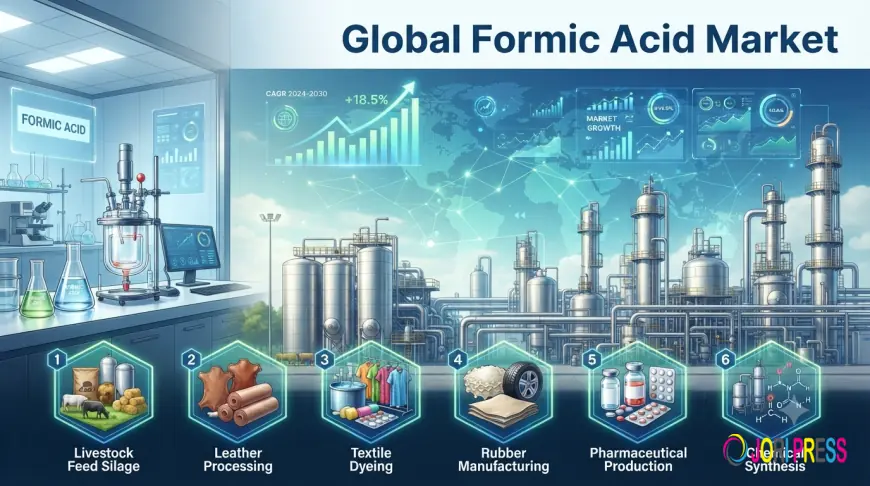
The Global Formic Acid Market is witnessing steady growth due to rising demand across agriculture, leather processing, textiles, rubber manufacturing, chemicals, and pharmaceutical industries. As industries increasingly focus on efficient production methods, sustainable chemical solutions, and enhanced product quality, formic acid has emerged as an important industrial chemical. Its versatility as a preservative, antibacterial agent, reducing agent, and intermediate in chemical synthesis continues to create new opportunities for manufacturers and end users worldwide.
Formic acid plays a critical role in modern industrial applications because of its excellent preservative properties, high biodegradability, and effectiveness in various manufacturing processes. Growing investments in agricultural productivity, industrial modernization, and specialty chemical production are supporting market expansion across developed and emerging economies. Manufacturers are also focusing on improving production efficiency while adopting environmentally responsible manufacturing practices.
Another major factor contributing to market growth is the increasing demand for sustainable chemical solutions. Industries are gradually replacing conventional chemicals with products that offer improved environmental performance without compromising efficiency. Formic acid aligns well with these evolving industry requirements, making it an attractive option for multiple applications ranging from livestock feed preservation to textile dyeing and leather tanning.
Global Formic Acid Market Overview
The Global Formic Acid Market size is expected to be valued at USD 3,649.7 million in 2025 and is further anticipated to reach USD 5,265.4 million by 2034, expanding at a CAGR of 4.2% during the forecast period.
The consistent market expansion reflects increasing industrial demand, technological advancements in chemical manufacturing, and growing adoption across multiple end-use industries. The market also benefits from continuous innovations in production technologies that improve purity levels while reducing manufacturing costs.
What is Formic Acid?
Formic acid (HCOOH) is the simplest carboxylic acid naturally found in ants, bees, and several plants. Commercially, it is produced through advanced chemical manufacturing processes and is widely utilized across industries because of its:
-
Excellent preservative properties
-
Strong antibacterial characteristics
-
Efficient reducing capabilities
-
High biodegradability
-
Versatile chemical reactivity
-
Cost-effective industrial applications
These characteristics make formic acid indispensable across numerous industrial sectors worldwide.
Major Market Drivers
Rising Agricultural Applications
Agriculture remains one of the largest consumers of formic acid globally. Farmers increasingly utilize formic acid to preserve silage, improve livestock nutrition, and reduce bacterial growth in animal feed.
Key agricultural benefits include:
-
Enhanced feed preservation
-
Improved livestock health
-
Reduced feed spoilage
-
Better nutritional retention
-
Increased farming productivity
As global food demand rises, agricultural investments continue supporting long-term market growth.
Expanding Leather Industry
Leather manufacturing requires efficient processing chemicals to improve leather quality and durability. Formic acid plays a vital role during tanning and finishing processes by controlling pH levels and improving chemical penetration.
Growing footwear, automotive upholstery, luxury goods, and furniture industries continue driving leather production worldwide.
Increasing Textile Manufacturing
The textile sector extensively utilizes formic acid during dyeing, bleaching, and finishing operations. It helps maintain proper acidity, improves dye fixation, and enhances fabric quality.
The expansion of global apparel production and technical textiles is creating additional opportunities for formic acid manufacturers.
Growth in Chemical Manufacturing
Formic acid serves as a valuable intermediate in producing:
-
Pharmaceuticals
-
Rubber chemicals
-
Cleaning agents
-
Industrial solvents
-
Specialty chemicals
-
Agricultural chemicals
Continuous industrial diversification is expanding the product's commercial importance.
Emerging Market Opportunities
Sustainable Chemical Production
Environmental regulations are encouraging industries to adopt biodegradable and eco-friendly chemicals. Formic acid offers a relatively sustainable solution compared to many conventional industrial chemicals.
Manufacturers investing in greener production technologies are expected to benefit from changing regulatory landscapes.
Pharmaceutical Industry Expansion
The pharmaceutical industry increasingly uses formic acid during drug synthesis and specialty chemical production.
Growing healthcare investments worldwide are expected to create additional long-term demand.
Rubber Processing Industry
Rubber manufacturers use formic acid as a coagulating agent during natural rubber processing.
Increasing automotive production and infrastructure development continue supporting rubber consumption globally.
Renewable Energy Applications
Researchers are exploring formic acid as a hydrogen carrier for future clean energy systems.
Although still developing, this emerging application presents promising long-term growth potential.
Market Challenges
Raw Material Price Fluctuations
Variations in raw material costs directly influence production expenses and profit margins for manufacturers.
Managing supply chain stability remains an important industry priority.
Environmental Compliance
Chemical manufacturing companies must comply with increasingly stringent environmental regulations.
Meeting sustainability standards often requires continuous investments in cleaner technologies.
Competition from Alternative Chemicals
Certain industrial applications can utilize substitute chemicals depending on performance requirements and pricing.
Manufacturers must continue innovating to maintain competitive advantages.
Market Segmentation
By Grade
Industrial-grade formic acid accounts for the largest market share due to widespread use in manufacturing industries.
Common grades include:
-
Industrial Grade
-
Feed Grade
-
Pharmaceutical Grade
-
Technical Grade
By Application
Major application areas include:
Animal Feed Preservation
This remains among the fastest-growing applications due to increasing livestock production worldwide.
Leather Processing
Essential during tanning and finishing operations.
Textile Dyeing
Supports efficient dye fixation and fabric processing.
Chemical Manufacturing
Used as a versatile intermediate for numerous industrial chemicals.
Rubber Processing
Improves natural rubber coagulation efficiency.
Pharmaceuticals
Used in specialty chemical synthesis and manufacturing processes.
End-User Industries
The market serves a diverse range of industries, including:
-
Agriculture
-
Chemicals
-
Leather
-
Textiles
-
Pharmaceuticals
-
Rubber
-
Food Processing
-
Industrial Manufacturing
The diversity of applications helps reduce dependency on any single industry while ensuring stable long-term demand.
Technological Developments
Continuous innovation is improving production efficiency across the global formic acid industry.
Recent technological advancements include:
Improved Manufacturing Processes
Modern production facilities are focusing on:
-
Higher product purity
-
Lower energy consumption
-
Reduced emissions
-
Better operational efficiency
Sustainable Production Methods
Manufacturers are increasingly adopting environmentally responsible production technologies to meet evolving sustainability goals.
Digital Manufacturing
Automation and digital monitoring systems improve:
-
Production consistency
-
Process optimization
-
Quality control
-
Supply chain efficiency
Global Formic Acid Market: Regional Analysis
North America
North America is projected to dominate the Global Formic Acid Market, accounting for 37.10% of the market share by the end of 2025.
The region benefits from a highly developed agricultural sector alongside strong industrial infrastructure. The United States and Canada maintain extensive livestock industries, including cattle and dairy farming, where formic acid is widely used as a feed preservative and silage additive. In addition, demand from leather processing, chemical manufacturing, pharmaceuticals, and textile applications continues supporting regional market leadership.
Investments in advanced manufacturing technologies and sustainability initiatives further strengthen North America's competitive position.
Europe
Europe represents a mature yet steadily expanding market.
Growth is supported by:
-
Sustainable chemical manufacturing
-
Advanced pharmaceutical production
-
Automotive industry expansion
-
Strong environmental regulations
-
Continuous industrial innovation
Countries across Europe continue investing in cleaner production technologies that complement increasing formic acid utilization.
Asia-Pacific
Asia-Pacific is expected to experience the fastest growth during the forecast period.
Key growth factors include:
-
Rapid industrialization
-
Expanding agriculture
-
Increasing textile manufacturing
-
Growing chemical production
-
Rising pharmaceutical investments
Large manufacturing bases across China, India, Japan, and Southeast Asia continue driving substantial demand.
Latin America
Agricultural modernization and expanding livestock industries are supporting market growth throughout Latin America.
Increasing industrial development also contributes to growing consumption across chemical and leather sectors.
Middle East & Africa
Industrial diversification, infrastructure development, and improving agricultural productivity are creating new opportunities for formic acid suppliers across the Middle East and Africa.
Although currently representing a smaller market share, future growth prospects remain promising.
Competitive Landscape
The Global Formic Acid Market remains competitive, with manufacturers emphasizing:
-
Production capacity expansion
-
Sustainable manufacturing
-
Product quality improvements
-
Research and development
-
Geographic expansion
-
Strategic partnerships
-
Supply chain optimization
Companies are also investing in advanced production technologies to improve operational efficiency while meeting growing global demand.
Future Market Outlook
The future outlook for the Global Formic Acid Market remains positive through 2034.
Several long-term trends are expected to support continued market expansion:
-
Rising agricultural productivity initiatives
-
Growing pharmaceutical manufacturing
-
Expanding leather and textile industries
-
Increased demand for sustainable chemicals
-
Continuous industrial modernization
-
Technological innovation in chemical production
-
Emerging renewable energy applications
As industries increasingly prioritize environmentally responsible and efficient chemical solutions, formic acid is expected to strengthen its position across multiple high-growth sectors.
Frequently Asked Questions (FAQs)
1. What is driving the growth of the Global Formic Acid Market?
The primary growth drivers include increasing agricultural applications, expanding chemical manufacturing, growing leather and textile industries, pharmaceutical demand, and the adoption of sustainable industrial chemicals.
2. What will be the market size of the Global Formic Acid Market by 2034?
The market is projected to reach USD 5,265.4 million by 2034, growing from USD 3,649.7 million in 2025 at a CAGR of 4.2%.
3. Which region dominates the Global Formic Acid Market?
North America is expected to hold the largest market share, accounting for 37.10% by the end of 2025, supported by its strong agricultural sector and broad industrial applications.
4. Which industries use formic acid the most?
Major end-use industries include agriculture, leather processing, textiles, pharmaceuticals, chemical manufacturing, rubber processing, food processing, and industrial manufacturing.
5. What are the future opportunities in the Global Formic Acid Market?
Future opportunities include sustainable chemical manufacturing, renewable energy applications, pharmaceutical expansion, advanced production technologies, and increasing demand from emerging economies.
Summary of Key Insights
The Global Formic Acid Market is poised for consistent growth over the coming decade, driven by expanding applications across agriculture, chemicals, textiles, leather, pharmaceuticals, and industrial manufacturing. The market is forecast to grow from USD 3,649.7 million in 2025 to USD 5,265.4 million by 2034, at a CAGR of 4.2%. North America is expected to maintain its leadership due to its well-established agricultural and industrial base, while Asia-Pacific is likely to witness the fastest expansion. Ongoing technological advancements, sustainability initiatives, and rising industrial demand are expected to reinforce the market's long-term growth trajectory, making formic acid an increasingly valuable chemical across diverse global industries.
What's Your Reaction?
 Like
0
Like
0
 Dislike
0
Dislike
0
 Love
0
Love
0
 Funny
0
Funny
0
 Angry
0
Angry
0
 Sad
0
Sad
0
 Wow
0
Wow
0