



































How Early Facade Repair Services Protect Commercial Buildings After Winter
Schedule Facade Repair Services before spring to prevent water intrusion, protect masonry, and extend building life with Above The Rest Building Services across New England.

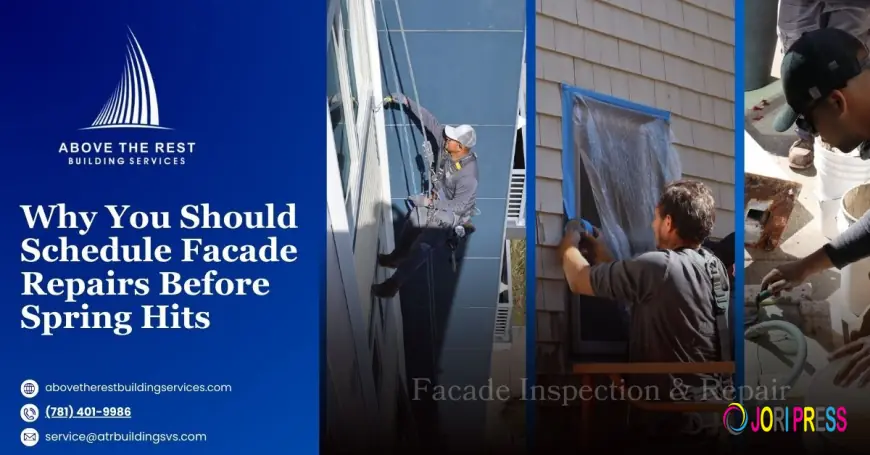
Winter leaves behind more than cold temperatures and snow-covered landscapes. For commercial buildings, the season often creates hidden structural challenges that continue to develop long after the snow has melted. Freeze-thaw cycles, wind-driven moisture, and fluctuating temperatures place constant stress on building façades, gradually weakening masonry, concrete, sealants, and exterior joints. While visible cracks may not appear immediately, unseen deterioration can increase repair costs if maintenance is delayed.
For commercial property owners and facility managers throughout New England, investing in Facade Repair Services before spring is an effective way to protect building performance and reduce the risk of long-term structural damage. Early inspections and timely repairs allow hidden issues to be identified before seasonal rainfall introduces additional moisture into compromised areas of the building envelope.
Why the Building Façade Deserves Attention
The façade is one of the most important structural elements of a commercial building. Beyond enhancing architectural appearance, it acts as a protective barrier against rain, snow, wind, temperature changes, and environmental contaminants. When exterior materials begin to deteriorate, moisture can penetrate deeper into the structure, affecting insulation, interior finishes, and supporting components.
Unlike cosmetic maintenance, Facade Repair Services focus on restoring the strength, stability, and weather resistance of the building envelope. Addressing small defects early helps prevent widespread deterioration while extending the lifespan of exterior systems.
Commercial buildings across Massachusetts, Boston, Cambridge, Rhode Island, Connecticut, Maine, Vermont, and New Hampshire experience challenging winter conditions each year, making routine façade inspections an important part of long-term property management.
How Freeze-Thaw Cycles Affect Exterior Building Systems
One of the primary causes of winter-related building deterioration is the freeze-thaw cycle. Brick, mortar, concrete, and stone naturally absorb small amounts of moisture over time. When temperatures fall below freezing, trapped water expands inside these materials, creating internal pressure that gradually weakens their structural integrity.
As this process repeats throughout the winter season, it may result in:
- Hairline cracks becoming larger fractures
- Deteriorating mortar joints
- Loose masonry units
- Surface scaling and concrete spalling
- Increased pathways for moisture infiltration
Because this deterioration develops internally, buildings may continue appearing structurally sound while hidden damage progresses behind the façade.
The Long-Term Impact of Moisture Intrusion
Moisture is one of the most destructive factors affecting commercial buildings because it rarely remains confined to a single location. Once water enters through damaged masonry, failed joints, or deteriorated façade materials, it can migrate into wall cavities, insulation, and structural supports.
If left untreated, moisture intrusion may contribute to:
- Interior water leaks
- Mold and mildew growth
- Corrosion of embedded steel
- Reduced thermal efficiency
- Damage to interior finishes
- Increased restoration costs
Protecting the building envelope before spring rainfall begins is one of the most effective ways to reduce these long-term risks.
Why Masonry Should Be Evaluated After Winter
Masonry systems experience continuous exposure throughout the winter months. Small cracks and weakened mortar joints often develop gradually, making them difficult to detect without a detailed inspection.
When damage is identified early, Commercial Masonry Repair restores the stability of brickwork, concrete, and mortar before deterioration spreads further into the building envelope. Prompt repairs also reduce the likelihood of moisture reaching interior structural components, helping property owners avoid larger restoration projects in the future.
Removing Winter Residue Improves Exterior Assessments
Road salt, dirt, algae, and airborne pollutants accumulate on commercial building exteriors throughout winter. These contaminants not only affect appearance but also trap moisture against masonry and conceal areas requiring repair.
Before exterior restoration begins, Professional Commercial Pressure Washing removes these deposits and exposes the true condition of the building façade. Clean surfaces allow maintenance professionals to identify hidden defects more accurately while providing better preparation for repair materials.
In addition to improving inspection accuracy, pressure washing helps reduce ongoing deterioration caused by corrosive salt buildup and environmental contaminants that remain on exterior surfaces after winter.
Strengthening the Building Envelope Against Spring Weather
As winter transitions into spring, commercial buildings face a new challenge. Frequent rainfall and higher humidity levels increase the amount of moisture that comes into contact with exterior walls. If winter has already created cracks or weakened façade components, water can quickly penetrate these vulnerable areas and accelerate deterioration.
To improve long-term protection, many property owners include Commercial Waterproofing Services as part of their exterior maintenance strategy. Waterproofing works alongside Facade Repair Services by reducing moisture penetration and helping exterior walls perform more effectively throughout changing weather conditions. When completed before the rainy season, it supports the durability of the building envelope and minimizes the likelihood of future water-related repairs.
The Importance of Maintaining Exterior Joints
Expansion joints and sealants are designed to absorb the natural movement of a building as temperatures change. Over time, however, prolonged exposure to freezing weather, ultraviolet rays, and moisture can cause these materials to deteriorate.
Once sealants begin to crack or separate, water can enter the building envelope through gaps that are often difficult to detect during routine visual inspections.
Timely Caulking and Sealant Replacement restores these weather-resistant barriers, helping to prevent leaks around windows, doors, and structural joints while protecting surrounding building materials from premature deterioration.
Exterior Appearance Reflects Building Performance
A well-maintained façade contributes to more than structural protection. It also creates a positive first impression for tenants, customers, employees, and visitors.
After façade restoration has been completed, Commercial Window Cleaning enhances the overall appearance of the property by removing mineral deposits, dirt, and environmental residue left behind during the winter months. Clean exterior glass complements façade improvements while allowing natural light to enter commercial spaces more effectively.
For office buildings, healthcare facilities, educational campuses, retail centers, and multifamily properties, maintaining a clean and professional exterior also reinforces confidence in the property's overall management and maintenance standards.
Professional Expertise Makes a Measurable Difference
Commercial façade restoration requires technical knowledge, specialized equipment, and a thorough understanding of how exterior building systems interact. Simply repairing visible cracks without addressing the underlying cause may result in recurring problems and additional maintenance expenses.
Buildings with elevated façades or difficult-to-access architectural features often require High-Access Building Maintenance to complete inspections and repairs safely. Proper access equipment and trained technicians allow maintenance work to be carried out efficiently while protecting both workers and building occupants.
An experienced exterior maintenance provider evaluates the building as a complete system, ensuring that repairs contribute to long-term structural performance rather than providing only temporary solutions.
Supporting Long-Term Commercial Building Performance
Preventive maintenance continues to be one of the most effective ways to preserve commercial buildings exposed to New England's demanding climate. By addressing winter-related deterioration before it escalates, property owners can reduce repair costs, extend the service life of exterior materials, and improve overall building performance.
Above The Rest Building Services supports commercial property owners throughout New England with specialized exterior maintenance solutions tailored to the unique challenges of the region. From Facade Repair Services and Commercial Masonry Repair to Commercial Waterproofing Services, the company provides practical solutions that strengthen building envelopes and reduce the impact of seasonal weather. Additional services, including Professional Commercial Pressure Washing, Commercial Window Cleaning, and High-Access Building Maintenance, are integrated where appropriate to support safe, efficient, and long-lasting exterior restoration projects.
Conclusion
Winter damage rarely ends when the season changes. Hidden moisture, freeze-thaw cycles, and gradual material deterioration can continue affecting commercial buildings well into the spring if they are not addressed promptly.
Investing in Facade Repair Services before spring provides property owners with an opportunity to identify hidden vulnerabilities, restore damaged exterior components, and improve the long-term resilience of the building envelope. When supported by complementary maintenance strategies such as waterproofing, masonry restoration, and routine inspections, early intervention helps protect commercial assets while reducing future maintenance costs.
For commercial buildings across New England, proactive façade maintenance is more than a seasonal repair it is a strategic investment in structural integrity, operational reliability, and long-term property value.
What's Your Reaction?
 Like
0
Like
0
 Dislike
0
Dislike
0
 Love
0
Love
0
 Funny
0
Funny
0
 Angry
0
Angry
0
 Sad
0
Sad
0
 Wow
0
Wow
0