






































End Mill Cutter: Roughing vs Finishing Explained
Learn the difference between roughing and finishing with an end mill cutter, including tool selection, cutting performance, accuracy, surface finish, and tool life.
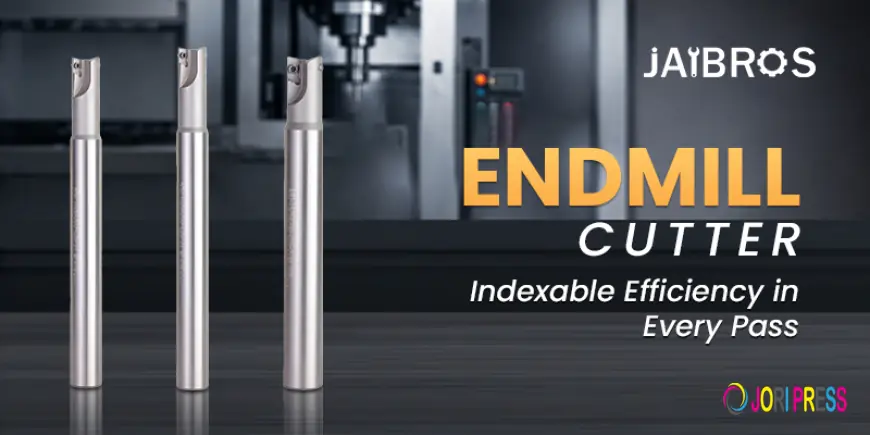
End Mill Cutter for Roughing vs Finishing: Key Differences Explained
In CNC machining, choosing the correct End Mill Cutter tool is important for achieving the desired accuracy, surface finish, and production efficiency. Roughing and finishing are two different machining stages, and each requires a tool designed for a specific purpose. Understanding the difference between roughing and finishing tools can help machinists improve productivity while maintaining consistent results.
What Is Roughing in CNC Machining?
Roughing is the first major machining stage. Its primary purpose is to remove a large amount of material quickly and efficiently. During this process, the focus is generally on material removal rather than achieving the final surface quality.
A suitable end mill cutter for roughing is designed to handle heavier cutting loads. Roughing tools often have geometries that allow efficient chip removal and stable cutting when machining large amounts of material. The machine can operate with appropriate cutting parameters to remove material while leaving a small amount of stock for the finishing operation.
Roughing is commonly used when machining materials such as steel, aluminum, stainless steel, and other engineering materials.
What Is Finishing in CNC Machining?
Finishing is performed after roughing to achieve the required dimensions, accuracy, and surface quality. Instead of removing large amounts of material, the finishing operation removes a smaller amount of remaining stock.
A finishing end mill cutter is generally selected for smoother cutting and better surface quality. Tool geometry, flute design, diameter, and cutting parameters all influence the final result.
For precision applications, machinists may use a CNC end mill specifically suited to the material and finishing requirements. Correct tool selection can reduce surface marks and help produce more consistent dimensions.
Roughing vs Finishing: Key Differences
The main difference between roughing and finishing is their machining objective. Roughing focuses on fast material removal, while finishing focuses on accuracy and surface finish.
During roughing, the cutting conditions are typically selected to efficiently remove material while maintaining tool stability. During finishing, lighter cuts are normally used because the objective is to achieve the required final geometry and surface quality.
A roughing tool may be selected for strength and chip evacuation, whereas a finishing tool is chosen according to the required surface finish and dimensional accuracy.
Choosing the Right Tool for Roughing
When selecting an end milling cutter for roughing, consider the material being machined, the amount of material that needs to be removed, machine capability, tool diameter, flute configuration, and cutting conditions.
For demanding applications, a carbide end mill can provide the rigidity and wear resistance required for efficient machining. Carbide tools are commonly used for CNC operations where higher cutting performance and longer tool life are important.
The machine setup is also important. Even a high-quality tool can perform poorly if the workpiece is not securely clamped or if the cutting parameters are unsuitable.
Choosing the Right Tool for Finishing
Finishing requires greater attention to surface quality and dimensional accuracy. A finishing tool should match the workpiece material and the geometry that needs to be produced.
A carbide end mill cutter can be suitable for applications requiring precision and consistent cutting performance. The number of flutes, tool diameter, helix angle, and cutting conditions should be considered according to the machining application.
For complex profiles and curved surfaces, specialized tool geometries may also be selected. The correct combination of tool and machining parameters can help minimize vibration and improve the final surface.
Can One Tool Be Used for Both Operations?
In some applications, the same end mill cutter can be used for both roughing and finishing. However, this is not always the most efficient approach.
Using separate tools allows each operation to be optimized for its specific purpose. A roughing tool can focus on rapid material removal, while a finishing tool can focus on producing the required dimensions and surface quality.
The best choice depends on the machine, workpiece material, production volume, component geometry, and required tolerance.
Common Mistakes to Avoid
One common mistake is using a finishing tool for heavy roughing operations. This can increase tool wear and reduce tool life. Another mistake is selecting a roughing tool without considering the required final surface quality.
Incorrect speed and feed settings can also cause excessive heat, vibration, poor chip evacuation, or premature tool failure. Proper workholding and tool setup are equally important.
Regularly inspecting the cutting edges can help identify wear before it affects the quality of the machined component.
How to Select the Best Option
Before choosing an end mill cutter, evaluate the entire machining process. Determine whether the operation is primarily for material removal or final finishing. Then consider the workpiece material, machine power, tool diameter, flute count, cutting depth, required tolerance, and surface-finish requirements.
For roughing, prioritize stability, chip evacuation, and efficient material removal. For finishing, prioritize accuracy, surface quality, and controlled cutting conditions.
Conclusion
Understanding the difference between roughing and finishing helps machinists select the right tooling for each stage of CNC machining. Roughing is focused on efficient material removal, while finishing is focused on achieving the final dimensions and surface quality. Selecting the appropriate tool, cutting parameters, and setup can improve productivity, accuracy, and tool life.
Jaibros provides a range of CNC machining and cutting solutions designed to support different industrial machining requirements. By selecting the right tooling for roughing and finishing applications, manufacturers can achieve more consistent machining performance and better production results.
What's Your Reaction?
 Like
0
Like
0
 Dislike
0
Dislike
0
 Love
0
Love
0
 Funny
0
Funny
0
 Angry
0
Angry
0
 Sad
0
Sad
0
 Wow
0
Wow
0