










































Digital Marketing Strategies to Grow Your Business in 2026
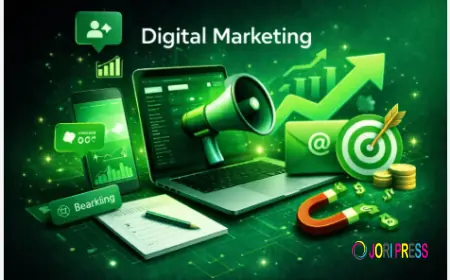
Digital marketing has become an essential part of business growth in today's competitive online marketplace. Whether you run a small local business, an e-commerce store, or a large organisation, having a strong digital presence helps you connect with potential customers, build trust, and generate leads.

Digital marketing has become an essential part of business growth in today's competitive online marketplace. Whether you run a small local business, an e-commerce store, or a large organisation, having a strong digital presence helps you connect with potential customers, build trust, and generate leads.
With changing consumer behaviour, search engine algorithms, and emerging technologies, businesses must continuously improve their marketing strategies to remain competitive. From search engine optimisation (SEO) and social media marketing to content creation and paid advertising, digital marketing offers multiple opportunities to reach the right audience.
This guide explores effective digital marketing strategies businesses can use to strengthen their online visibility and achieve sustainable growth in 2026.
What Is Digital Marketing?
Digital marketing refers to promoting products, services, or brands through online channels such as search engines, websites, social media platforms, email, and digital advertising.
Unlike traditional marketing, digital marketing allows businesses to target specific audiences, measure campaign performance, and adjust strategies based on customer behaviour.
A well-planned digital marketing strategy combines several channels to attract potential customers, encourage engagement, and increase conversions.
1. Search Engine Optimisation (SEO)
Search engine optimisation is one of the most important components of digital marketing. It focuses on improving a website's visibility in search engine results, helping businesses attract relevant organic traffic.
Effective SEO involves several activities:
-
Keyword research: Identifying relevant search terms potential customers use.
-
On-page SEO: Optimising page titles, meta descriptions, headings, internal links, and website content.
-
Technical SEO: Improving website speed, mobile usability, crawlability, and indexing.
-
Off-page SEO: Building brand authority through quality backlinks, digital PR, and relevant mentions.
-
Local SEO: Improving visibility in location-based searches and Google Business Profiles.
Businesses should focus on creating helpful, relevant content that satisfies user search intent instead of relying on excessive keyword repetition.
2. Content Marketing for Long-Term Growth
Content marketing helps businesses educate customers, answer common questions, and establish credibility within their industries.
High-quality content can attract potential customers at different stages of their buying journey.
Effective content formats include:
-
Informative blog posts and educational articles
-
Industry guides and tutorials
-
Case studies and customer success stories
-
Product comparisons and buying guides
-
Videos, infographics, and frequently asked questions
For example, a business selling cleaning products could publish an article explaining how to choose commercial cleaning supplies for different workplaces.
This approach addresses real customer needs while creating opportunities to rank for relevant search terms.
Regularly updating existing content is equally important because outdated information may reduce its usefulness and accuracy.
3. Social Media Marketing and Brand Engagement
Social media platforms allow businesses to communicate directly with their audience and strengthen brand recognition.
Platforms such as Facebook, Instagram, LinkedIn, and YouTube support different marketing objectives.
LinkedIn can be particularly useful for B2B businesses seeking professional connections, while Instagram and Facebook may help consumer-focused brands showcase products and engage with customers.
Successful social media marketing involves more than publishing promotional content. Businesses should share educational posts, customer experiences, industry updates, and practical advice.
Consistent engagement, meaningful conversations, and authentic communication help build stronger relationships with potential customers.
4. Pay-Per-Click Advertising (PPC)
Pay-per-click advertising helps businesses reach potential customers through paid placements on platforms such as Google Ads and Microsoft Advertising.
Unlike organic SEO, which generally takes time to produce results, PPC campaigns can begin generating targeted website traffic shortly after launch.
Businesses can target audiences based on search queries, location, interests, and other available advertising criteria.
However, successful PPC advertising requires careful planning.
Important considerations include selecting relevant keywords, writing compelling advertisements, developing effective landing pages, and monitoring advertising costs.
Tracking conversions and return on advertising spend helps businesses understand campaign performance and improve budget allocation.
5. Email Marketing and Customer Retention
Email marketing remains a valuable channel for communicating with existing customers and nurturing potential leads.
Businesses can use email campaigns to share product announcements, educational resources, industry updates, and personalised offers.
Segmenting email subscribers based on their interests or previous interactions can improve message relevance.
Automated welcome emails, abandoned-cart reminders, and post-purchase communications can also support customer engagement.
Businesses should obtain appropriate marketing consent, respect unsubscribe requests, and avoid sending excessive promotional messages.
6. AI Search Optimisation and Emerging Search Trends
Artificial intelligence is changing how people discover and interact with online information.
AI-powered search experiences may summarise information from multiple sources, making clear and trustworthy website content increasingly valuable.
Businesses can support discoverability through Answer Engine Optimisation (AEO) and Generative Engine Optimisation (GEO).
Useful practices include providing direct answers to common questions, organising information with descriptive headings, demonstrating subject expertise, and keeping business information accurate.
Structured data can also help search engines better understand eligible website content.
Although visibility within AI-generated answers is not guaranteed, creating useful, well-organised content supports both traditional SEO and newer search experiences.
7. Website User Experience and Conversion Optimisation
Attracting visitors is only one part of digital marketing. Businesses must also provide a website experience that encourages visitors to take meaningful action.
A successful website should offer clear navigation, mobile-friendly layouts, fast-loading pages, and accessible contact information.
Strong calls to action help visitors understand the next step, whether they want to request a quote, make a purchase, or contact the business.
Businesses can use analytics tools to identify pages with high exit rates, understand customer journeys, and improve conversion opportunities.
How to Measure Digital Marketing Success
Monitoring results helps businesses determine which strategies contribute to their goals.
Important performance indicators include organic website traffic, keyword visibility, conversion rates, qualified leads, customer acquisition costs, and advertising returns.
Tools such as Google Analytics and Google Search Console provide valuable insights into website performance and search visibility.
Regular reporting allows businesses to identify successful campaigns, address weaknesses, and make informed marketing decisions.
Conclusion
Digital marketing in 2026 requires a balanced approach combining SEO, valuable content, social media engagement, paid advertising, and customer-focused website experiences.
Businesses that understand their audience, publish useful information, and measure their results are better positioned to compete in an evolving digital environment.
Rather than depending on a single marketing channel, organisations should develop an integrated digital marketing strategy that supports visibility, customer trust, and long-term business growth. digitech.com
What's Your Reaction?
 Like
0
 Dislike
0
 Love
0
 Funny
0
 Angry
0
 Sad
0
 Wow
0