




































Digital Front Door Solutions Reshape Patient Access Today
Digital Front Door Solutions reshape patient access by enabling seamless appointment scheduling, virtual care, personalized communication, and connected healthcare experiences across digital channels.

Introduction
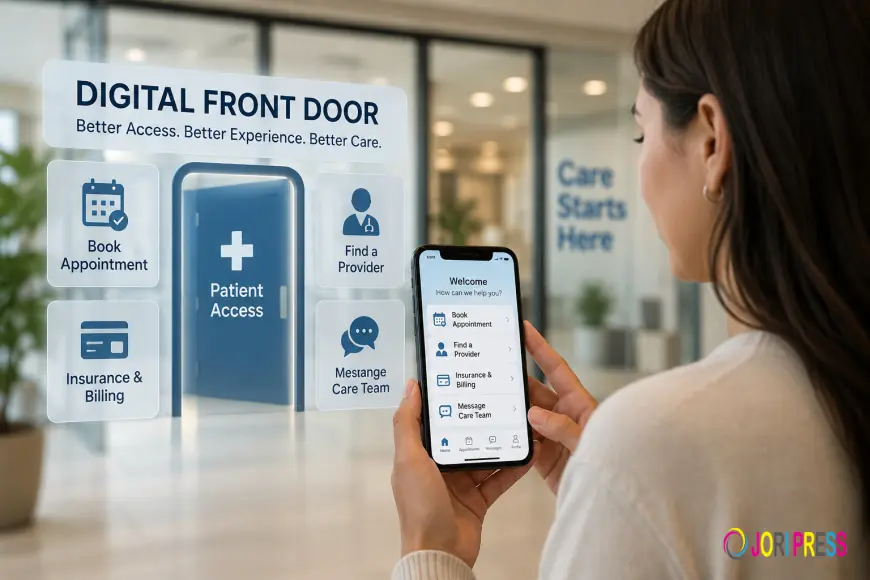
Healthcare organizations today handle patient interactions in ways that look completely different from even five years ago. Phone calls and walk-in registration desks used to define the start of nearly every patient journey. Now, that first touchpoint happens through a screen, an app, or a chatbot. This shift has pushed hospitals, clinics, and health systems to invest heavily in digital front door solutions that make it easier for patients to find care, book appointments, and stay connected with providers without stepping into a waiting room.
The term itself sounds simple, but the technology behind it is anything but. A digital front door is the sum of every online interaction a patient has with a healthcare brand before, during, and after treatment. Getting this right can mean the difference between a patient who trusts an organization enough to return and one who quietly switches to a competitor after a single frustrating scheduling experience.
Why Patients Expect A Seamless Entry Point
People are used to ordering groceries, booking flights, and managing their finances from a phone. Naturally, they expect the same convenience from their healthcare providers. When a health system fails to offer intuitive online scheduling or a working patient portal, it creates friction right at the start of the relationship. This is precisely where well-designed digital front door solutions step in, removing the guesswork and giving patients a clear, guided path toward the care they need.
Consider a parent trying to book a same-day appointment for a sick child. If the process requires multiple phone transfers and long hold times, that parent may abandon the effort and head to an urgent care center instead. A smooth digital entry point, by contrast, lets them search symptoms, check available slots, and confirm a visit within minutes, building loyalty in ways a traditional front desk cannot match anymore.
Core Components Behind Digital Front Door Solutions
Building an effective digital entry point isn't about bolting a single app onto an existing website. It usually involves several connected pieces working together. Online scheduling tools sit alongside secure messaging platforms, symptom checkers, virtual visit capabilities, and integrated billing systems. When these pieces communicate with each other properly, patients experience one continuous journey rather than a series of disconnected steps.
Interoperability plays a massive role here. A patient who fills out intake forms digitally shouldn't have to repeat that same information verbally at the front desk. The strongest platforms in this category pull data from electronic health records, insurance verification systems, and communication tools so every department works from the same up-to-date picture of the patient. This reduces redundant paperwork and speeds up the entire visit, from check-in to discharge.
The Role of Mobile Technology
Smartphones have become the primary device through which most patients now access healthcare services. A mobile-first approach isn't optional anymore; it's the baseline expectation. Health systems that design their digital entry points around mobile usability tend to see stronger engagement because patients can manage appointments, refill prescriptions, or message their care team while waiting in line at a grocery store or sitting in traffic.
This mobile emphasis also extends to accessibility. Voice navigation, larger text options, and multilingual support all contribute to making these tools genuinely useful for a broader population, including older adults and non-native speakers who might otherwise struggle with complicated interfaces.
Building Trust Through Data Security
None of this convenience matters if patients don't trust the platform with their personal health information. Every digital entry point handles sensitive data, from insurance details to diagnosis history, so security has to be baked into the design rather than added as an afterthought. Encryption standards, multi-factor authentication, and regular security audits are now standard expectations for any organization rolling out new digital front door solutions.
Healthcare organizations that communicate their security practices clearly tend to see higher adoption rates for their digital tools. Patients want reassurance that convenience isn't coming at the cost of privacy, and transparent communication about data protection goes a long way toward building that confidence.
Measuring Success Beyond Convenience
It's tempting to judge these platforms purely on how many patients use the scheduling app or portal. But the real measure of success shows up in broader metrics like patient retention, reduced no-show rates, and overall satisfaction scores. When patients feel a healthcare provider respects their time and offers a straightforward way to get care, they're far more likely to stick with that provider for future needs rather than shopping around.
Staff efficiency improves too. Front desk teams spend less time on repetitive administrative tasks and more time handling complex patient needs that require a human touch. This shift doesn't eliminate the human element of healthcare; it simply moves the routine parts of the process online so in-person interactions become more meaningful and less rushed.
What Comes Next For Patient Access
The pace of change in healthcare technology shows no sign of slowing down. Artificial intelligence, predictive analytics, and increasingly sophisticated virtual care options will continue reshaping what a strong digital entry point looks like over the next several years. Organizations that treat their online tools as a one-time project rather than an evolving strategy will likely fall behind competitors who keep refining the experience based on real patient feedback.
Ultimately, the goal isn't just to digitize old processes but to rethink how patients connect with care from the very first click. Health systems that invest thoughtfully in this space are positioning themselves for long-term patient loyalty in an increasingly digital-first world. The organizations paying close attention now, testing their tools with real patients and iterating on honest feedback, are the ones most likely to earn lasting trust in the years ahead.
What's Your Reaction?
 Like
0
Like
0
 Dislike
0
Dislike
0
 Love
0
Love
0
 Funny
0
Funny
0
 Angry
0
Angry
0
 Sad
0
Sad
0
 Wow
0
Wow
0