




























Custom Sportswear Manufacturing: From Design to Bulk Production
Learn how custom sportswear manufacturing works from design and fabric selection to sampling, quality control, bulk production, and delivery.
Custom Sportswear Manufacturing: From Design to Bulk Production
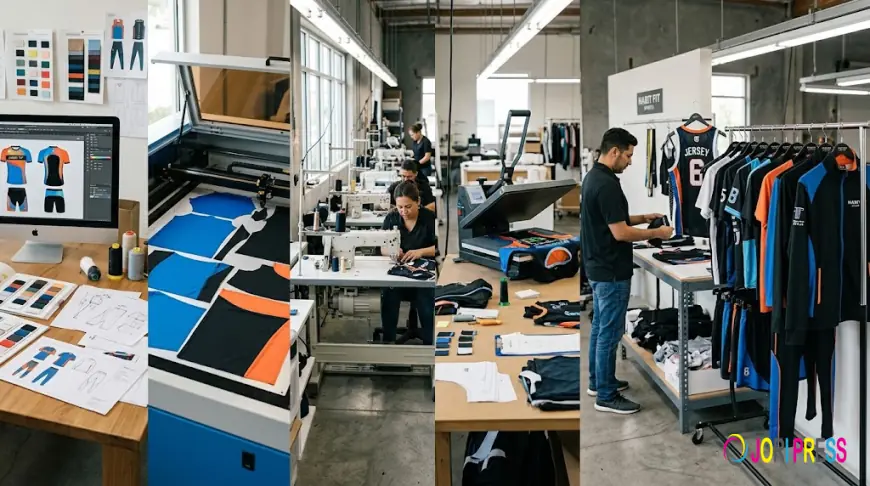
Creating custom sportswear is about much more than putting a logo on a T-shirt or choosing a color for a jersey. A successful custom sportswear product needs the right design, fabric, fit, construction, branding, quality control, and production process.
For clothing brands, sports teams, fitness companies, gyms, schools, and retailers, working with a professional sportswear manufacturer can turn an idea into a finished product ready for customers or athletes.
The process usually involves several stages, starting with product planning and design and ending with bulk production, inspection, packaging, and delivery.
Understanding how custom sportswear manufacturing works can help you make better decisions, avoid expensive mistakes, and communicate more effectively with your manufacturing partner.
What Is Custom Sportswear Manufacturing?
Custom sportswear manufacturing is the process of producing athletic clothing according to a brand's or customer's specific requirements.
Unlike standard wholesale sportswear, custom manufacturing can allow you to control different aspects of the product, including:
-
Design
-
Fabric
-
Colors
-
Size
-
Fit
-
Patterns
-
Logos
-
Printing
-
Embroidery
-
Labels
-
Packaging
-
Product specifications
Depending on the manufacturer, customization can range from modifying an existing product to developing a completely new garment from scratch.
For example, a sports team may need custom jerseys with specific colors, player numbers, names, and logos. A fitness clothing brand may require custom leggings with a particular fabric, waistband, fit, measurements, and private-label branding.
Who Uses Custom Sportswear Manufacturing?
Custom sportswear is used by many different types of businesses and organizations.
Common customers include:
-
Sports teams
-
Fitness brands
-
Gym businesses
-
Running clubs
-
Schools
-
Universities
-
Sports retailers
-
Clothing startups
-
Corporate teams
-
Event organizers
-
Fitness influencers
-
Athletic organizations
Each customer can have different requirements.
A professional sports team may prioritize performance, durability, and team identity, while a new fitness clothing brand may focus on product design, comfort, branding, and retail presentation.
Step 1: Define the Product You Want to Manufacture
The first stage is deciding exactly what you want to produce.
Start by identifying the product category.
Examples include:
-
Sports jerseys
-
Gym shirts
-
Leggings
-
Sports bras
-
Running shorts
-
Training pants
-
Tracksuits
-
Hoodies
-
Tank tops
-
Compression wear
-
Cycling clothing
-
Performance jackets
-
Team uniforms
Do not begin production with only a general idea such as "I want custom sportswear."
Define the product as clearly as possible.
For example, instead of saying you need a custom sports shirt, specify whether you need a lightweight running shirt, a football jersey, a training top, or a gym T-shirt.
The intended use affects fabric, construction, fit, and production requirements.
Step 2: Develop the Design
Once the product is defined, the next stage is design development.
Your design may include:
-
Product shape
-
Colors
-
Patterns
-
Logo placement
-
Graphics
-
Text
-
Numbering
-
Branding
-
Panels
-
Stitching details
-
Decorative elements
If you already have professional design files, provide them to the manufacturer in suitable formats.
If you do not have a finished design, ask whether the manufacturer offers design or product-development assistance.
A clear design reduces misunderstandings during sampling and production.
Step 3: Choose the Right Fabric
Fabric selection is one of the most important parts of custom sportswear manufacturing.
The fabric should match the intended use of the garment.
Common sportswear materials include:
-
Polyester
-
Nylon
-
Spandex
-
Cotton blends
-
Recycled polyester
-
Performance fabric blends
Different fabrics have different characteristics.
You may need to consider:
-
Stretch
-
Breathability
-
Moisture management
-
Weight
-
Durability
-
Softness
-
Recovery
-
Opacity
-
Color retention
-
Resistance to pilling
For example, a pair of performance leggings needs enough stretch and recovery for movement. A running shirt may benefit from lightweight and breathable fabric.
Choosing fabric based only on price can create problems later. A cheaper material may not deliver the comfort or durability your customers expect.
Step 4: Confirm Fabric Specifications
Simply choosing "polyester" or "nylon" is often not enough.
Different fabrics made from the same basic material can have very different characteristics.
Ask the manufacturer for relevant specifications such as:
-
Fabric composition
-
Weight
-
Stretch characteristics
-
Finish
-
Available colors
-
Performance properties
-
Washing requirements
If the fabric is an important part of your product's selling point, make sure the specification is clearly documented.
Step 5: Create the Size and Fit Specifications
Sportswear needs to fit the body correctly and allow comfortable movement.
Your specifications may include measurements such as:
-
Chest
-
Waist
-
Hip
-
Shoulder
-
Sleeve length
-
Garment length
-
Inseam
-
Rise
-
Leg opening
Create a clear size chart for your products.
For example, if your brand offers XS through XXL, each size should have defined measurements rather than relying on vague labels.
An approved size specification also helps maintain consistency when you reorder the same product later.
Step 6: Select Printing and Decoration Methods
Custom sportswear often requires logos, artwork, names, numbers, or other graphics.
Manufacturers may offer different decoration techniques, including:
-
Sublimation
-
Screen printing
-
Heat transfer
-
Direct-to-film printing
-
Embroidery
-
Reflective printing
-
Other specialized techniques
The best method depends on the fabric, design, quantity, product type, and desired appearance.
For example, sublimation can be useful for detailed all-over designs on suitable polyester fabrics, while embroidery may be appropriate for certain jackets, polos, caps, or heavier garments.
Discuss the artwork and intended use with the manufacturer before selecting the production method.
Step 7: Prepare Your Branding Requirements
If you are manufacturing sportswear for your own clothing brand, branding should be considered early.
Branding can include:
-
Main logo
-
Neck labels
-
Woven labels
-
Printed labels
-
Size labels
-
Care labels
-
Hang tags
-
Packaging
-
Custom bags
Prepare your logo and brand assets in high-quality formats.
You should also specify exactly where branding elements should appear.
For example, a logo may be placed on the chest, sleeve, leg, waistband, or back depending on the product.
Step 8: Develop a Prototype or Sample
Before bulk manufacturing, a sample should normally be produced for evaluation.
The sample gives you an opportunity to check the actual product.
Review:
-
Fabric
-
Color
-
Fit
-
Measurements
-
Stitching
-
Seams
-
Logo placement
-
Printing
-
Labels
-
Construction
-
Comfort
-
Overall appearance
Do not approve bulk production based only on a digital design.
A design may look correct on a computer screen but produce a different result when translated into a physical garment.
Step 9: Test the Sample
Sample approval should involve more than looking at the garment.
Test it according to its intended purpose.
For example, if you are producing running apparel, test the garment during running or other movement.
For gym leggings, check:
-
Stretch
-
Recovery
-
Comfort
-
Opacity
-
Waistband stability
-
Seam placement
For a sports jersey, consider:
-
Movement
-
Breathability
-
Stitch strength
-
Printing
-
Fit
-
Color consistency
Real-world testing can reveal problems that are difficult to notice during a simple visual inspection.
Step 10: Make Sample Revisions
It is normal for a first sample to require changes.
You may need to adjust:
-
Fabric
-
Measurements
-
Color
-
Logo size
-
Logo position
-
Stitching
-
Waistband
-
Sleeves
-
Length
-
Fit
-
Printing
Give the manufacturer clear feedback.
Instead of saying "the shirt does not fit well," explain what needs to change.
For example, you might specify that the sleeve needs to be shorter or the garment length needs to increase by a certain amount.
Clear instructions reduce the risk of repeated revisions.
Step 11: Approve the Final Sample
Once the product meets your requirements, approve the final sample.
Keep a physical record of the approved version whenever possible.
The approved sample can serve as a reference for bulk production and future repeat orders.
You should also maintain the final technical specifications, including:
-
Fabric
-
Measurements
-
Colors
-
Artwork
-
Labels
-
Packaging
-
Construction details
This documentation becomes valuable when producing the same product again.
Step 12: Confirm the Minimum Order Quantity
Before bulk production begins, confirm the manufacturer's Minimum Order Quantity, commonly called MOQ.
MOQ can apply to:
-
Product
-
Color
-
Design
-
Fabric
-
Size
-
Production order
For a new brand, MOQ is particularly important because excessive inventory can tie up cash.
For example, a startup may want to test a new sportswear design with a smaller production run before ordering thousands of pieces.
Ask the manufacturer about its MOQ and whether different quantities are available for different customization levels.
Step 13: Review the Final Production Quote
Once the specifications are confirmed, request a detailed quotation.
The price may depend on:
-
Product design
-
Fabric
-
Quantity
-
Printing
-
Embroidery
-
Labels
-
Packaging
-
Product complexity
-
Customization
-
Sampling
Do not compare suppliers using only the basic garment price.
One manufacturer may have a lower unit price but charge additional fees for branding, packaging, or other services.
A complete quotation gives you a better understanding of your actual production cost.
Step 14: Confirm Production Lead Time
Before placing the bulk order, agree on the expected production timeline.
The complete process can involve:
-
Material preparation
-
Cutting
-
Sewing
-
Printing or embroidery
-
Finishing
-
Quality inspection
-
Packaging
-
Shipment
Lead time can vary depending on order quantity, product complexity, material availability, and factory workload.
If you have a specific launch date or event, communicate it before production starts.
Do not assume that the manufacturer's standard lead time automatically applies to every custom order.
Step 15: Begin Bulk Production
After the sample, specifications, quantity, pricing, and production terms are approved, bulk production can begin.
The manufacturer may first prepare the required fabrics and accessories before moving into garment production.
The production process commonly includes:
Fabric Inspection
Materials are checked before cutting to identify obvious defects or inconsistencies.
Pattern Preparation
Patterns are prepared according to the approved specifications.
Cutting
Fabric is cut into the required garment pieces.
Sewing
The individual pieces are assembled into finished garments.
Printing and Embroidery
Approved logos, graphics, names, numbers, or other branding are applied.
Finishing
Garments receive final finishing work, such as trimming loose threads and completing labels and accessories.
Quality Inspection
Finished products are inspected before packaging.
Step 16: Monitor Quality During Production
Quality control should happen throughout production rather than only at the end.
Important areas to monitor include:
-
Measurements
-
Fabric consistency
-
Stitching
-
Seams
-
Colors
-
Printing
-
Embroidery
-
Labels
-
Garment finishing
A quality-control system can help identify problems before a large quantity of defective garments is completed.
For repeat orders, comparing the new production batch with the approved sample can also help maintain consistency.
Step 17: Inspect the Finished Products
Before the products reach customers, inspect the completed order.
Depending on your business arrangement, inspection may be performed by the manufacturer, your team, an independent inspection service, or a combination of these.
Look for:
-
Missing pieces
-
Wrong sizes
-
Printing defects
-
Incorrect colors
-
Stitching problems
-
Fabric defects
-
Label errors
-
Packaging problems
The goal is to identify issues as early as possible.
Step 18: Package the Finished Sportswear
After quality control, the garments can be prepared for shipment.
Packaging requirements may include:
-
Individual garment bags
-
Size stickers
-
Product labels
-
Branded packaging
-
Cartons
-
Shipping marks
If you are selling directly to consumers, packaging can also contribute to the customer experience.
However, packaging should be practical and appropriate for your product and budget.
Step 19: Arrange Shipping
Once production is complete, the order needs to reach its destination.
Shipping options depend on the manufacturer's location, destination, order size, and delivery requirements.
Possible considerations include:
-
Air shipping
-
Sea freight
-
Courier services
-
Delivery time
-
Shipping cost
-
Tracking
-
Customs documentation
-
Import requirements
For international orders, understand the responsibilities of both the manufacturer and buyer before shipment.
How Long Does Custom Sportswear Manufacturing Take?
There is no universal production timeline for every custom sportswear order.
The timeline can be affected by:
-
Design complexity
-
Fabric availability
-
Sampling
-
Number of revisions
-
Order quantity
-
Custom printing
-
Embroidery
-
Label requirements
-
Packaging
-
Factory workload
-
Shipping method
A simple custom product may require less development time than a highly customized performance garment.
The safest approach is to ask the manufacturer for a project-specific timeline rather than relying on a general estimate.
How Much Does Custom Sportswear Manufacturing Cost?
Custom sportswear pricing varies significantly.
The final cost can depend on:
-
Fabric
-
Product design
-
Quantity
-
Customization
-
Printing
-
Embroidery
-
Labels
-
Packaging
-
Sampling
-
Shipping
Larger orders may sometimes have lower unit costs because production expenses are spread across more garments, but brands should not order excessive quantities simply to obtain a lower price.
Inventory that does not sell can become more expensive than a slightly higher manufacturing cost.
How to Keep Custom Sportswear Production Costs Under Control
There are several practical ways to manage manufacturing costs.
Keep Your Initial Collection Focused
Instead of launching dozens of products, start with products that match your target customer's needs.
Choose Materials Carefully
Premium fabric can improve product quality, but select materials based on the actual performance requirements of the garment.
Reduce Unnecessary Complexity
Highly complex construction, multiple decoration techniques, or complicated packaging can increase production costs.
Understand MOQ
Do not order more inventory than your business can reasonably sell.
Compare Complete Quotes
Look at the full production cost rather than only the advertised unit price.
Minimize Unnecessary Revisions
Clear specifications and accurate design files can reduce avoidable sample revisions.
Common Problems in Custom Sportswear Manufacturing
Understanding potential problems can help you prevent them.
Poor Communication
Unclear instructions can result in incorrect colors, measurements, logos, or materials.
Incorrect Sizing
Small measurement differences can create significant customer complaints.
Fabric Substitution
If a specific fabric is important to your product, make sure the approved material is clearly documented.
Printing Errors
Incorrect logo size, placement, color, or artwork can make finished products unusable.
Production Delays
Material shortages, high factory workloads, revisions, and other issues can affect production schedules.
Inconsistent Quality
Without clear specifications and quality-control procedures, different production batches may not match.
How to Choose a Custom Sportswear Manufacturer
When comparing potential manufacturing partners, look beyond price.
Consider:
-
Sportswear experience
-
Product quality
-
Fabric options
-
Customization capabilities
-
MOQ
-
Sample quality
-
Production capacity
-
Quality-control procedures
-
Lead times
-
Communication
-
Branding options
-
Packaging
-
Shipping support
Ask manufacturers for examples of similar products they have produced.
If your business needs highly technical performance clothing, prioritize manufacturers with relevant experience rather than choosing a supplier based solely on a low quotation.
Questions to Ask Before Starting Production
Before approving an order, ask:
-
What sportswear products do you specialize in?
-
What fabrics are available?
-
What is the MOQ?
-
Can you produce custom designs?
-
Can you provide samples?
-
How many sample revisions are possible?
-
What printing methods do you offer?
-
Can you provide private-label branding?
-
What are your production lead times?
-
How do you handle quality control?
-
What is your production capacity?
-
What payment terms apply?
-
What packaging options are available?
-
What shipping methods do you support?
-
How are defective products handled?
Getting these answers before production begins can prevent misunderstandings later.
Custom Sportswear Manufacturing Checklist
Before placing a bulk order, make sure you have confirmed:
-
Product design
-
Fabric
-
Fabric specifications
-
Colors
-
Size chart
-
Measurements
-
Logo artwork
-
Printing method
-
Label requirements
-
Packaging
-
MOQ
-
Unit price
-
Additional costs
-
Sample approval
-
Quality standards
-
Production timeline
-
Payment terms
-
Shipping arrangements
Having this information documented gives both the brand and manufacturer a clear reference.
Final Thoughts
Custom sportswear manufacturing is a step-by-step process that begins with an idea and ends with a finished product ready for customers, athletes, teams, or retailers.
The most important stages include product planning, design development, fabric selection, sizing, sampling, revisions, branding, pricing, bulk production, quality control, packaging, and shipping.
A successful production project depends on clear communication and realistic expectations. Do not rush through the sample stage, and do not make decisions based only on the cheapest quotation.
Whether you are building a new fitness clothing brand, creating uniforms for a sports team, or expanding an existing apparel business, a structured manufacturing process can help you produce consistent, professional sportswear and build a stronger foundation for future orders.
Frequently Asked Questions
What is custom sportswear manufacturing?
Custom sportswear manufacturing is the production of athletic clothing according to specific requirements such as design, fabric, colors, measurements, branding, printing, embroidery, and packaging.
What is the first step in custom sportswear production?
The first step is defining the product requirements. You should determine the product type, intended use, target customer, design, fabric, sizes, branding, and approximate quantity.
Should I get a sample before bulk production?
Yes. A physical sample allows you to evaluate the fabric, fit, measurements, stitching, colors, printing, branding, and overall construction before committing to bulk production.
What fabrics are commonly used for custom sportswear?
Common materials include polyester, nylon, spandex, cotton blends, and recycled performance fabrics. The best material depends on the product and its intended use.
What does MOQ mean in sportswear manufacturing?
MOQ means Minimum Order Quantity. It is the smallest quantity a manufacturer requires for a particular product, design, color, fabric, or order.
Can I add my own logo to custom sportswear?
Yes, many manufacturers offer branding options such as printing, embroidery, woven labels, printed labels, hang tags, and custom packaging. Available options vary between manufacturers.
How can I maintain consistent quality in repeat orders?
Keep an approved sample and detailed product specifications covering fabric, measurements, colors, artwork, construction, labels, and packaging. Use these as references for future production.
Is custom sportswear more expensive than standard wholesale clothing?
Custom sportswear can cost more because it may involve product development, specialized fabrics, custom artwork, printing, labels, packaging, and other additional production requirements. The final cost depends on the specific order.
Can a small clothing brand order custom sportswear?
Yes, but manufacturers have different MOQs and production requirements. New brands should discuss minimum quantities and sampling options before selecting a manufacturing partner.
What should I check before approving a bulk production order?
Check the final sample, measurements, fabric, colors, artwork, branding, packaging, quantity, pricing, quality requirements, production timeline, payment terms, and shipping arrangements before approving production.
What's Your Reaction?
 Like
0
Like
0
 Dislike
0
Dislike
0
 Love
0
Love
0
 Funny
0
Funny
0
 Angry
0
Angry
0
 Sad
0
Sad
0
 Wow
0
Wow
0