






































Custom Machined Aluminum Parts: Precision Manufacturing for Modern Industries
Discover high-quality custom machined aluminum parts from SanwoMetal, engineered for precision, durability, fast prototyping, and reliable performance across modern industries.

Why Custom Machined Aluminum Parts Are Essential for High-Performance Manufacturing
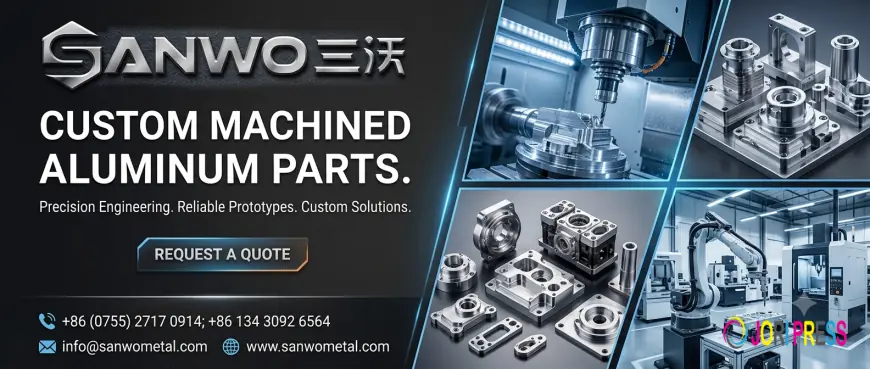
In today's competitive manufacturing landscape, precision, durability, and production efficiency are more important than ever. Custom machined aluminum parts have become the preferred choice for companies that require lightweight, corrosion-resistant, and highly accurate components. From aerospace and automotive engineering to robotics, medical devices, consumer electronics, and industrial automation, aluminum machining continues to drive innovation across industries. SanwoMetal specializes in delivering precision-engineered aluminum components tailored to exact customer specifications. With advanced CNC machining capabilities, strict quality control, and extensive manufacturing expertise, the company helps businesses reduce production risks while improving product performance. Whether customers need rapid prototypes, small production batches, or large-scale manufacturing, professionally machined aluminum components provide exceptional dimensional accuracy, consistent quality, and cost-effective production solutions.
Understanding Custom Aluminum Machining
What Are Custom Machined Aluminum Parts?
Custom machined aluminum parts are components manufactured from aluminum alloys using advanced CNC machining technologies. Unlike standard off-the-shelf products, these parts are produced according to unique customer drawings, CAD models, or engineering specifications.
Modern CNC equipment allows manufacturers to create highly complex geometries with exceptional precision while maintaining tight tolerances throughout production.
Common Aluminum Grades Used
Different applications require different aluminum alloys. Some of the most widely used materials include:
-
Aluminum 6061
-
Aluminum 6063
-
Aluminum 7075
-
Aluminum 5052
-
Aluminum 2024
Each alloy offers specific benefits in strength, machinability, corrosion resistance, and weight, making material selection an important part of the engineering process.
Benefits of Choosing Precision Aluminum Components
Lightweight Yet Strong
Aluminum weighs approximately one-third as much as steel while maintaining impressive structural strength. This makes it ideal for industries seeking improved efficiency without sacrificing durability.
Excellent Corrosion Resistance
Natural oxide formation protects aluminum from rust and environmental damage, reducing maintenance costs and extending product lifespan.
Outstanding Machinability
Aluminum machines faster than many metals, allowing shorter production cycles, smoother surface finishes, and lower manufacturing costs.
High Dimensional Accuracy
Modern CNC machining produces complex components with exceptional repeatability and precision, ensuring consistent quality across production batches.
Excellent Thermal Conductivity
Many electronic and industrial applications require efficient heat dissipation. Aluminum provides excellent thermal performance for heat sinks, housings, and mechanical assemblies.
Industries That Depend on Custom Machined Aluminum Parts
Manufacturers across numerous industries rely on precision aluminum machining.
Aerospace
Aircraft manufacturers require lightweight structural components with outstanding strength-to-weight ratios.
Automotive
Electric vehicles, racing cars, and commercial transportation use aluminum components to reduce weight and improve fuel efficiency.
Medical Equipment
Medical instruments require highly accurate machined components with excellent surface quality and dimensional consistency.
Robotics
Precision aluminum parts improve robotic accuracy while minimizing overall equipment weight.
Consumer Electronics
Smart devices, communication equipment, and computer hardware frequently incorporate precision-machined aluminum housings and frames.
Industrial Automation
Factories use aluminum machine parts for automation equipment, fixtures, jigs, and precision mechanical systems.
Why CNC Machining Is Ideal for Aluminum Manufacturing
Precision Engineering
Computer-controlled machining ensures every component meets exact specifications with minimal variation.
Complex Geometry
Advanced multi-axis CNC equipment creates intricate features impossible with conventional machining methods.
Faster Production
Automation shortens manufacturing cycles while maintaining exceptional accuracy.
Better Surface Finish
Modern machining techniques produce smoother surfaces, reducing post-processing requirements.
Repeatable Quality
Whether manufacturing ten parts or ten thousand, CNC systems ensure consistency throughout production.
Manufacturing Process at SanwoMetal
Step 1: Design Review
Engineers evaluate customer drawings, material selection, tolerances, and manufacturability.
Step 2: Material Selection
The appropriate aluminum alloy is selected according to strength, corrosion resistance, and application requirements.
Step 3: CNC Programming
Experienced programmers generate optimized machining paths for maximum precision and efficiency.
Step 4: Precision Machining
Advanced CNC milling, turning, drilling, and tapping operations create the finished component.
Step 5: Quality Inspection
Every part undergoes dimensional inspection using precision measuring equipment before shipment.
Step 6: Surface Treatment
Depending on customer requirements, parts may receive:
-
Anodizing
-
Sandblasting
-
Powder coating
-
Polishing
-
Brushing
-
Chemical conversion coating
Comparison Table: Aluminum vs Other Manufacturing Materials
|
Feature |
Aluminum |
Steel |
Plastic |
|
Weight |
Very Light |
Heavy |
Very Light |
|
Corrosion Resistance |
Excellent |
Moderate |
Excellent |
|
Strength-to-Weight Ratio |
Excellent |
Good |
Moderate |
|
Machinability |
Excellent |
Moderate |
Good |
|
Thermal Conductivity |
High |
Moderate |
Low |
|
Recyclability |
Excellent |
Excellent |
Limited |
|
Precision CNC Machining |
Excellent |
Excellent |
Good |
How to Choose the Right Manufacturing Partner
Selecting a reliable CNC machining supplier directly affects product quality and project success.
Consider the following factors:
-
Industry experience
-
Advanced CNC equipment
-
Certified quality management
-
Material expertise
-
Engineering support
-
Competitive lead times
-
Surface finishing capabilities
-
Transparent communication
-
Consistent quality inspection
-
Flexible production capacity
Companies like SanwoMetal combine engineering knowledge with modern manufacturing technology to deliver reliable machining solutions for global customers.
Best Practices for Designing Aluminum Components
Simplify Geometry
Avoid unnecessary complexity that increases machining time and cost.
Use Appropriate Tolerances
Specify tight tolerances only where function requires them.
Select Suitable Aluminum Alloys
Choose materials based on mechanical properties rather than price alone.
Consider Surface Finishing Early
Planning finishing requirements during design helps reduce manufacturing delays.
Frequently Asked Questions
1. What are custom machined aluminum parts?
They are precision aluminum components manufactured according to customer drawings or CAD files using CNC machining technology.
2. Why is aluminum widely used in machining?
Because it is lightweight, corrosion-resistant, strong, easy to machine, and highly recyclable.
3. Which industries commonly use aluminum CNC parts?
Aerospace, automotive, electronics, robotics, medical devices, telecommunications, defense, and industrial automation.
4. Which aluminum alloy is most popular?
6061 aluminum is widely used due to its excellent balance of strength, corrosion resistance, and machinability.
5. Can aluminum parts receive surface treatments?
Yes. Common treatments include anodizing, polishing, powder coating, sandblasting, brushing, and chemical conversion coatings.
6. What tolerances can CNC machining achieve?
Modern CNC machining can achieve very tight tolerances depending on design requirements and material selection.
7. Is aluminum environmentally friendly?
Yes. Aluminum is fully recyclable without significant loss of quality, making it a sustainable manufacturing material.
8. Can manufacturers produce both prototypes and production parts?
Yes. CNC machining supports rapid prototyping, low-volume production, and large-scale manufacturing.
9. What information should customers provide before production?
Engineering drawings, CAD files, material requirements, tolerances, quantities, and surface finish specifications.
10. Why choose SanwoMetal for precision aluminum machining?
SanwoMetal offers advanced CNC machining technology, experienced engineers, rigorous quality inspection, competitive pricing, flexible production capacity, and dependable global delivery for precision aluminum manufacturing projects.
Final Thoughts
Choosing the right supplier for custom machined aluminum parts is essential for achieving outstanding product quality, manufacturing efficiency, and long-term business success. Precision machining ensures every component meets exact engineering requirements while reducing waste, improving reliability, and accelerating production timelines. With extensive CNC machining expertise, advanced manufacturing equipment, and a strong commitment to quality, SanwoMetal delivers dependable aluminum machining solutions for customers across a wide range of industries. Whether your project requires prototypes, customized components, or high-volume production,
Contact - +86 (0755) 2717 0914,+86 134 3092 6564
What's Your Reaction?
 Like
0
Like
0
 Dislike
0
Dislike
0
 Love
0
Love
0
 Funny
0
Funny
0
 Angry
0
Angry
0
 Sad
0
Sad
0
 Wow
0
Wow
0