









































Custom Drone Battery Solutions From Jentc Technology in 2026

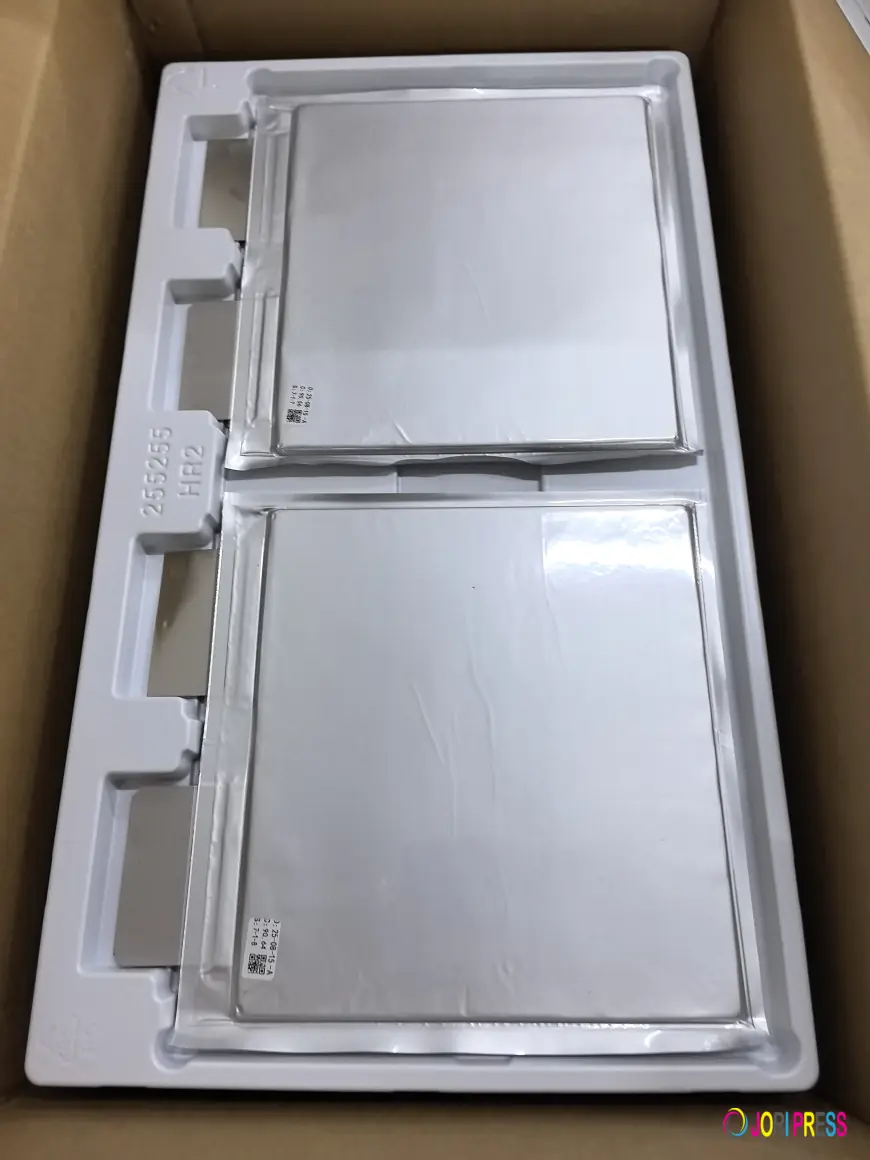
Drone operators across agriculture, inspection, logistics, and defense-adjacent sectors continue to face a familiar set of obstacles: limited flight time, unstable power delivery in extreme temperatures, slow charging cycles, and inconsistent battery performance over repeated use. Addressing these challenges requires more than an off-the-shelf cell — it requires an engineering approach built around the specific mission profile of each aircraft. This is the space in which Shenzhen Jentc Technology Co., Ltd., operating under the brand names Jentc and Rechane, has concentrated its efforts since its founding in 2011.
A Fifteen-Year Focus on High-Rate Battery Customization
Headquartered in Shenzhen with business coverage extending globally, Jentc Technology positions itself as a provider of high-rate battery customization solutions. The company's scope spans the full technical stack: cell formula design, supporting BMS (Battery Management System) development, and structural design. Rather than offering a single fixed product, Jentc builds tailored battery systems — cell plus BMS plus structure — around the actual demands of each application.
The company's core values, described as Safety, Innovation, and Quality, inform a business philosophy centered on "industry development as the guide, application technology as the cornerstone, and value enhancement as the mission." Over the years, this philosophy has translated into a series of firsts: the 2015 launch of the 4.35V high-voltage drone battery (LIHV), the 2019 introduction of an active battery balancing BMS and a high-voltage 3C fast-charging drone battery, the 2021 rollout of a 4.4V ultra-high-voltage large-capacity drone battery, and continued development through 2022–2024 of intelligent management modules, data acquisition systems, and a 400V high-voltage drone battery and charging solution. Jentc holds dozens of patents and has obtained global certifications including UL, CE, CB, and UN38.3.
Why Custom Drone Batteries Matter
Standard batteries are engineered for average use cases, which means they frequently underperform in specialized scenarios. Jentc's custom drone battery line is built specifically to improve overall battery life and power performance where pain points such as short battery life, insufficient power, low charging efficiency, discharge control failure, and poor low-temperature performance are most acute.
Two differentiating pillars define this approach:
Battery core customization. By selecting higher-performing positive and negative electrode sheets, electrolytes, separators, and conductive agents — and applying more innovative formulas and processes — Jentc increases the energy density of the drone battery, resulting in longer flight time and stronger power output.
UAV battery BMS customization. More reasonable SOC calculation and discharge logic address battery expansion and discharge failure issues, improving overall safety. Active balancing technology maintains consistency among battery cells, extending the cycle life of the UAV battery.

The customization scope covers voltage up to 400V, discharge rates below 180C, energy density up to 420Wh/kg, cell capacity up to 90AH, fast charge at 5C or below, low-temperature operation above -70°C, high-temperature operation below 80°C, and a complete set of drone battery BMS software and hardware solutions. This range allows Jentc to serve agricultural plant protection, large-load drones, power and photovoltaic inspection, crossing drones, pipeline inspection, logistics, cleaning, and formation drone applications.
BMS as a Core Differentiator
A drone battery is only as reliable as the system managing it. Jentc's customized lithium battery BMS development addresses scenarios where standard protection schemes fall short. Beyond basic overcharge, over-discharge, over-current, short circuit, and temperature protection, the company's BMS offerings include a current-limiting function tailored to flight scenarios, real-time data collection of voltage, current, and temperature, and customizable communication protocols — including CAN bus and Bluetooth — for transmitting operational data to external systems such as drones and energy storage EMS platforms. Additional capabilities include adjustable logic control, SOC and SOH calculation, active and passive balancing, automated logging for fault diagnosis, and 4G-enabled remote monitoring that reduces on-site operation and maintenance requirements.
Evidence From the Field
Jentc's project history illustrates how these customization principles translate into measurable outcomes. In a fishing drone application, the company replaced a customer's 22.2V 6.5Ah ternary rate lithium battery weighing 1000g with a 23.1V 10AH semi-solid battery weighing 1100g, increasing flight time from 16 minutes to 24 minutes — a 50 percent improvement at nearly the same weight.
For northern inspection drones and drone nests, a 15.2V 6.7Ah high-rate lithium battery requiring a warm-up period was replaced with a 15.2V 10AH -40°C low-temperature battery featuring 2C fast charging, cutting charging time by 30 minutes while eliminating the need for preheating.
In a high-temperature drone scenario, a 22.2V 10Ah cylindrical high-rate battery rated for -20°C to 60°C was reengineered into a 22.2V 10AH battery capable of operating at 70°C, meeting the demands of extreme-heat environments without bulging.
For large and heavy-load UAVs requiring extended flight windows for takeoff and landing sequences, Jentc replaced an 88.8V 24S 10C 10000mAh battery with a 4.4V ultra-high-voltage cell configuration, raising capacity to 12000mAh at 10C while reducing overall weight to 5.8kg. The result was an energy density increase exceeding 25 percent and flight life extended from 5.5 minutes to 7.5 minutes, surpassing the customer's expectation of 6.5 minutes.
In agricultural plant protection, a 22.8V 1600mAh/22.8V 22000mAh high-voltage drone battery using high-temperature electrolyte, ceramic diaphragm, and customized copper foil reduced charging time from 50 minutes to 18 minutes while resisting bulging under 3C fast charging.
A System-Level Approach to Drone Power
What distinguishes Jentc's methodology is the refusal to treat cell chemistry and BMS design as separate problems. Each case begins with the pain point defined by the operating environment — whether that is water exposure, extreme temperature, high discharge current, or extended mission duration — and works backward through material selection, electrode processing, and control logic to a specific specification. This system-level customization, spanning semi-solid-state batteries, high-voltage configurations, fast-charging designs, and integrated BMS software, reflects the "Application Scenario + Innovative Technology" route the company has pursued since its earliest technical milestones.
For organizations evaluating drone power systems where standard batteries fall short of mission requirements, Jentc Technology's track record of applied customization — documented across agricultural, inspection, marine, and high-performance flight scenarios — offers a reference point for how targeted engineering can translate directly into flight time, safety, and operational efficiency gains.
What's Your Reaction?
 Like
0
 Dislike
0
 Love
0
 Funny
0
 Angry
0
 Sad
0
 Wow
0