


































Common Documentation Errors in Generic Drug Submissions
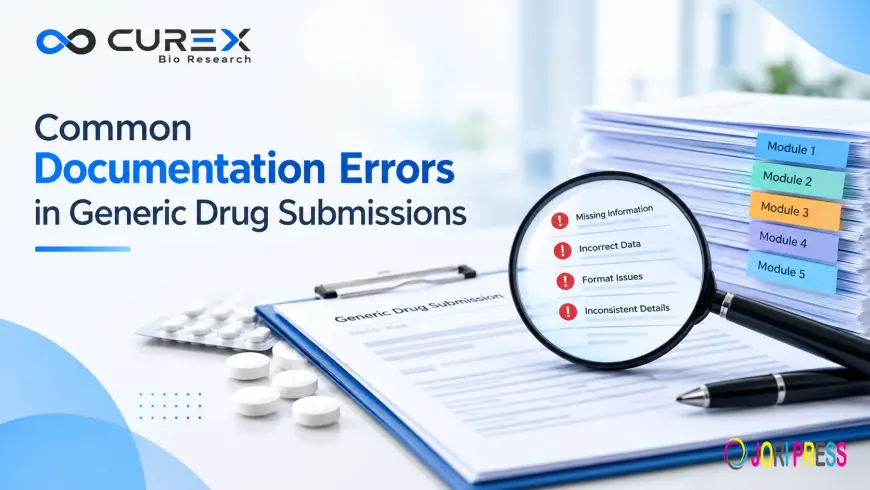
For generic pharmaceutical manufacturers, the Abbreviated New Drug Application (ANDA) is the result of extensive formulation and regulatory efforts. However, the submission process is challenging, with documentation errors potentially leading to significant delays or rejections. A study examining FDA submissions from 2014-2024 found 172 deficiencies in ANDAs, with bioequivalence (35%), chemistry (34%), and labeling (31%) as the primary issues. Method validation deficiencies were also common, often due to non-compliance with FDA guidelines.
Understanding and preventing common errors is crucial for obtaining first-cycle approval and accelerating the availability of affordable generic medicines to patients.
ANDA Rejection
ANDA submissions can fail at two distinct stages:
- Technical Rejection: Understanding and preventing common errors is crucial for obtaining first-cycle approval and accelerating the availability of affordable generic medicines to patients.
- Refuse-to-Receive (RTR): This occurs when a dossier passes technical checks but is not adequate for review, potentially leading to an RTR (Refuse to Review) decision if it has one or more major deficiencies or ten or more minor deficiencies. Common reasons for RTR include inadequate stability data, incomplete information, poor dissolution, differences from the Reference Listed Drug (RLD), and failure to respond to information requests.
Most Common Documentation Errors
- Incomplete or Inaccurate Bioequivalence Data
Bioequivalence issues are the most prevalent deficiency in ANDA submissions, with common problems identified.
- Chemistry, Manufacturing, and Controls (CMC) Deficiencies
Chemistry-related deficiencies are nearly as common as bioequivalence issues, with frequent errors noted in the context.
- Labelling Errors
Labelling issues constitute 31% of deficiencies, with non-compliance with Reference Listed Drug (RLD) labelling being the most frequent problem, involving discrepancies in prescribing information, patient labelling, and carton/container labelling.
- Incomplete FDA Form 356h
One common reason for a Request for Reference (RTR) is an incomplete or improper FDA Form 356h, which must be accurately completed, as it serves as the application's cover letter.
- Data Integrity Issues
Data integrity is a key regulatory concern, highlighted by the FDA's findings of significant issues during inspections of CROs. This has resulted in import alerts and further reviews of previously approved medications linked to non-compliant facilities.
- DMF and Third-Party Documentation Errors
Many ANDAs depend on Drug Master Files (DMFs) for their active pharmaceutical ingredients, leading to common errors in the submission process.
- Incomplete or Inconsistent Responses to FDA Queries
When the FDA issues deficiency letters, applicants are required to provide complete responses; merely promising to submit information later may be deemed a partial response, potentially leading to the FDA not reviewing any accompanying amendments.
- Poor Narrative and Lack of Clarity
Regulatory reviewers assess numerous submissions and often face challenges with documents that lack a coherent scientific narrative or excessively utilize jargon, leading to delays. A successful submission should present a clear, navigable argument rather than a disorganized collection of files.
The impact of documentation errors extends far beyond administrative inconvenience:
- Refuse-to-Receive (RTR) occurs when there are major deficiencies or ten or more minor deficiencies, necessitating resubmission and the restart of the review clock.
- Delayed approvals can prolong review timelines by months, even for minor deficiencies that do not trigger RTR. The rates of first-cycle approvals are consistently between 121 and 148 per year.
- Increased costs arise from each additional review cycle, impacting resources, time, and opportunity costs significantly.
- In the generic pharmaceutical sector, speed-to-market is crucial; delays result in lost revenue and heightened competition.
CurexBio offers medical writing and regulatory affairs services that assist generic manufacturers in avoiding documentation errors and obtaining first-cycle ANDA approval.
Expert Medical Writing Services
CurexBio provides expert medical and regulatory writing services to ensure scientific accuracy and compliance in various documents, including clinical study protocols, clinical study reports, investigator brochures, regulatory summaries, and submission documents. By involving medical writers early in the development process, CurexBio facilitates the transformation of scientific data into documentation that is easily navigable for regulatory reviewers.
Rigorous Data Quality and Integrity
CurexBio employs Source Data Verification (SDV) and risk-based monitoring to identify and resolve data discrepancies effectively. Our monitoring framework features central laboratory support and integrated data systems, promoting a standardized and accurate data flow, which is essential for quality medical writing and regulatory submissions.
Integrated Regulatory Affairs Support
CurexBio's regulatory affairs team offers dossier preparation for IND, NDA, and ANDA submissions, develops regulatory strategies, conducts gap analyses to identify deficiencies before submission, and manages the lifecycle of products.
Comprehensive Clinical Operations
CurexBio manages clinical operations including site selection, training, and regulatory file maintenance, ensuring trials comply with GCP standards from the start, thus establishing a reliable foundation for the final report.
Pharmacovigilance and Safety Monitoring
CurexBio manages clinical operations including site selection, training, and regulatory file maintenance, ensuring trials comply with GCP standards from the start, thus establishing a reliable foundation for the final report.
Documentation errors significantly delay generic drug approvals, costing manufacturers millions. Issues like incomplete bioequivalence data and CMC deficiencies can lead to RTR decisions and extended review timelines. CurexBio offers medical writing, regulatory expertise, and clinical research services to help generic manufacturers avoid these errors, ensuring documents are accurate and compliant for faster first-cycle approvals, ultimately benefiting patients.
Because when documentation is done right, patients don't have to wait.
Ready to avoid costly documentation errors in your next generic submission? Contact CurexBio to learn how our medical writing and regulatory affairs services can support your ANDA success.
What's Your Reaction?
 Like
0
Like
0
 Dislike
0
Dislike
0
 Love
0
Love
0
 Funny
0
Funny
0
 Angry
0
Angry
0
 Sad
0
Sad
0
 Wow
0
Wow
0