






































CNC Machining Services: A Complete Guide to Precision Manufacturing
Discover CNC machining services for precision manufacturing, including processes, benefits, materials, applications, and tips for choosing the right machining provider.

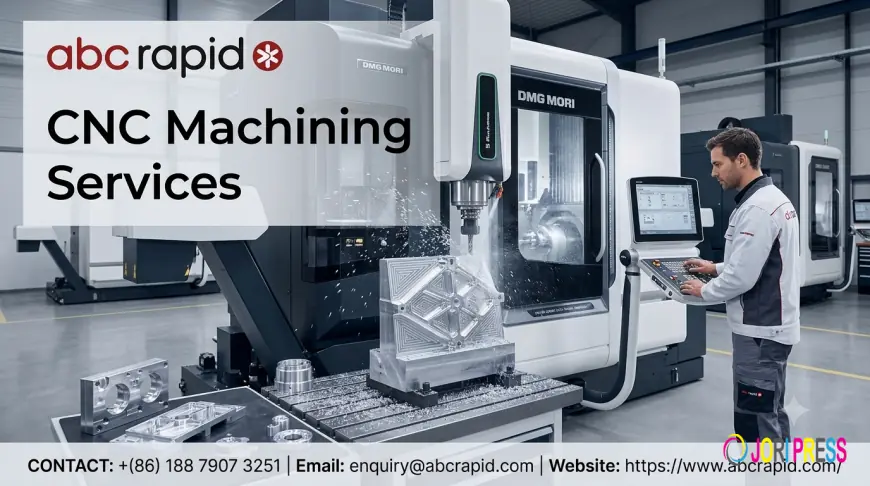
CNC machining services have become an important part of modern manufacturing because they allow companies to produce accurate, reliable, and custom-made components with excellent consistency. CNC stands for Computer Numerical Control, a technology that uses computer programs to control machining equipment and cutting tools. This makes it possible to manufacture everything from simple brackets and shafts to complex engineering components with precise dimensions.
Today, CNC machining is used across many industries, including automotive, aerospace, medical equipment, electronics, robotics, industrial machinery, and consumer products. Businesses can use CNC machining for prototypes, custom parts, small production batches, and larger manufacturing projects. The process is especially useful when accuracy, repeatability, material flexibility, and faster production are important.
What Are CNC Machining Services?
CNC machining services involve removing material from a solid workpiece to create a finished component according to a digital design. The process normally starts with a CAD model created by an engineer or product designer. This design is converted into machine instructions that guide the cutting tools.
Depending on the shape and requirements of the component, manufacturers can use different CNC processes. CNC milling is suitable for parts with flat surfaces, slots, pockets, holes, and complex shapes, while CNC turning is commonly used for cylindrical components such as shafts, pins, bushings, and threaded parts.
Other operations can include drilling, boring, tapping, reaming, and surface finishing. By combining several machining processes, manufacturers can produce complete components that are ready for assembly or further production.
Why Are CNC Machining Services Important?
One of the biggest advantages of CNC machining is its ability to deliver repeatable results. Once the machining program has been prepared and tested, the same process can be used to manufacture multiple parts with consistent dimensions.
This is particularly valuable when components need to fit together as part of a larger assembly. Even a small dimensional difference can affect the performance of mechanical products, so accurate manufacturing is essential.
Major Benefits of CNC Machining
CNC machining offers several advantages for modern product development and manufacturing:
-
High dimensional accuracy
-
Consistent production quality
-
Fast prototype development
-
Support for many metals and plastics
-
Suitable for custom and complex components
-
No expensive production mold required
-
Suitable for low-volume and production quantities
-
Wide range of finishing options
-
Easy integration with CAD and digital manufacturing workflows
Another important benefit is design flexibility. Engineers can modify a digital design and manufacture a new version without creating a completely new mold or production tool.
Common Types of CNC Machining
Different CNC processes are selected according to the geometry and requirements of the component. Understanding these processes can help businesses choose the right manufacturing solution.
CNC Milling
CNC milling uses rotating cutting tools to remove material from a stationary workpiece. It is one of the most widely used machining methods and can produce components with holes, pockets, slots, flat surfaces, and three-dimensional features.
Three-axis CNC machines are suitable for many standard components, while four-axis and five-axis machines can be used for more complicated geometries. Multi-axis machining can also reduce the number of setups required during production.
CNC Turning
CNC turning is mainly used for cylindrical or round components. During the process, the workpiece rotates while a cutting tool removes material to achieve the required shape.
Common CNC-turned parts include shafts, bushings, pins, rings, spacers, threaded components, and other rotational parts.
CNC Drilling and Tapping
Drilling creates accurate holes in a component, while tapping creates internal threads. These operations are often combined with milling or turning to complete a finished part.
Correct hole diameter, depth, thread size, and positioning are important when components need to connect with screws, bolts, or other mechanical parts.
5-Axis CNC Machining
5-axis CNC machining allows the cutting tool or workpiece to move across multiple axes. This provides greater access to complicated surfaces and angled features.
It is particularly useful for aerospace components, medical parts, molds, complex mechanical components, and other designs that would require several setups on conventional machines.
Materials Used for CNC Machining
Material selection plays an important role in CNC manufacturing. The right material depends on the component's strength, weight, temperature resistance, corrosion resistance, operating environment, and budget.
Common CNC machining materials include:
|
Material |
Common Applications |
Main Benefits |
|
Aluminum |
Housings, brackets, prototypes |
Lightweight and easy to machine |
|
Stainless Steel |
Industrial and medical components |
Strong and corrosion resistant |
|
Brass |
Fittings and electrical parts |
Excellent machinability |
|
Copper |
Electrical components |
Excellent conductivity |
|
Titanium |
Aerospace and performance parts |
Strong and lightweight |
|
ABS |
Prototypes and enclosures |
Lightweight and economical |
|
POM |
Gears and bushings |
Low friction and good stability |
|
PEEK |
High-performance parts |
High temperature and chemical resistance |
Material should not be selected based only on price. The final application should always be considered because the material can directly affect the durability and performance of the finished component.
How to Design Parts for CNC Machining
A well-designed component can be easier and less expensive to manufacture. Before sending a design to a CNC machining supplier, engineers should review several important factors.
Consider Tool Access
Cutting tools need enough space to reach the required features. Very deep pockets or difficult internal areas can increase machining time and may require specialized tools.
Avoid Unnecessary Tight Tolerances
Not every dimension needs an extremely tight tolerance. Tight tolerances can require additional machining and inspection, which may increase production costs.
Only critical dimensions should normally receive special tolerance requirements.
Use Suitable Internal Corner Radii
Because most CNC cutting tools are round, perfectly sharp internal corners can be difficult to produce. Adding appropriate internal radii can make machining easier and reduce unnecessary tool movement.
Consider Wall Thickness
Very thin walls can be difficult to machine because they may vibrate or deform during cutting. A suitable wall thickness can improve stability and production consistency.
CNC Machining Services for Prototypes and Production
CNC machining is useful throughout the product development process. During the early stages, companies can use CNC machining to create functional prototypes from materials similar to those planned for the final product.
This allows engineers to test dimensions, assembly, strength, appearance, and performance before moving into large-scale manufacturing.
For low-volume production, CNC machining can also be a cost-effective option because it does not normally require the expensive molds associated with processes such as injection molding.
For higher production volumes, the best manufacturing method depends on the component, quantity, material, geometry, and required unit cost.
CNC Machining vs. Other Manufacturing Methods
|
Manufacturing Method |
Best Used For |
Tooling Requirement |
|
CNC Machining |
Prototypes, custom and low-volume parts |
Low |
|
Injection Molding |
High-volume plastic parts |
High |
|
3D Printing |
Rapid prototypes and complex designs |
Low |
|
Die Casting |
High-volume metal components |
High |
CNC machining is often a strong choice when precision is important and production quantities do not justify expensive dedicated tooling.
Quality Control in CNC Machining
Quality control is an important part of reliable CNC manufacturing. A professional manufacturer should inspect components according to their drawings, specifications, and application requirements.
Inspection may involve measuring tools such as calipers, micrometers, height gauges, gauges, optical measuring equipment, and coordinate measuring machines.
Depending on the project, customers may also require inspection reports, material certificates, certificates of conformity, or other quality documentation.
A strong quality-control process helps identify dimensional problems before parts reach the assembly stage.
Industries That Use CNC Machining Services
The flexibility of CNC technology makes it suitable for many industries. Automotive manufacturers use CNC-machined components for mechanical systems, fixtures, brackets, and prototypes. Aerospace companies use precision-machined parts where accuracy and material performance are important.
Medical manufacturers can use CNC machining for equipment components and specialized parts, while electronics companies use it for enclosures, heat sinks, brackets, and mounting components.
Other common applications include:
-
Robotics and automation
-
Industrial machinery
-
Consumer products
-
Electrical equipment
-
Engineering equipment
-
Automotive components
-
Aerospace components
-
Medical devices
-
Product development and prototyping
How to Choose the Right CNC Machining Company
Choosing a CNC machining supplier requires more than comparing prices. A reliable supplier should understand your technical requirements and communicate clearly throughout the project.
Before selecting a manufacturing partner, consider the following:
-
Check the company's CNC machining capabilities.
-
Confirm whether it can work with your required materials.
-
Review its tolerance and inspection capabilities.
-
Ask about available surface finishes.
-
Check whether it supports prototype and production quantities.
-
Confirm expected production and delivery times.
-
Provide complete CAD files and technical drawings.
-
Ask whether the supplier performs design-for-manufacturing reviews.
A supplier that identifies manufacturing problems before production can help reduce delays, unnecessary costs, and rejected parts.
Frequently Asked Questions
1. What are CNC machining services?
CNC machining services use computer-controlled machines to manufacture components by cutting material from a solid workpiece according to a digital design.
2. What materials can be CNC machined?
Common materials include aluminum, stainless steel, steel, brass, copper, titanium, ABS, nylon, POM, polycarbonate, and PEEK.
3. Is CNC machining suitable for prototypes?
Yes. CNC machining is widely used for functional prototypes because parts can be manufactured without creating expensive production molds.
4. Can CNC machines manufacture complex components?
Yes. Advanced CNC equipment, particularly five-axis machines, can manufacture complex surfaces, angled features, pockets, and other detailed geometries.
5. What is CNC milling used for?
CNC milling is commonly used to manufacture brackets, housings, plates, fixtures, machine components, and parts containing holes, slots, pockets, and complex surfaces.
6. What is CNC turning used for?
CNC turning is mainly used for cylindrical components such as shafts, pins, bushings, rings, spacers, and threaded parts.
7. How accurate are CNC machined parts?
CNC machining can achieve high dimensional accuracy, but the actual achievable tolerance depends on the machine, material, geometry, tooling, process, and specified requirements.
8. Can CNC machined parts be surface finished?
Yes. Depending on the material and application, parts can receive finishes such as anodizing, polishing, bead blasting, painting, plating, and other treatments.
9. How can CNC machining costs be reduced?
Costs can often be reduced by avoiding unnecessary tight tolerances, designing for good tool access, selecting machinable materials, simplifying complex features, and choosing an appropriate production quantity.
10. What files are required for CNC machining?
A 3D CAD model is generally required. A 2D technical drawing is also recommended when the project includes specific tolerances, threads, surface finishes, or inspection requirements.
11. Is CNC machining suitable for small production runs?
Yes. CNC machining can be an effective option for prototypes, custom parts, and low-volume production because it does not normally require dedicated production molds.
12. How can I get a CNC machining quote?
To receive an accurate quotation, provide your CAD model, material requirements, quantity, tolerances, surface finish, delivery requirements, and any inspection or certification requirements.
Conclusion
CNC machining services provide manufacturers with a flexible and dependable way to produce precision components for prototypes, custom projects, and production applications. With the right combination of CNC technology, material selection, design, tolerances, finishing, and quality inspection, businesses can achieve reliable parts while controlling manufacturing costs.
Choosing the right machining partner is just as important as choosing the right manufacturing process. A capable supplier can review your design, recommend suitable materials and machining methods, identify potential production challenges, and deliver components according to your requirements.
If you are looking for reliable CNC manufacturing support for your next project, AbcRapid can help turn your digital designs into accurate, functional, and production-ready components. Share your CAD files and project requirements to discuss your CNC machining needs and get started with a suitable manufacturing solution.
Contact - +(86) 188 7907 3251
What's Your Reaction?
 Like
0
Like
0
 Dislike
0
Dislike
0
 Love
0
Love
0
 Funny
0
Funny
0
 Angry
0
Angry
0
 Sad
0
Sad
0
 Wow
0
Wow
0