
































Choosing the Right Motorcycle License Plate Mount for Your Bike
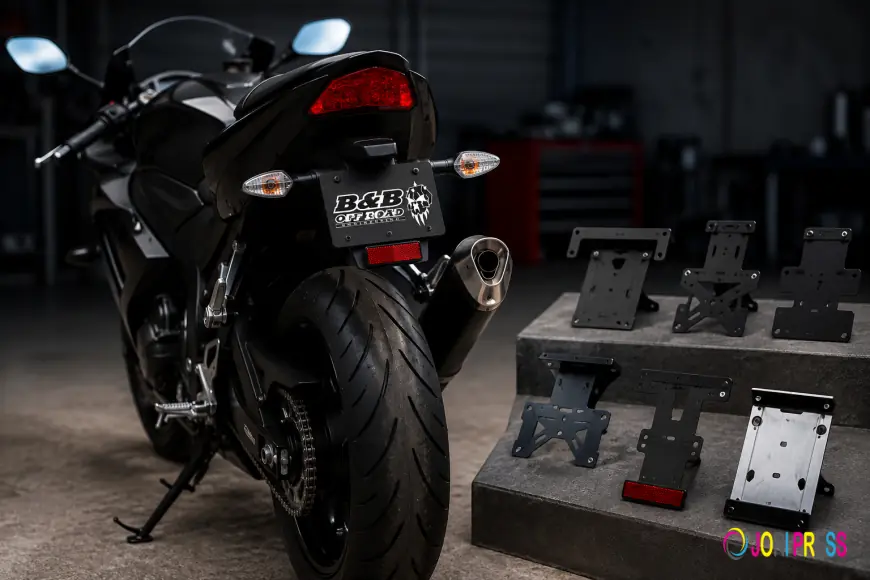
If you've ever looked at the back of your motorcycle and winced at the bulky factory bracket hanging below your tail light, you're not alone. Stock license plate holders are usually oversized, made from cheap plastic, and designed more for legal compliance across dozens of markets than for how your bike actually looks or performs off-road. Swapping it out is one of the simplest upgrades you can make, but picking the right motorcycle license plate mount takes a bit more thought than grabbing the first one you see online.
This guide walks through what these mounts actually do, the factors that matter when choosing one, and how to avoid the mistakes that lead to a cracked plate, a failed inspection, or a mount that rattles loose on your first trail ride.
What Is a Motorcycle License Plate Mount?
A license plate mount is the bracket, arm, or plate assembly that holds your registration plate (and usually your rear light and indicators) in position at the back of the bike. On most motorcycles, this comes as one bulky unit from the factory, often called the "tail tidy" once it's replaced with a slimmer aftermarket version.
You'll also hear the term fender eliminator used almost interchangeably with tail tidy. Technically, a fender eliminator refers to removing the rear fender or mudguard entirely and replacing it with a compact bracket that holds only the plate and lighting, while a tail tidy can sometimes retain a small fender section. In practice, most riders use the two terms to describe the same category of upgrade: a lighter, tighter rear-end setup that ditches the stock plastic.
Why Upgrade Your Stock License Plate Bracket?
There are a few practical reasons riders replace the factory setup, beyond the obvious styling improvement:
- Weight reduction – Stock brackets are often made from thick plastic and steel, adding unnecessary weight to the rear of the bike.
- Ground clearance – On adventure and enduro bikes, a low-hanging factory mount can get caught on rocks, ruts, or roots during off-road riding.
- Reduced mud and debris buildup – Enclosed factory units trap mud and water, which can accelerate corrosion on wiring and fasteners.
- Better sightlines – A slimmer mount often improves visibility for the rear light and indicators, which matters for both looks and safety.
- Crash resistance – Off-road riders drop their bikes. A compact, well-mounted plate holder is less likely to snap off in a low-speed tip-over than a wide factory bracket.
None of this means the stock part is badly designed manufacturers have to account for global regulations, cost, and mass production. But for riders who use their bikes off-road, commute daily, or simply want a cleaner rear end, an aftermarket mount is usually worth the upgrade.
Key Factors to Consider When Choosing One
Not all mounts are created equal, and the "best" one depends heavily on your bike, your riding style, and where you live. Here's what to weigh up before buying.
1. Legal Compliance First
This is the factor riders most often overlook. Registration plate laws vary by country and even by state or region, covering things like:
- Minimum plate visibility angle (how far to the side the plate must be readable from)
- Plate lighting requirements (many jurisdictions require the plate to be illuminated at night)
- Mounting angle limits (some regions cap how far off-vertical the plate can sit)
- Retention of reflectors or indicators in their original position
Before buying any mount, check your local road transport authority's requirements. A mount that looks great but pushes your plate outside the legal viewing angle can result in a fine or a failed roadworthy inspection — and in a genuine crash, an obscured plate can complicate insurance or police reporting.
2. Material and Build Quality
Aftermarket mounts are typically made from one of the following:
| Material | Pros | Cons |
|---|---|---|
| Aluminium | Lightweight, corrosion-resistant, strong | Higher cost than plastic |
| Stainless steel | Very durable, handles vibration well | Heavier than aluminium |
| Reinforced plastic/nylon | Budget-friendly, flexible under impact | Can degrade with UV exposure over time |
For bikes that see regular off-road use, aluminium or stainless steel mounts generally hold up better to vibration, mud, and the occasional knock than plastic alternatives. If you're mostly riding on-road, a quality reinforced plastic unit can be perfectly adequate and easier on the budget.
3. Compatibility With Your Bike
Not every mount fits every model, even within the same brand's lineup. Check that the product is listed as a direct fit for your bike's exact make, model, and year — subtle differences in subframe design or light wiring connectors between model years can make a "close enough" mount a poor fit. Look for:
- Confirmed compatibility with your bike's specific model year
- Whether it retains your existing indicators or requires new ones
- Whether the wiring uses plug-and-play connectors or needs splicing
4. Mounting Style
There are generally two approaches:
- Direct-fit tail tidy kits – Designed specifically for one model, bolting into existing mounting points with minimal modification.
- Universal mounts – Adjustable brackets that can fit a wider range of bikes, often requiring more setup and fabrication.
Direct-fit kits are almost always the better choice if one exists for your bike, since they're engineered around your exact subframe and lighting layout. Universal mounts make sense mainly for older, less common, or heavily customized bikes where a direct-fit option doesn't exist.
5. Weather and Vibration Resistance
Off-road and adventure riding exposes the rear of the bike to constant vibration, water, and mud. Look for mounts with:
- Stainless steel or coated hardware to resist rust
- Rubber isolation mounts or grommets to dampen vibration (which also protects your tail light bulb or LED unit)
- Sealed or weatherproof wiring connectors if the mount includes new lighting
Tail Tidy vs Fender Eliminator: What's the Difference?
Since these terms get used loosely, it's worth clarifying:
- A tail tidy typically replaces the entire rear plastic assembly plate holder, light, and sometimes a small splash guard with a compact, purpose-built unit.
- A fender eliminator more specifically removes the rear fender/mudguard, sometimes paired with a separate plate bracket.
In everyday use, most riders shopping for a motorcycle license plate mount are really looking for one of these two products, and many manufacturers sell combined kits that do both jobs at once. When comparing products, check exactly what's included some kits come with new LED lighting and indicators, while others only supply the mounting bracket and expect you to reuse your existing lights.
Installation Tips
Most tail tidy and fender eliminator kits are designed for a straightforward home installation, but a few tips make the process smoother:
- Read the full instructions before starting – Confirm which wiring connectors you'll need and whether any resistors are required for indicators (some LED indicators need load resistors to prevent fast-blinking fault codes).
- Support the plate and light assembly while removing the stock bracket – Wiring harnesses can be tucked up inside the tail section and are easy to snag.
- Torque bolts to the manufacturer's spec – Over-tightening plastic or aluminium brackets is a common cause of cracking.
- Test all lighting before finishing the job – Check brake light, running light, and both indicators before you ride away.
- Recheck the plate angle – After installation, confirm the plate still meets your local visibility angle requirements.
Common Mistakes to Avoid
- Buying based on looks alone – A mount that looks great in photos but isn't rated for your bike's vibration levels can crack within months.
- Ignoring plate angle regulations – A steep upward or downward tilt might look aggressive but can put you outside legal limits.
- Skipping load resistors on LED indicator upgrades – This is a common cause of hyper-flashing indicators after a mount swap.
- Using the wrong fasteners – Stock hardware isn't always compatible with new mounting points; using undersized bolts can lead to vibration loosening over time.
- Forgetting reflectors – Some regions require a rear reflector independent of the tail light; removing the stock unit can inadvertently remove this too.
Quick Reference: What to Check Before You Buy
- ✅ Confirmed fit for your exact bike model and year
- ✅ Legal for your state/country's plate visibility and lighting rules
- ✅ Material suited to your riding conditions (on-road vs off-road)
- ✅ Includes or is compatible with your indicators and tail light
- ✅ Comes with quality hardware and clear installation instructions
Final Thoughts
Choosing the right motorcycle license plate mount comes down to matching the product to your bike, your riding conditions, and your local regulations not just picking whatever looks the sleekest in a product photo. A well-chosen tail tidy or fender eliminator will shed unnecessary weight, tidy up your bike's rear end, and hold up to the vibration and mud that come with regular riding, all while keeping you compliant on the road.
If you ride off-road or on adventure trips and want a mount built specifically with those conditions in mind, it's worth looking at manufacturers who specialise in that space rather than generic universal parts companies like B&B Off Road Engineering, an Australian manufacturer based in Delacombe, VIC, design their tail tidies and fender eliminators specifically around the demands of off-road and adventure riding, which is a good benchmark to compare other options against when you're weighing up durability versus price.
Whatever you choose, take the time to check compatibility and local plate regulations before you buy it's a small upgrade, but getting it right saves you the hassle of returns, failed inspections, or a cracked bracket down the track.
What's Your Reaction?
 Like
0
Like
0
 Dislike
0
Dislike
0
 Love
0
Love
0
 Funny
0
Funny
0
 Angry
0
Angry
0
 Sad
0
Sad
0
 Wow
0
Wow
0