








































How to Choose the Right Adventure Bike for Indian Roads
Learn how to choose an adventure bike for Indian roads by comparing weight, seat height, engine size, suspension, mileage and touring comfort.
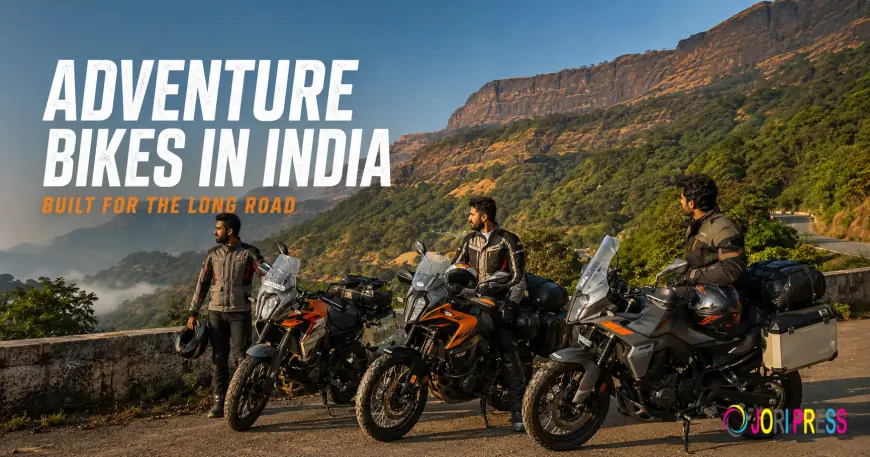
Adventure motorcycles are becoming increasingly popular among Indian riders. They offer an attractive combination of highway comfort, everyday practicality and the ability to travel across rough or uneven roads.
However, adventure bikes vary considerably in size, performance and purpose. A motorcycle that works well for an experienced tourer may feel heavy or intimidating to a beginner. Riders should therefore evaluate their personal requirements instead of choosing a model based only on its appearance or engine capacity.
Begin with Your Actual Riding Needs
Before comparing motorcycles, consider where and how you expect to ride.
Ask yourself:
-
Will the motorcycle mainly be used in the city?
-
How frequently will you travel on highways?
-
Do you expect to carry a passenger?
-
Will you ride on rough roads or off-road trails?
-
How much luggage will you carry?
-
What is your maintenance budget?
-
Are authorised service centres available nearby?
A road-focused adventure bike may be suitable for commuting and highway touring. A lighter model with appropriate tyres and suspension may be more manageable on trails and broken roads.
Readers can explore motorcycle guides and comparisons through the Adventure Bikes in India category.
Select a Manageable Engine Capacity
A larger engine can provide stronger acceleration and more relaxed highway performance. It may be useful when carrying luggage or travelling with a passenger.
However, large engines can also increase the motorcycle’s weight, fuel consumption and maintenance costs. Their additional performance may be unnecessary for riders who primarily travel through cities.
Smaller adventure motorcycles often provide several practical advantages:
-
Easier handling in traffic
-
Better fuel efficiency
-
Lower ownership costs
-
Greater confidence for beginners
-
Simpler low-speed control
-
Easier parking and manoeuvring
The best engine capacity is the one that provides sufficient performance without making the motorcycle difficult to manage.
Consider Motorcycle Weight Carefully
Weight is one of the most important factors when choosing an adventure bike.
A heavy motorcycle may feel stable on a straight highway, but it can become challenging during U-turns, parking and off-road travel. Recovering a heavy bike after losing balance can also be difficult.
During a test ride, check whether you can:
-
Move the motorcycle manually
-
Take slow and controlled turns
-
Stop confidently on an incline
-
Use the side stand comfortably
-
Balance the bike on an uneven surface
Do not judge a motorcycle only by how it performs at speed. Low-speed control is equally important for everyday ownership.
Check the Seat Height
Adventure bikes frequently have tall seats because they require additional ground clearance and suspension travel.
A rider does not always need to place both feet completely flat on the ground. However, they should be able to stop and balance the motorcycle confidently.
Seat width can also affect reach. A narrow seat may feel more accessible than a wide seat with the same official height.
Test the motorcycle while wearing your usual riding boots. If available, consider adjustable suspension or a factory-approved lower-seat option rather than making unsafe modifications.
Understand Ground Clearance
Higher ground clearance helps a motorcycle cross potholes, large speed breakers and uneven surfaces without scraping its underside.
This is valuable on Indian roads, but greater clearance usually contributes to a taller motorcycle. Riders must find a suitable balance between road capability and accessibility.
A protective engine guard or bash plate can provide additional protection, but it should be fitted correctly and should not significantly reduce the available clearance.
Evaluate Suspension Performance
Adventure motorcycles normally offer more suspension travel than commuter and sports bikes. This allows them to absorb larger road imperfections.
Suspension quality is more important than travel figures alone. A well-adjusted system should provide control without feeling excessively soft or unstable.
Premium motorcycles may include adjustable preload, compression or rebound settings. These adjustments can help when adding a passenger or luggage, but riders should understand how to use them correctly.
Suspension, ergonomics and fuel range are explored further in this guide explaining why adventure bikes are suitable for long-distance riding.
Choose Suitable Wheels and Tyres
Adventure bikes may use alloy or spoked wheels. Alloy wheels are generally convenient for road use, while spoked wheels can be better suited to repeated impacts on rough surfaces.
Tyre design also influences performance. Road-focused tyres provide better grip and stability on paved surfaces, while dual-purpose tyres offer additional capability on gravel and mild trails.
Highly aggressive off-road tyres may create more noise and offer reduced refinement on highways. Select tyres according to the surfaces you genuinely expect to ride on.
Calculate Realistic Fuel Range
A practical fuel range is valuable during long journeys, particularly when petrol stations are far apart.
Do not focus only on tank capacity. A large tank paired with poor mileage may not offer a better range than a smaller and more efficient motorcycle.
Real-world fuel consumption can change because of:
-
Traffic conditions
-
Highway speed
-
Luggage and passenger weight
-
Mountain gradients
-
Tyre pressure
-
Wind and weather
-
Riding style
Calculate the approximate range using realistic mileage and plan fuel stops before entering remote areas.
Examine Wind Protection
Continuous wind pressure can cause fatigue during long highway journeys. A well-designed windscreen can redirect airflow away from the rider’s chest.
However, a larger screen is not automatically better. Its position may create turbulence or excessive helmet noise.
If the motorcycle has an adjustable windscreen, test different positions. The correct setting depends on the rider’s height, helmet and preferred riding posture.
Review Luggage Capacity
Adventure motorcycles often support saddle bags, panniers, tank bags and top boxes. Before purchasing accessories, check the motorcycle’s maximum recommended load.
Hard panniers provide structure and security, while soft luggage is usually lighter and may be practical for occasional touring.
Avoid overloading the rear of the motorcycle. Heavy luggage can change its steering, suspension and braking performance. Pack heavier items low and distribute the weight evenly.
Check Maintenance and Service Support
A motorcycle intended for regular touring should have dependable service support.
Before buying, research:
-
Routine service expenses
-
Spare-part availability
-
Authorised service locations
-
Tyre replacement costs
-
Insurance costs
-
Recommended service intervals
-
Reliability reported by long-term owners
An advanced imported motorcycle may offer excellent features, but it can become inconvenient if parts or trained technicians are difficult to find.
Do Not Ignore Safety Features
Modern adventure bikes may include anti-lock braking systems, traction control and different riding modes.
Dual-channel ABS is especially useful during emergency braking. Some motorcycles allow the rear ABS to be adjusted for off-road conditions, but this feature should only be used by riders who understand its purpose.
Electronic assistance can support the rider, but it cannot replace training, attention or responsible speed.
Take a Complete Test Ride
A short ride around a showroom may not reveal whether a motorcycle is suitable for long journeys.
During the test ride, evaluate:
-
Low-speed balance
-
Throttle response
-
Brake feel
-
Clutch weight
-
Gear changes
-
Seat comfort
-
Handlebar reach
-
Wind protection
-
Heat near the rider’s legs
-
Visibility through the mirrors
If you expect to carry a passenger, check pillion comfort and available space as well.
Explore Related Motorcycle and Sports Content
Motorcycle and motorsport followers can also access the official Khelo24race login page to review the platform’s available features.
Any gaming or interactive service should be accessed only by adults aged 18 or older, where legally allowed. Users should understand the relevant local rules and participate responsibly.
Final Thoughts
Choosing an adventure motorcycle requires more than comparing prices and engine figures. Weight, seat height, ergonomics, suspension, fuel range and service availability all influence the ownership experience.
A suitable motorcycle should feel comfortable on the road and manageable while parking or riding slowly. Beginners will often benefit more from a lighter, predictable bike than from a large and powerful model.
Identify your actual requirements, compare ownership costs and take a meaningful test ride. The right adventure bike should support your journeys rather than making them unnecessarily difficult.
What's Your Reaction?
 Like
0
Like
0
 Dislike
0
Dislike
0
 Love
0
Love
0
 Funny
0
Funny
0
 Angry
0
Angry
0
 Sad
0
Sad
0
 Wow
0
Wow
0