







































Champions League 2026/27: How the 36-Team League Phase Works
Discover how the Champions League 2026/27 format works, including 36 teams, league phase fixtures, points, knockout qualification and key match dates.
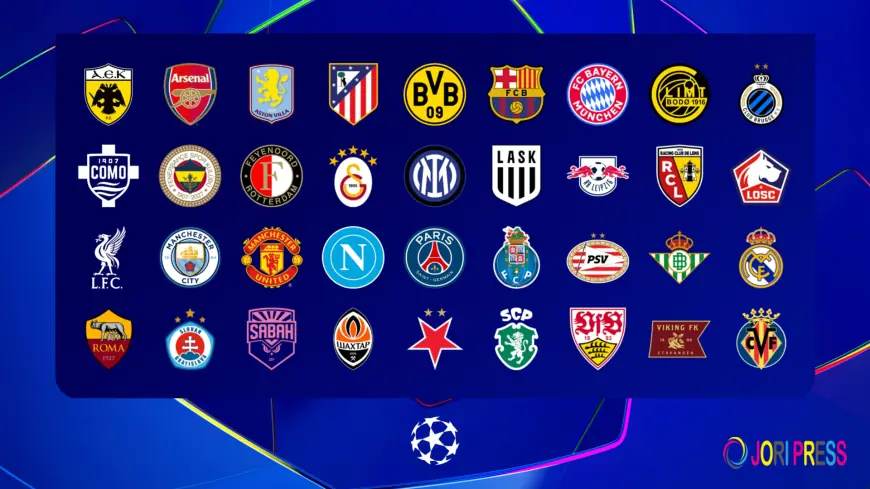
The UEFA Champions League 2026/27 is bringing another season of high-stakes European football under its expanded 36-team format. Instead of the traditional group stage, clubs now compete in one league table, where every match can affect their chances of reaching the knockout rounds.
For supporters familiar with the old Champions League system, the changes may still take some getting used to. Teams face eight different opponents, league positions determine qualification, and clubs finishing outside the top 24 are eliminated.
The format, first introduced in the 2024/25 season, aims to create more varied fixtures and competitive matchups throughout the league phase.
Here is how the Champions League 2026/27 format works, from the league-phase draw to the final in Madrid.
Why Does the Champions League Have 36 Teams?
UEFA expanded the Champions League from 32 to 36 teams beginning with the 2024/25 campaign.
Previously, 32 clubs were divided into eight groups of four. Each team played six matches against three opponents, facing every opponent once at home and once away.
Under the new system, all 36 teams participate in a single league table.
This structure provides more opportunities for clubs to face opponents from different countries and creates additional fixtures between European teams.
The league phase now features 144 matches across eight matchdays, compared with 96 matches during the previous group stage.
However, the expansion also brings challenges, particularly for clubs managing domestic league commitments alongside European competition.
How Does the 36-Team League Phase Work?
The Champions League league phase follows a straightforward structure once the main rules are understood.
Each of the 36 participating clubs plays eight matches against eight different opponents.
Four matches take place at home, while the remaining four are played away.
Unlike the previous group stage, clubs do not face the same opponent twice during the league phase.
All teams are ranked together in one table based on the points they collect.
Here is a quick overview:
| Competition Feature | Champions League 2026/27 |
|---|---|
| Participating clubs | 36 |
| League-phase matches per club | 8 |
| Home matches | 4 |
| Away matches | 4 |
| Total league-phase matches | 144 |
| Direct round-of-16 qualification | Positions 1–8 |
| Knockout play-off qualification | Positions 9–24 |
| Eliminated clubs | Positions 25–36 |
The biggest difference is that a team does not need to finish above three specific group opponents. Instead, it must collect enough points to secure a favourable position among all 36 participating clubs.
How Are Champions League Opponents Selected?
UEFA uses a structured draw to determine league-phase opponents.
Before the draw, the 36 clubs are divided into four pots containing nine teams each. These pots are primarily based on UEFA club coefficient rankings, with the defending Champions League titleholder placed as the top seed in Pot 1.
Each club is assigned two opponents from every pot.
One opponent from each pot is played at home, and the other is faced away.
For example, a club could face a major European opponent from Pot 1 while also playing teams from the other three pots.
As a general rule, clubs from the same national association cannot meet during the league phase. A team can also face no more than two opponents from any other single association, subject to UEFA's draw provisions.
The arrangement aims to provide a range of opponents while maintaining competitive balance.
How Are Points Calculated in the Champions League?
The Champions League uses the familiar football points system.
-
Win: 3 points
-
Draw: 1 point
-
Loss: 0 points
After eight matches, teams are ranked according to the total points earned.
Consider a hypothetical example.
A club wins five matches, draws two, and loses one.
Its points calculation would be:
5 wins × 3 points = 15 points
2 draws × 1 point = 2 points
Total: 17 points
That total contributes to the club's final league position. However, collecting 17 points does not automatically guarantee a specific qualification place because the outcome depends on how other teams perform.
What Happens When Teams Finish Level on Points?
When two or more clubs finish with the same number of points, UEFA applies tiebreaking criteria.
Goal difference is considered first, followed by goals scored and away goals scored. Additional criteria include wins, away wins, and the collective performance of opponents.
This means a late goal can influence a team's final ranking even if the result of its own match is already decided.
Which Teams Qualify for the Knockout Rounds?
The Champions League qualification system divides the league table into three groups.
Positions 1–8: Direct Qualification
The eight highest-ranked clubs automatically advance to the round of 16.
These teams avoid the additional knockout play-off round, reducing their match commitments and giving them a valuable advantage.
Positions 9–24: Knockout Play-Offs
Teams finishing between ninth and 24th must compete in two-legged knockout play-offs.
The 16 participating clubs are paired through a seeded draw.
Teams finishing ninth to 16th are seeded, while those ranked 17th to 24th are unseeded.
The eight winners progress to the round of 16, joining the eight clubs that qualified directly.
Positions 25–36: Elimination
The bottom 12 teams are eliminated from the competition.
Unlike the previous format, these clubs do not transfer into the Europa League after their Champions League campaign ends.
This makes the battle for a top-24 finish particularly important during the final league-phase matches.
How Does the Champions League Knockout Phase Work?
Once the league phase and knockout play-offs are completed, 16 clubs remain.
The competition then progresses through the traditional knockout rounds:
-
Round of 16
-
Quarter-finals
-
Semi-finals
-
Final
The round of 16, quarter-finals, and semi-finals are played over two legs.
UEFA's knockout bracket also rewards stronger league-phase finishes through seeding and home-leg arrangements.
If the aggregate score of a two-legged tie is level after the second match, the teams play extra time. A penalty shootout follows if necessary.
The away goals rule is no longer used to decide knockout ties.
The final is a single match that determines the European champions.
Champions League 2026/27 Match Dates
The 2026/27 league phase began in September 2026 and continues until January 2027.
According to UEFA's published schedule, the matchdays are:
| Matchday | Dates |
|---|---|
| Matchday 1 | 8–10 September 2026 |
| Matchday 2 | 13–14 October 2026 |
| Matchday 3 | 20–21 October 2026 |
| Matchday 4 | 3–4 November 2026 |
| Matchday 5 | 24–25 November 2026 |
| Matchday 6 | 8–9 December 2026 |
| Matchday 7 | 19–20 January 2027 |
| Matchday 8 | 27 January 2027 |
The knockout play-offs are scheduled for February 2027, followed by the round of 16 in March, quarter-finals in April, and semi-finals across April and May.
The Champions League final is scheduled for 5 June 2027 at the Estadio Metropolitano in Madrid, Spain.
UEFA notes that competition dates remain subject to change.
What Makes the New Champions League Format Different?
One of the most noticeable changes is the wider variety of opponents.
Under the old format, clubs faced the same three opponents throughout the group stage. The expanded league phase introduces eight different matchups for every participating team.
Another important difference is the shared league table.
A result in one match can influence the position of clubs playing elsewhere in Europe, particularly when several teams have similar points totals.
The final matchday can therefore become especially tense as teams compete for direct qualification, play-off places, or survival in the tournament.
For managers, the format introduces additional tactical and scheduling challenges. Squad rotation, injuries, travel, and domestic fixtures all become important considerations.
Supporters interested in following the competition can explore the UEFA Champions League fixtures, standings and match analysis on Kheloexch for additional football coverage.
What Does the Format Mean for Smaller European Clubs?
The expanded competition gives more clubs an opportunity to participate in the league phase.
Teams from less prominent European leagues can potentially face several well-known opponents in one season, providing valuable competitive experience and international exposure.
However, additional matches can also place pressure on clubs with smaller squads and fewer financial resources.
A team competing in its domestic league, national cup, and European competitions must manage player fitness carefully.
While the expanded format creates opportunities, reaching the knockout rounds remains a significant challenge.
Final Thoughts
The Champions League 2026/27 format changes how clubs approach Europe's biggest football competition.
With 36 teams, eight league-phase fixtures per club, and one combined points table, every result contributes towards the final rankings.
A top-eight finish guarantees direct qualification to the round of 16. Teams ranked ninth to 24th must survive the knockout play-offs, while the bottom 12 are eliminated.
The expanded structure creates more matchups and gives supporters new reasons to follow results across Europe.
As the competition progresses towards the final in Madrid on 5 June 2027, league positions, knockout seedings, and individual performances will determine which club eventually lifts the trophy.
What's Your Reaction?
 Like
0
 Dislike
0
 Love
0
 Funny
0
 Angry
0
 Sad
0
 Wow
0