







































Casting Cutoff Machine: Clean, Fast Gate Cutting from India's Premier Manufacturer
We are the Manufacturer of Abrasive Cutoff Machine in India - Automatic Abrasive Cutoff Machine, Semi Automatic Abrasive Cutoff Machine complete with a pair of hydraulic job clamping vice

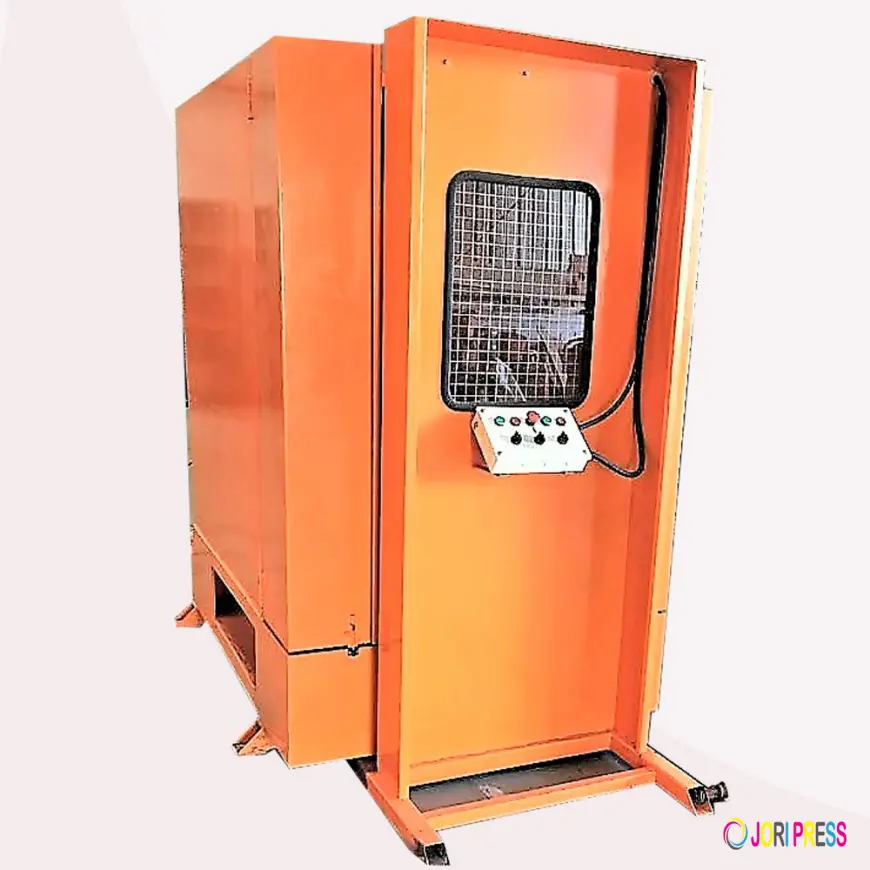
Quick answer: A casting cutoff machine removes gates, sprues, and risers from investment castings with a high-speed abrasive wheel. Laxminarayan Technologies has built these since 1986. Clean cuts mean less grinding, fewer surface defects, lower reject rates, and roughly 40% labour savings across the fettling line.
Introduction
Nine out of ten fettling headaches start at the gate. Ask any shop-floor supervisor. A good casting cutoff machine decides how much grinding comes next, and grinding is exactly where your labour cost hides. Since 1986, Laxminarayan Technologies has designed abrasive gate cut-off machines for Indian and global foundries, and we've watched reject rates drop when the cut lands clean the first time. This machine solves one blunt problem. Get the gate off the part fast, square, without cracking it or scorching the face. Your throughput rides on it. So does your finish. Truth is, most shops underrate this step until the rework piles up.
What is a casting cutoff machine?
It's a foundry machine that separates cast parts from their gating system using a rotating abrasive wheel. In investment casting, it trims gates, sprues, and runners close to the part, leaving a small stub for final grinding. Simple job, high stakes.
How does an abrasive gate cut-off machine work?
Here's the flow on the floor.
Load the de-shelled casting or cluster onto the fixture.
Line the gate up against the wheel guard.
Spin the wheel to speed. The cut is quick.
Feed the wheel through the gate. Wet or dry, depending on the alloy.
The gate drops. A short stub stays behind for grinding.
Unload. Next part.
That's it. Simple on paper. The real trick is holding the same stub height batch after batch.
Why clean gate cutting matters
Less grinding downstream. Every rough cut becomes someone's hand-grinding hour.
Fewer surface defects. A torn or scorched gate contaminates the part face and hurts surface finish.
Better dimensional accuracy where the gate meets the part.
Lower consumable cost when wheel grade, feed, and speed match the alloy.
Manual grinding vs abrasive cutoff
Here's the difference, plainly.
Manual grinding. Slow. Operator-dependent. Inconsistent stub height. Heavy on labour.
Abrasive cutoff. Faster, repeatable, square cuts, and roughly 40% labour savings on the line. Our wider foundry range also delivers close to 50% power savings across wax, shell, and dewax stages.
Both remove the gate. Only one does it the same way every single time.
Use cases and real-world applications
Over four decades we've cut just about everything.
Aviation turbine and IGT parts. A cracked superalloy stub means a scrapped casting. No second chances.
Automotive castings. Pump and valve bodies in stainless and carbon steel, high volume, tight cycle times.
Pump and valve work. Where stub control near machined faces matters.
Ceramic-core, complex geometries. Thin walls, fragile edges, careful fixturing needed.
For full specs and fixturing options, see our abrasive gate cut-off machine. It slots neatly behind upstream lines like our wax injection machine and, for cored parts, the ceramic core injection machine.
Challenges and solutions
Thin-wall cracking during cutting. Proper fixturing and the right wheel grade keep the part supported. Don't rush the feed.
Heat scorch on superalloys. Wrong wheel, wrong speed, and the face burns. We match wheel and coolant to the alloy so the surface stays sound.
High-mix, low-volume shops. Quick-change fixtures cut setup time. Upstream, our inert gas flash dewax systems reduce flash and shell defects, so the casting reaches the cutoff bench cleaner to begin with.
Conclusion
Gate removal looks minor. It isn't. It sets your finish, your reject rate, and your labour bill for the whole batch. A casting cutoff machine that cuts square and clean pays for itself in grinding hours saved. Laxminarayan Technologies has built foundry machinery since 1986, ISO 9001 certified, from the wax room to turnkey IC foundry lines. Talk to our engineering team about matching a cutoff machine to your alloy and your volume. Cut once, cut right, grind less.
FAQs
What is a casting cutoff machine used for? It removes gates, sprues, and risers from castings after shell knockout, using an abrasive wheel. In investment casting it leaves a small, uniform stub for final grinding, which cuts rework and protects the part surface.
How much labour can an abrasive gate cut-off machine save? In our foundry installations, clean abrasive cutoff typically trims around 40% of fettling labour versus manual grinding, mainly by reducing downstream hand-grinding and keeping stub height consistent across the batch.
Can it cut superalloy aerospace castings? Yes, with the correct wheel grade, feed rate, and coolant. Nickel and cobalt superalloys scorch if you push too hard, so matching wheel and speed to the alloy keeps the surface sound and defect-free.
Wet or dry cutting for investment castings? It depends on the alloy and part geometry. Heat-sensitive superalloys usually run wet to control scorch. Many steel castings cut dry. We advise based on your material and reject data.
What's Your Reaction?
 Like
0
Like
0
 Dislike
0
Dislike
0
 Love
0
Love
0
 Funny
0
Funny
0
 Angry
0
Angry
0
 Sad
0
Sad
0
 Wow
0
Wow
0