


































Building Your Dream Weekend Villa in the Hills
Buying land and building in the hills isn't easy. From water issues to strict laws, here is an honest look at building your dream home without the stress

City life is loud. It is crowded. You wake up to honking cars and go to sleep with the sound of construction. It makes sense that you want a break. You want a place where the air is clean and the only noise comes from birds or the wind. That is why so many people are looking for land. If you are searching for Farm Land for Sale in Karjat, Maharashtra, you are on the right track. That area is beautiful and green. But buying land is just the first step. Building a house on a hill is a different game.
It is not like building in the city. The ground is uneven. The weather is different. The rules are different. I have seen many people buy land and then struggle to build. They run out of money or they get tired of the problems. I want to help you avoid that. Here is a realistic look at how to build your weekend home in the hills without losing your mind.
Choosing the Right Spot
You might think the best land is the one with the highest view. That is not always true. High points are windy. They are hard to reach. If your car cannot climb the steep dirt road during the monsoon, you will never use the house. Rain in the hills can be brutal. It washes away roads.
Look for a plot that is accessible. A flat piece of land is gold. It saves you money. Building on a slope requires retaining walls. Those walls cost a lot of money. They are just buried stone and concrete, but you cannot build without them. So, try to find a spot that doesn't need a massive wall just to hold the soil up.
Also, check for water. This is the biggest issue. A view is nice, but you cannot drink a view. You need a borewell or a river connection. Ask the neighbors about water depth. If they dig 500 feet and find nothing, you will likely have the same luck.
The Boring Paperwork
Before you dream about a balcony, check the papers. Land laws in hill stations are strict. You need to know if the land is agricultural or non-agricultural. In many places, you cannot build a permanent structure on farm land without permission. You might only be allowed a farmhouse of a certain size.
Get a local lawyer. Do not trust the seller’s word. They want to sell. They will say everything is fine. The lawyer will check the title. They will check for forest land buffers. If your land is too close to a protected forest, you cannot build. It is better to spend a little money on a lawyer now than lose the whole plot later.
Designing for the Climate
Do not copy a city design. Glass boxes look good in magazines. In the hills, they turn into greenhouses. It gets hot in the day. A glass house will bake you. Then at night, it gets cold. Glass loses heat fast. You will freeze.
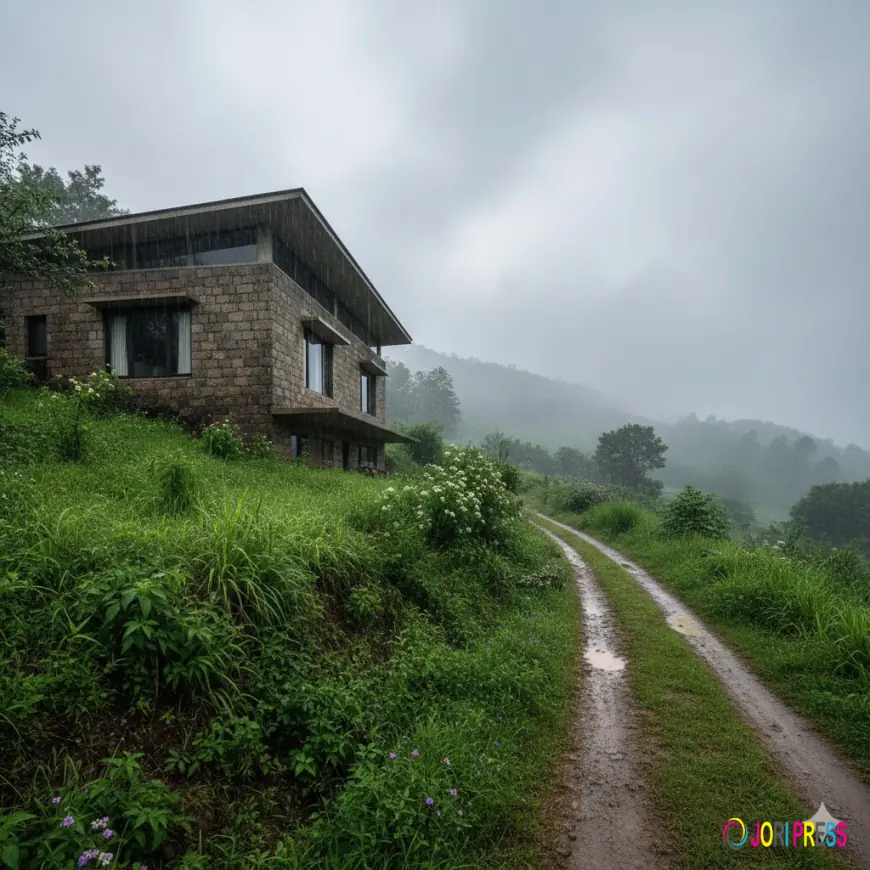
Use local materials. Stone and brick are good. They keep the temperature steady. They also handle the rain better. In the hills, it rains sideways. The wind pushes water into every crack. You need big overhangs on your roof. These protect the walls. If you have flat walls with no roof overhang, the rain will ruin the paint in two years.
Keep the layout simple. Complex shapes cost more. They also leak more. A simple rectangle or L-shape is best. It is easier to build and easier to maintain. Remember, this is a weekend home. You do not want to spend your weekend fixing leaks.
Construction Challenges
Finding labor is hard. In the city, you have many options. In a village, you have two or three contractors. They know they are the only option. They work on their own time.
You cannot manage this from the city. You need to be there, or you need a project manager. If you only visit on Sundays, work will stop on Monday. Materials will go missing. Measurements will be wrong.
Transport is another headache. Trucks have a hard time on narrow hill roads. A truck might drop your bricks at the bottom of the hill. Then you have to pay people to carry them up by hand. This adds time and cost. Factor this in.
Power and Connectivity
Electricity grids in the hills are weak. The power goes out a lot. You need a backup. An inverter is okay for lights. For a fridge or a pump, you might need a generator. Solar is a good option too. It costs more upfront but pays off later.
Internet is also hit or miss. Do not assume your phone will work. Check the signal before you buy the land. If you plan to work from the hills, get a fiber connection if possible. If not, test different dongles. Some spots are dead zones.
Water Management
I mentioned water before, but I will say it again. It is vital. You need a big tank. When the power goes out, the pump won't work. Gravity is your friend. Put a tank on the roof or a high point of the land.
Rainwater harvesting is smart. You have a big roof. Catch that water. diverse it into a tank or a recharge pit. It helps the groundwater. It also gives you a backup supply for the garden.
The Garden and Fencing
You want a garden. That is part of the dream. But nature wants your garden too. Cows, goats, and wild boars will eat your plants. You need a strong fence. Barbed wire is standard. Chain link is better but costs more.
Do not plant fancy city plants. They will die. Look at what grows wild around you. Plant that. Local trees are tough. They don't need much water. They survive the bugs. Fruit trees are nice, but they attract monkeys. If you are okay with sharing your mangoes with a troop of monkeys, go ahead. If not, stick to shade trees.
Security Concerns
When you are not there, the house is empty. It is an easy target. Local relationships are your best security. Hire a local caretaker. It helps the village economy. It gives you eyes on the ground.
If you treat the locals well, they look out for you. If you act like a rich outsider who knows everything, they won't care what happens to your house. Be humble. Pay fair wages. It makes a difference.
The Cost Reality
It will cost more than you plan. That is a fact. Budget for the land. Then budget for the house. Then add 30% more.
There are hidden costs. Leveling the land costs money. Building a septic tank costs money. Getting an electricity meter costs money. The boundary wall alone can cost as much as a small room. Do not max out your budget on the land purchase. Save cash for the build.
Furnishing the Villa
Keep it low maintenance. Dust settles fast. Bugs get in. Heavy carpets are a bad idea. They trap moisture and smell bad during the monsoon. Stick to tile or stone floors. They are easy to sweep.
Don't bring your old, broken furniture from the city. It will just clutter the space. Buy simple, sturdy pieces. Wood expands in the humidity. Make sure doors and drawers have gaps so they don't get stuck in the rainy season.
Conclusion
Building a home in the hills is hard work. It takes time. There will be days when you question why you started. You will argue with the contractor. You will get stuck in mud. You will spend more money than you wanted.
But then, the house is done. You sit on the verandah. You hold a cup of tea. The sun goes down behind the mountain. The air is cool. It is quiet.
That is when you know. It was worth the trouble. Just keep it simple. Plan for the worst weather. Respect the locals. And don't rush. The hills have been there for a long time. They aren't going anywhere. Take your time and build it right.
Source - realestateindia.com
What's Your Reaction?
 Like
0
Like
0
 Dislike
0
Dislike
0
 Love
0
Love
0
 Funny
0
Funny
0
 Angry
0
Angry
0
 Sad
0
Sad
0
 Wow
0
Wow
0