






































What Are the Benefits of Using an Oxygen Concentrator?
Discover the benefits of using an oxygen concentrator, including continuous oxygen supply, easier home care, lower refill needs, and greater convenience.
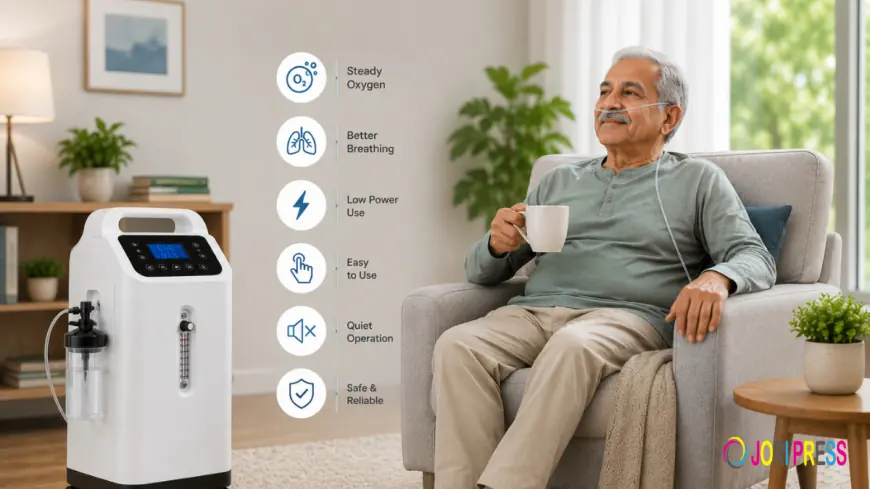
When you need supplemental oxygen at home, choosing the right equipment can make everyday care easier. An oxygen concentrator is one of the most common options for people who have been prescribed long-term oxygen therapy.
You may be comparing oxygen concentrator prices of different models. But cost is only one part of the decision. You also need to consider oxygen output, reliability, electricity use, maintenance, portability, and after-sales support.
A concentrator can offer several practical advantages over oxygen cylinders. However, it is not suitable for everyone. Your doctor should determine whether oxygen therapy is needed and what flow rate and delivery method are appropriate for you.
What Is an Oxygen Concentrator?
An oxygen concentrator is a medical device that takes air from the surrounding environment and concentrates its oxygen. Normal atmospheric air contains about 21% oxygen. The machine uses molecular sieve technology, usually through a process called pressure swing adsorption, to separate much of the nitrogen from the air.
The concentrated oxygen is then delivered to the patient through oxygen tubing and usually a nasal cannula. Unlike a cylinder, the concentrator does not store a fixed quantity of oxygen. It produces oxygen while the machine is operating and has an adequate electrical supply.
The World Health Organization (WHO) describes oxygen concentrators as devices that can provide a continuous source of oxygen when properly selected, operated, and maintained. WHO technical specifications also identify stationary concentrators with flow capacities commonly ranging from 1 to 10 liters per minute (LPM).
The actual oxygen concentration varies by model and operating conditions. Therefore, you should always check the manufacturer's specifications and use the machine according to your prescription.
Provides a Continuous Source of Oxygen
One of the main advantages of an oxygen concentrator is its ability to produce oxygen continuously while it is operating.
An oxygen cylinder contains a limited amount of compressed oxygen. Once the supply is depleted, you need to arrange a refill or replacement. This can be inconvenient when oxygen is required regularly.
A concentrator works differently. It continuously draws in room air and processes it to produce oxygen-enriched gas. This means you do not have to schedule regular cylinder refills simply because the machine has been running.
WHO notes that oxygen concentrators can provide a continuous oxygen source, but they depend on a reliable power supply.
This makes a concentrator particularly practical for patients who have been prescribed oxygen for extended periods at home. You can keep the device in a suitable location and operate it according to your treatment plan.
However, continuous production does not mean unlimited availability under every circumstance. A power outage can stop the machine. If you depend on oxygen continuously, discuss a suitable backup plan with your healthcare provider.
Reduces the Need for Frequent Oxygen Refills
Regular cylinder users have to monitor the remaining oxygen and arrange refills before the supply runs out. Depending on the patient's oxygen flow and cylinder size, this may happen relatively frequently.
A concentrator can reduce this logistical burden because it does not need to be refilled with oxygen. It uses the air already present in your home.
This can be especially useful for caregivers. Instead of regularly transporting cylinders or coordinating refills, you can focus more on maintaining the patient's prescribed oxygen routine.
That said, the concentrator itself still needs care. Filters may need cleaning or replacement. The machine may also require professional servicing depending on the model and manufacturer's recommendations.
The benefit is therefore not that a concentrator requires no maintenance. Rather, the type of maintenance is different. Instead of arranging oxygen refills, you focus on electricity, cleaning, filters, accessories, and technical servicing.
For someone receiving long-term oxygen therapy, this change can make oxygen management more convenient.
Can Be Practical for Home Oxygen Therapy
A concentrator can be a convenient option when oxygen therapy is prescribed for use at home.
Stationary concentrators are designed to remain in the home and are often fitted with wheels. This allows you to move the machine between nearby rooms when necessary.
For example, a patient may use the machine beside the bed at night and move it to a living area during the day. The exact arrangement depends on the patient's mobility, tubing length, and treatment requirements.
The machine should always be placed where its air intake and ventilation openings remain unobstructed. WHO guidance recommends keeping concentrators away from walls and curtains so airflow is not restricted.
Home use can also reduce some of the physical handling associated with large oxygen cylinders. However, the machine still needs to be positioned safely and connected correctly.
If you are considering an oxygen machine for home, make sure the model meets the patient's prescribed flow and delivery requirements. A convenient design is useful only when the device is medically appropriate.
Can Be More Convenient for Long-Term Oxygen Users
Some patients need oxygen for extended periods. In such cases, convenience becomes an important part of daily care.
A concentrator can remain ready for use without requiring a fresh oxygen supply every few days. Once it is correctly set up, you can follow the prescribed treatment schedule.
This may make it easier for caregivers to establish a consistent routine. The patient can use the machine at the prescribed times without having to arrange a cylinder exchange each time the stored oxygen is depleted.
The convenience is especially noticeable when oxygen use continues for months or longer. You still need to monitor the machine and follow maintenance instructions, but you avoid one recurring task: replenishing the oxygen supply.
However, long-term users should not assume that a concentrator eliminates the need for backup oxygen. If electricity fails, the concentrator cannot continue producing oxygen. A backup cylinder or another appropriate solution may be necessary for some patients.
Your healthcare professional can help determine the appropriate backup plan based on the patient's oxygen dependence and local power reliability.
Portable Models Can Support Mobility
Not all oxygen concentrators are large stationary devices. Portable oxygen concentrators are designed to make oxygen therapy more manageable outside the home for appropriate users.
Portable models are generally smaller and lighter than stationary units. Many use rechargeable batteries and can be carried using a handle, shoulder strap, or carrying case.
However, portability does not mean every patient can use every portable model. Some portable concentrators provide pulse-dose oxygen rather than continuous flow. Their output capacity can also be lower than that of larger stationary units.
This distinction is important. A portable machine should only be selected if its delivery method and oxygen output match the patient's prescription.
If your doctor has prescribed continuous-flow oxygen, do not assume a portable pulse-dose device will provide an equivalent treatment.
For suitable patients, however, portability can make it easier to attend appointments, visit family, or participate in appropriate daily activities. Always follow your healthcare provider's instructions regarding oxygen use outside the home.
May Reduce Some Long-Term Oxygen Supply Costs
The financial benefit of a concentrator depends on how frequently it is used, electricity costs, maintenance, the local price of oxygen refills, and the machine's purchase price.
A cylinder requires recurring oxygen refills or replacements. A concentrator does not require oxygen refilling because it produces oxygen from room air.
This can make a concentrator economically attractive for some regular users over the long term.
However, you should not assume that every concentrator is automatically cheaper. The machine consumes electricity, and filters or other components may require replacement. Repairs can also create additional costs.
When comparing the oxygen machine price, consider the total cost of ownership rather than looking only at the initial purchase amount.
Ask about electricity consumption, warranty coverage, servicing, replacement parts, and accessories. A machine with a slightly higher purchase cost may offer better value if it is reliable and supported by an established service network.
The best financial choice depends on the patient's actual oxygen needs and how frequently the machine will be used.
Can Be Easier to Manage Than Heavy Oxygen Cylinders
Large oxygen cylinders can be heavy and require careful handling. Moving them around the home may be difficult for older adults, caregivers, or people with limited physical strength.
Many stationary concentrators have wheels. This can make short-distance movement easier when the machine needs to be repositioned.
The machine itself still needs to remain stable. You should never pull it by the oxygen tubing or power cord. Move it according to the manufacturer's instructions.
The reduced need to transport cylinders for refilling is another practical advantage. Instead of moving a cylinder to a supplier, you can continue using the concentrator while it has power and is properly maintained.
However, cylinders can still have an important role. They can provide backup oxygen during a power outage or in situations where a concentrator is not practical.
For many households, the most useful approach may not be choosing one system exclusively. A healthcare professional may recommend a concentrator for regular use with an appropriate backup oxygen source.
Offers Useful Safety and Monitoring Features
Modern oxygen concentrators can include several features designed to make operation easier and help identify problems.
Depending on the model, you may find alarms for power failure, low oxygen concentration, overheating, pressure problems, or other operating conditions. Some machines also include displays that show operating information.
These features can be particularly helpful for home users and caregivers. An alarm can alert you that something needs attention instead of leaving you to discover the problem later.
However, alarms do not replace regular maintenance or medical monitoring.
You should learn what each alarm means before using the machine. Keep the user manual nearby and know how to contact your supplier if the machine develops a fault.
You should also understand oxygen fire safety. Oxygen supports combustion, so smoking, open flames, candles, and other ignition sources must be kept away from oxygen equipment. FDA safety communications have reported serious fire and burn incidents involving oxygen equipment and smoking.
Good safety practices are essential regardless of how advanced the machine is.
What Factors Should You Consider Before Buying One?
The benefits of an oxygen concentrator depend heavily on choosing the right model.
Start with the patient's prescription. Check the required oxygen flow, delivery method, and whether oxygen is needed continuously or only during particular activities or sleep.
Then compare oxygen concentration, noise level, power consumption, dimensions, weight, alarms, warranty, and maintenance requirements.
Do not select a machine simply because it has the lowest oxygen concentrator machine price. A cheaper model may not provide the required flow or may have limited service support.
Ask the supplier whether replacement filters and spare parts are available. Confirm what accessories are included and whether technical support is available after purchase.
You should also consider the electrical supply in your home. Concentrators require electricity, so patients who depend heavily on oxygen may need an appropriate backup arrangement.
Finally, use the machine only according to medical instructions. A concentrator is not a substitute for professional diagnosis or treatment planning.
Are Oxygen Concentrators Suitable for Everyone?
No. An oxygen concentrator is not appropriate for every person who feels short of breath.
Oxygen therapy is prescribed when a healthcare professional determines that supplemental oxygen is medically indicated. The underlying condition, blood oxygen level, symptoms, and other clinical factors may affect the decision.
You should not purchase a concentrator and start oxygen therapy simply because you believe it may improve breathing.
The same applies to changing the flow rate. Higher oxygen flow is not automatically safer or more effective.
If a person experiences new or worsening breathing difficulty, chest pain, confusion, severe weakness, or bluish lips or skin, they need prompt medical evaluation rather than simply increasing the concentrator setting.
The right equipment is important, but it should always be part of an appropriate medical care plan.
Conclusion
An oxygen concentrator can provide a convenient and continuous oxygen source for patients who have been prescribed oxygen therapy. It can reduce refill needs, simplify home care, and offer practical benefits for long-term use.
Before buying, focus on medical suitability, oxygen output, reliability, maintenance, power requirements, and support. The right choice is not necessarily the cheapest one. Look for dependable performance and long-term value.
FAQs
What is the biggest benefit of an oxygen concentrator?
The biggest practical benefit is that a concentrator can produce oxygen continuously while it has a suitable power supply and is operating correctly. Unlike a cylinder, it does not require oxygen refilling after a fixed quantity has been used. This can make it convenient for patients who need regular oxygen therapy at home. However, it still requires proper maintenance and an appropriate backup plan.
Is an oxygen concentrator better than an oxygen cylinder?
Neither is universally better. A concentrator can be convenient for regular home use because it produces oxygen continuously and does not require refilling. A cylinder stores oxygen and can remain useful as a backup during power failures. The appropriate option depends on the patient's prescription, oxygen requirements, electricity availability, mobility, and healthcare provider's recommendations. Some patients may benefit from having both.
How much electricity does an oxygen concentrator use?
Electricity consumption varies significantly by model, flow setting, and operating time. Stationary concentrators generally use more power than smaller portable models. Check the manufacturer's rated power consumption before purchasing. If the patient uses the machine for many hours each day, electricity cost should be considered when calculating the long-term cost. A reliable backup plan is also important where power interruptions are common.
What's Your Reaction?
 Like
0
Like
0
 Dislike
0
Dislike
0
 Love
0
Love
0
 Funny
0
Funny
0
 Angry
0
Angry
0
 Sad
0
Sad
0
 Wow
0
Wow
0