






































Behavioral pediatric dentists Guidance and Psychology Paradigms
pediatric dentistry, achieving a technically perfect restoration is impossible without first managing the patient's behavioral state.

1. Behavioral pediatric dentists Guidance and Psychology Paradigms
A primary differentiator in the daily operations of a specialist is the implementation of structured, evidence-based behavioral guidance. In dental paediatrician, achieving a technically perfect restoration is impossible without first managing the patient's behavioral state.
Non-Pharmacological Techniques
Both general and pediatric dentists utilize basic communication strategies, but specialists are trained to deploy an advanced spectrum of psychological interventions approved by the American Academy of Pediatric Dentistry (AAPD):
-
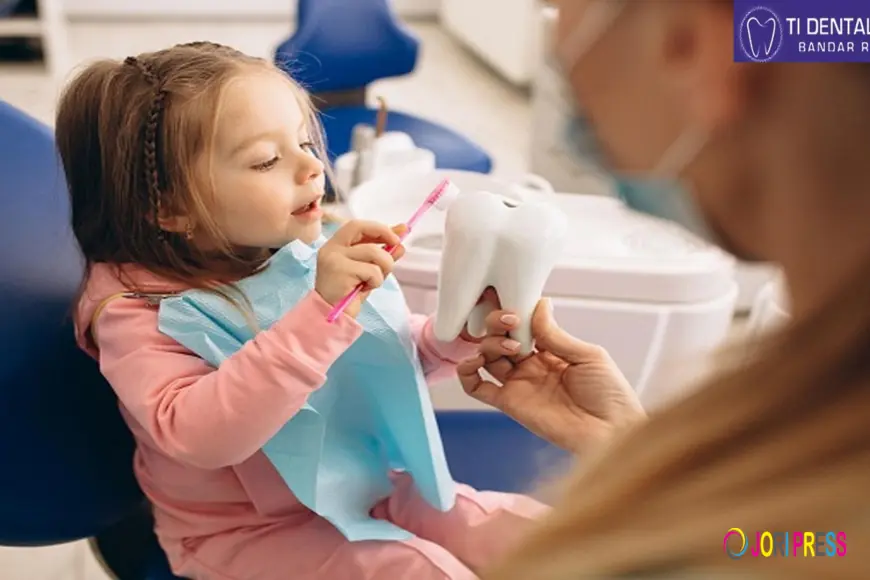
Tell-Show-Do: The clinician explains the procedure in age-appropriate language (e.g., calling the high-speed handpiece a "tooth tickler"), shows the instrument operating on a finger, and then performs the task exactly as described.
-
Voice Control: A deliberate alteration of voice volume, tone, or pace to influence and direct a child’s attention, establish authority, and soothe acute anxiety.
-
Positive Reinforcement: Rewarding desired behaviors with precise verbal praise or small tangible tokens to build an ongoing cycle of compliance.
-
Distraction: Diverting the child's attention away from unpleasant sensations (e.g., using overhead screens, storytelling, or asking the child to lift their leg during a local anesthetic injection).
Advanced and Pharmacological Behavior Management
When a child presents with severe dental phobia, pre-cooperative age (typically under 3 years old), or extensive treatment needs, non-verbal techniques may fail. This is where the specialized training of a kids dentist becomes essential.
| Interventional Modality | Clinical Application | Monitoring & Safety Requirements |
| Nitrous Oxide ($\text{N}_2\text{O}/\text{O}_2$) | Mild anxiolysis (anxiety reduction) for anxious but cooperative children; preserves protective reflexes. | Continuous pulse oximetry; scavenged delivery systems. |
| Oral Conscious Sedation | Moderate sedation combining midazolam, hydroxyzine, or chloral hydrate for uncooperative, fearful patients. | Strict pre-sedation fasting (NPO guidelines); continuous capnography and ECG tracking. |
| General Anesthesia (GA) | Complete loss of consciousness for extensive full-mouth rehabilitation, severe dental infections, or combative SHCN patients. |
What's Your Reaction?
 Like
0
Like
0
 Dislike
0
Dislike
0
 Love
0
Love
0
 Funny
0
Funny
0
 Angry
0
Angry
0
 Sad
0
Sad
0
 Wow
0
Wow
0