





































Basement Floor Coating: A Complete Guide for Homeowners
Learn how basement floor coating works, what it costs, how long it takes, and what to check before you start. A practical guide from Fortress Concrete Coatings in Indiana.

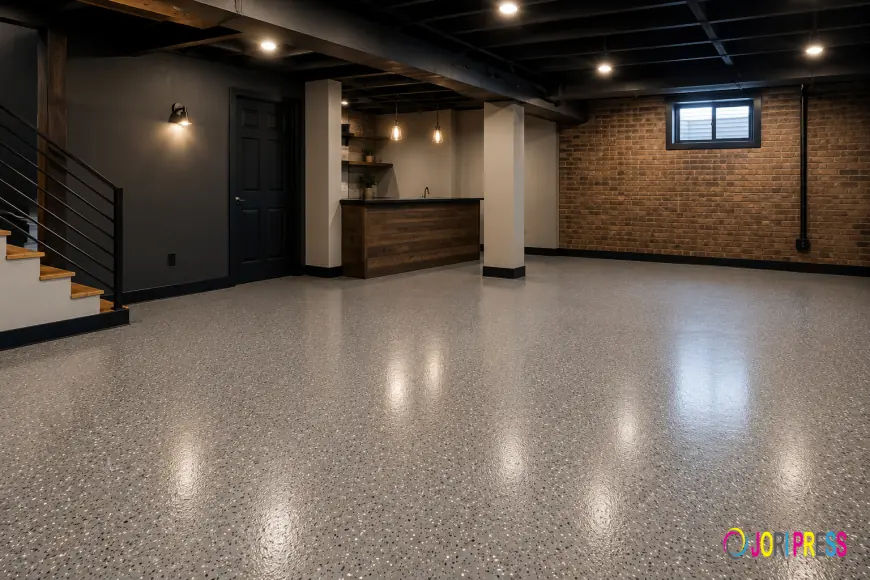
Most basements start as a bare concrete slab. It’s functional, but it’s also dusty, cold, and easy to stain. Many homeowners want to turn that space into a gym, playroom, workshop, or storage area, and the floor is usually the first thing to fix.
A basement floor coating is one of the most practical ways to do that. This guide explains what a coating is, how it works, what to check before installing one, and how to avoid common mistakes.
What Is a Basement Floor Coating?
A basement floor coating is a protective layer applied over your existing concrete slab. It seals the surface and gives the floor a smooth, seamless finish. Coatings come in different materials, including paint, epoxy, polyaspartic, and polyurea. Each one differs in durability, cure time, and flexibility.
A coating is not a leveling system or a waterproofing membrane. It improves the surface of the concrete. It does not change the structure underneath.
Why Bare Basement Concrete Causes Problems
Untreated concrete is porous, which leads to several everyday issues:
- Dust. Concrete slowly breaks down at the surface and releases fine, chalky dust. This settles on stored items and spreads through the house.
- Staining. Because the surface is porous, spills from cleaners, paint, or appliances soak in.
- Hard to clean. Rough, porous concrete holds dirt and is difficult to mop clean.
- Dull appearance. Patches, cracks, and discoloration make the space feel unfinished.
- Cold, hard feel. Bare concrete feels cold underfoot, though a coating alone won’t insulate it.
A sealed coating addresses most of these, mainly dust, staining, and cleaning.
Types of Basement Floor Coatings
Understanding the options helps you decide what suits your space.
Concrete paint. The lowest-cost option. It’s thin, wears quickly, and often peels, especially under traffic or if the surface isn’t prepared properly.
Epoxy. A thicker coating with a glossy finish. Epoxy is popular, but it generally takes longer to cure and can be less flexible than newer systems.
Polyaspartic and polyurea. These cure quickly and are more flexible, which helps them handle temperature changes in concrete. They also resist abrasion, chemicals, and UV fading. Fortress Concrete Coatings installs a polyaspartic polyurea system with a tinted base coat and a clear top coat.
The right choice depends on how you use the basement, your budget, and your timeline.
Why Surface Preparation Matters Most
Whatever coating you choose, the preparation decides how long it lasts. A coating can only bond as well as the surface beneath it.
Professional prep usually includes:
- Diamond grinding. Machines remove old sealers and create a rough profile that gives the coating something to grip. Quality contractors use dust collection, which matters inside a home.
- Crack and damage repair. Cracks are opened and filled so the finished floor is level and consistent.
- Cleaning. Dust, oil, and debris are removed before coating.
Many DIY kits rely on acid etching or light scuffing. These methods often don’t create a deep enough profile, which is a common reason coatings peel early.
What About Moisture in Basements?
This is the most important question to ask before coating a basement floor. Concrete can let moisture vapor pass through it, and basements are the most likely place for this to happen.
If moisture is pushing up through the slab, it can interfere with how a coating bonds and cause bubbling or peeling. Before coating, it’s worth checking for:
- Damp patches or dark spots on the floor
- A musty smell
- White, powdery residue on the concrete (efflorescence)
- Past water leaks or flooding
- Drainage problems around the home’s exterior
A simple plastic sheet test is a common first check. Tape a small sheet to the floor for a day or two and see if moisture collects underneath. Professionals can use more precise moisture testing. If a basement has an active water problem, it should be fixed first, because a coating is not a substitute for waterproofing.
Benefits of a Coated Basement Floor
When a basement slab is in good condition and properly prepared, a coating can offer:
- Reduced dust from the concrete surface
- Easier cleaning with a smooth, sealed finish
- Stain resistance against household chemicals and spills
- Better appearance with color and decorative flake options
- Added surface durability for gym equipment, tools, and foot traffic
- A consistent look across the whole space with no seams or grout lines
How Basement Floor Coating Is Installed
A typical professional installation follows these steps. You can see how Fortress handles each one on our process page.
- Assessment. The installer inspects the slab for cracks, stains, uneven spots, and old coatings.
- Grinding. The surface is mechanically ground to remove sealers and prepare it for bonding.
- Repairs. Cracks and imperfections are filled and smoothed.
- Base coat. A tinted coat is rolled on for even coverage.
- Decorative flakes (optional). Flakes are added to the wet base for texture and visual depth.
- Top coat. A clear coat seals the floor and protects the finish.
Timelines depend on basement size and how much repair the floor needs. Polyurea cures faster than many traditional coatings, so projects tend to finish sooner. Customers have had large basements completed in a couple of days.
What Affects Basement Floor Coating Cost?
There is no single price, because every basement is different. The main factors are:
- Size. Larger areas need more material and labor.
- Concrete condition. Cracks, pitting, and old coatings add prep work.
- Preparation needed. Floors with heavy staining or previous sealers take more effort.
- Repairs and leveling. Uneven areas or damage add time and materials.
- Layout. Multiple rooms, drains, or tight spaces can affect the project.
- Coating system. Different materials come at different price levels.
Rather than comparing flat per-square-foot prices online, get a quote based on an inspection of your actual floor.
Common Mistakes to Avoid
- Skipping moisture checks. This is the leading cause of coating failure in basements.
- Choosing the cheapest option. Thin paints and rushed prep tend to cost more over time.
- Poor preparation. Without proper grinding, even good materials can peel.
- Ignoring cracks. Unrepaired cracks show through the finish and can spread.
- Using a DIY kit on a problem slab. Kits work best on clean, dry, sound concrete.
- Not asking questions. A good contractor will explain their prep, materials, and timeline.
Questions to Ask Before Hiring a Contractor
- How do you prepare the concrete?
- Do you check for moisture before coating?
- How do you handle cracks and uneven areas?
- What coating system do you use, and why?
- What’s included in the estimate?
- How long will the project take?
About Fortress Concrete Coatings
Fortress Concrete Coatings is a family-owned company based in La Porte, Indiana, with over 25 years of experience in polyurea concrete coatings. We serve homeowners in La Porte County, Porter County, Lake County, and Berrien County. Check our service area page to see if we cover your location, or browse our floor colors for design ideas.
Frequently Asked Questions
Can you put a coating on a basement floor?
Yes, as long as the slab is sound, properly prepared, and free from active moisture problems.
Does basement floor coating stop water leaks?
No. A coating is not waterproofing. Water issues should be fixed before coating.
Is a coated basement floor slippery?
It depends on the finish. Decorative flakes and textured finishes can improve traction.
How long does a basement floor coating last?
Lifespan depends on the system, the preparation, and how the space is used. Proper prep is the biggest factor.
Can you coat over cracks?
Cracks should be repaired first so the surface is level before coating.
Can I coat my basement floor myself?
It’s possible, but DIY kits often skip diamond grinding, which affects how well the coating bonds.
Is the process messy or dusty?
Grinding creates dust, which is why professionals use HEPA-filtered collection systems.
Ready to Talk About Your Basement Floor?
If you’re thinking about a basement floor coating, we’ll inspect your slab, explain what it needs, and give you a clear estimate.
What's Your Reaction?
 Like
0
 Dislike
0
 Love
0
 Funny
0
 Angry
0
 Sad
0
 Wow
0