






































How Augmented Reality is Transforming Business Experiences in 2026
Explore how augmented reality in business is transforming customer experiences, improving engagement, and helping companies make smarter decisions.

Introduction
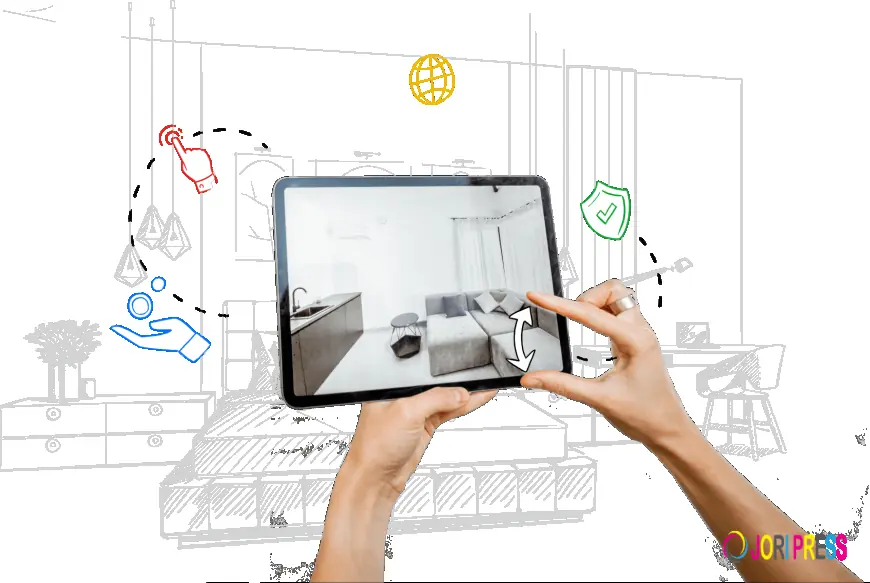
Imagine being able to see how a sofa fits in your living room before buying it, or trying on glasses without stepping into a store. This is no longer something futuristic, it’s already happening.
That’s the impact of augmented reality in business today.
Instead of asking customers to imagine, businesses are now helping them experience products and services in real time. This shift is changing how people interact with brands, make decisions, and build trust.
In 2026, augmented reality (AR) is not just an innovation it’s becoming a practical way for businesses to improve everyday experiences.
What is Augmented Reality? (Simple Explanation)
Augmented reality is a technology that adds digital elements like visuals, instructions, or 3D objects into the real-world environment using devices such as smartphones.
You’re still looking at your surroundings, but with an added layer that helps you understand things better.
In simple terms, AR doesn’t replace reality; it enhances it.
Why Businesses Are Rapidly Adopting AR
Today, businesses are focused on creating smoother and more engaging customer journeys. One of the biggest challenges has always been helping customers feel confident in their decisions.
This is where AR applications in business are making a difference.
Instead of guessing, users can now:
- See products in their own space
- Interact with them in real time
- Make quicker and more confident choices
This not only improves user experience but also helps businesses reduce confusion and build stronger trust.
Real-World Applications of Augmented Reality in Business
Retail: Bringing Products Closer to Customers
Online shopping often lacks clarity. AR solves this by allowing customers to visualize products before buying.
From trying on accessories to placing furniture virtually, AR helps customers feel more certain about their choices making shopping more interactive and less risky.
Education: Making Learning More Practical
Learning becomes easier when you can see and interact with concepts.
AR allows students to explore topics visually instead of just reading about them. This makes learning more engaging and helps improve understanding, especially for complex subjects.
Healthcare: Improving Training and Precision
In healthcare, accuracy matters. AR helps professionals visualise critical information in real time, supporting better decisions.
It also plays a role in training by giving learners a more hands-on experience without real-world risks.
Manufacturing: Enhancing Efficiency at Work
In industries where precision is key, AR helps workers perform tasks more efficiently.
Instead of relying on manuals, employees can follow visual instructions directly in their workspace. This reduces errors and speeds up processes.
Marketing: Creating Interactive Brand Experiences
Traditional marketing shows products AR lets customers experience them.
Businesses are using AR to create interactive campaigns that let users explore products more engagingly. This not only grabs attention but also leaves a lasting impression.
How AR is Improving Customer Experience
At its core, augmented reality is about making things clearer and easier.
It helps customers:
- Visualise products better
- Understand features quickly
- Feel more confident before making decisions
Instead of static images or long descriptions, AR provides a more direct and interactive experience.
When people understand something better, they naturally feel more comfortable moving forward, and that’s where businesses benefit.
The Real Business Value of Augmented Reality
The benefits of augmented reality go beyond just user experience.
Businesses are seeing real impact in areas like:
- Higher customer engagement
- Reduced product returns
- Faster decision-making
- Better communication of complex ideas
AR is helping bridge the gap between what businesses offer and what customers actually understand.
What’s Changing in 2026?
Augmented reality is becoming more accessible than ever.
Today, most AR experiences work directly on smartphones, which means businesses don’t need heavy investments to get started.
We’re also seeing AR being combined with smarter technologies, making experiences more personalised and useful in real-world situations.
The focus is no longer on experimenting with AR, it’s about using it to solve real business problems.
Conclusion
Augmented reality is quietly reshaping how businesses connect with people. It removes guesswork, improves clarity, and creates experiences that feel more real and engaging.
From helping customers make better decisions to supporting teams internally, AR is becoming a valuable part of modern business strategies.
For businesses exploring this space, the key is not just adopting AR but using it in a way that truly adds value. Practical solutions, like those from Intellify’s augmented reality services, can make this technology meaningful and effective.
As customer expectations continue to grow, businesses that focus on better, more interactive experiences will naturally stand out and augmented reality is helping make that possible. You can refer to Theintellify.com.
What's Your Reaction?
 Like
0
Like
0
 Dislike
0
Dislike
0
 Love
0
Love
0
 Funny
0
Funny
0
 Angry
0
Angry
0
 Sad
0
Sad
0
 Wow
0
Wow
0