






































Does Astaxanthin Help with Tanning? The Truth Behind the Trend
Astaxanthin does not trigger a true melanin-based tan, but as a carotenoid pigment, it can deposit minor red-orange hues in the outer skin layers to create a subtle warm tint.
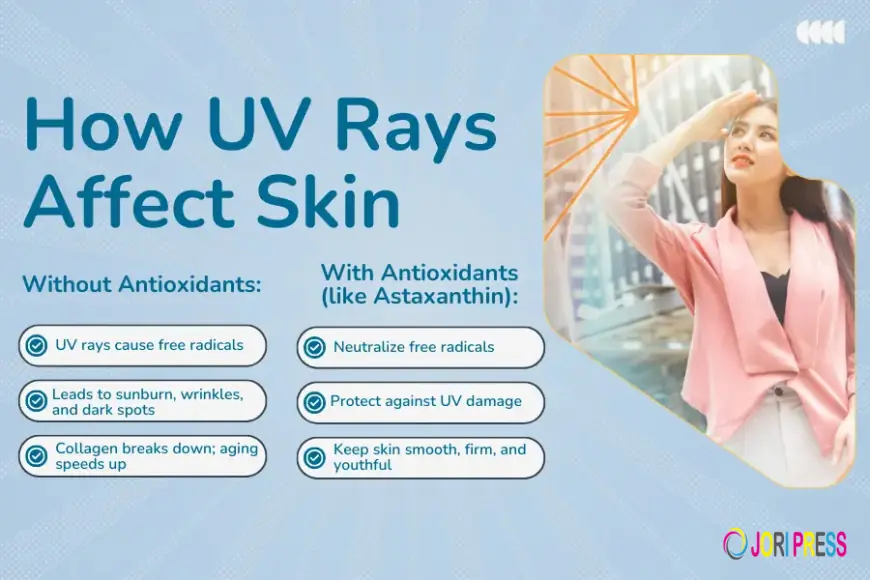
A sun-kissed complexion may look appealing, but tanning through prolonged sun exposure also exposes the skin to ultraviolet (UV) radiation. This can contribute to oxidative stress, sunburn, premature skin changes, and other forms of skin damage.
Astaxanthin, a carotenoid known for its antioxidant activity, has gained attention for its potential role in skin health and UV-related oxidative stress. But can astaxanthin actually help you tan?
The evidence suggests that astaxanthin may influence some processes involved in pigmentation while also supporting the skin's defenses against oxidative stress. However, it should not be considered a tanning agent or a substitute for sunscreen.
What Is Astaxanthin?
Astaxanthin is a naturally occurring red-orange carotenoid pigment that belongs to the same broad family of compounds as other carotenoids. It is particularly well known for its antioxidant properties.
It occurs naturally in several marine organisms, including:
-
Salmon
-
Shrimp
-
Trout
-
Lobster
-
Certain types of microalgae
One of the richest natural sources is the microalga Haematococcus pluvialis.
Astaxanthin was first identified in 1938 by scientist Richard Kuhn while studying pigments associated with lobsters and aquaculture.
Research has investigated astaxanthin for several aspects of skin health, including its antioxidant and anti-inflammatory activity and its potential role in protecting skin from UV-related oxidative stress.
How Are Antioxidants Connected to Tanning?
To understand the possible relationship between astaxanthin and tanning, it helps to look at what happens when skin encounters UV radiation.
UV exposure can increase the production of reactive molecules called free radicals. When these molecules accumulate faster than the body's antioxidant defenses can handle, oxidative stress can occur.
Oxidative stress can affect skin cells and is associated with processes such as:
-
Sunburn and UV-related skin damage
-
Premature skin aging
-
Changes in skin texture
-
Oxidative damage to cellular components
The body naturally uses antioxidant systems to help maintain balance. Dietary antioxidants, including astaxanthin, are being studied for their ability to help manage oxidative stress.
However, antioxidants do not make UV exposure harmless. A tan itself is a response to UV exposure, and tanning should not be treated as evidence that the skin has been protected from radiation.
Can Astaxanthin Help You Tan?
There is some scientific interest in whether astaxanthin can affect melanogenesis, the biological process through which the skin produces melanin.
Melanin contributes to skin pigmentation and is produced by specialized skin cells called melanocytes. One enzyme involved in the melanin-production pathway is tyrosinase.
Research published in 2019 investigated astaxanthin's antioxidant and antityrosinase activity. The findings provide a biological basis for studying whether astaxanthin could influence pigmentation-related processes. However, this type of evidence does not establish that taking astaxanthin will reliably produce a darker tan in people.
In other words, astaxanthin may interact with pathways involved in pigmentation, but there is not enough evidence to describe it as a proven tanning supplement.
Astaxanthin May Support the Skin During UV Exposure
Astaxanthin has also been investigated for its potential effects on UV-related skin stress.
A randomized, double-blind, placebo-controlled human study published in Nutrients examined daily astaxanthin supplementation over nine weeks. Participants taking 4 mg per day showed an increase in minimal erythema dose, a measure related to the amount of UV exposure required to produce visible redness. The study also reported improvements related to moisture loss and skin texture.
These findings suggest that astaxanthin may help support the skin's response to UV exposure. They do not mean that astaxanthin works like sunscreen or prevents sunburn.
What Does Astaxanthin Do for Skin?
Astaxanthin has attracted attention in skin-health research because of several biological properties.
Antioxidant Activity
Astaxanthin can act as an antioxidant and may help counter oxidative stress caused by free radicals.
Because UV exposure can increase oxidative stress in skin, researchers have investigated whether astaxanthin can provide additional antioxidant support.
Support for UV-Stressed Skin
Human research has explored whether oral astaxanthin supplementation can increase the skin's resistance to UV-induced redness and other changes.
The available evidence is promising but does not justify replacing established sun-protection measures.
Skin Texture and Moisture
The nine-week human trial mentioned above reported improvements in skin moisture-related measures and texture among participants receiving astaxanthin.
Support for Healthy Aging
Oxidative stress is one factor involved in skin aging. Astaxanthin has therefore been studied for its potential role in maintaining healthy-looking skin and supporting antioxidant defenses.
Some research also explores its relationship with collagen and skin structure, although these findings should not be interpreted as proof that astaxanthin reverses aging.
How to Use Astaxanthin for Skin Support
Astaxanthin can be obtained from food or dietary supplements.
Food Sources of Astaxanthin
Seafood is one of the best dietary sources of naturally occurring astaxanthin.
Common sources include:
-
Salmon
-
Trout
-
Shrimp
-
Lobster
Cooking methods such as baking, grilling, and steaming can be practical ways to include these foods in a balanced diet.
Astaxanthin Supplements
Supplements provide a more concentrated source of astaxanthin than most dietary servings.
When selecting a supplement, consider the ingredient amount, product quality, manufacturing standards, and any unnecessary additives.
Astaxanthin is generally taken with a meal containing dietary fat because it is a fat-soluble carotenoid.
How Much Astaxanthin Is Safe?
Astaxanthin supplementation has been studied at several doses.
A safety review published in Phytotherapy Research examined available evidence and reported that doses up to 24 mg per day had been used without reported adverse effects in the reviewed studies.
That does not mean everyone should take 24 mg daily. Supplement needs can vary, and higher doses are not automatically more beneficial.
If you take medications, have an existing medical condition, are pregnant or breastfeeding, or are considering a high-dose supplement, speak with a qualified healthcare professional before starting it.
Can Astaxanthin Replace Sunscreen?
No.
This is one of the most important points when discussing astaxanthin and tanning.
Astaxanthin may provide antioxidant support from within, but it does not replace topical sun protection.
For outdoor exposure, use a broad-spectrum sunscreen with SPF 30 or higher and apply it as directed. Other protective measures, such as clothing, shade, sunglasses, and limiting exposure during periods of intense sunlight, can also reduce UV exposure.
Astaxanthin should be viewed as a potential nutritional addition to a broader skin-care routine rather than a substitute for UV protection.
Tips for Safer Sun Exposure
If you want to maintain healthy-looking skin while spending time outdoors, consider these basic precautions.
Know How Your Skin Responds to the Sun
Different skin types respond differently to UV radiation. Knowing how easily your skin burns or tans can help you make better decisions about sun exposure and protection.
Apply Broad-Spectrum Sunscreen
Choose a broad-spectrum sunscreen with SPF 30 or higher to help protect against UVA and UVB radiation.
Apply it to exposed areas, including commonly missed areas such as the ears, neck, hands, and other exposed parts of the body.
Use Physical Protection
Sunscreen is only one part of sun protection. Clothing, hats, sunglasses, shade, and avoiding prolonged exposure during intense sunlight can provide additional protection.
Include Antioxidant-Rich Foods
A balanced diet containing fruits, vegetables, seafood, and other nutrient-rich foods can provide a variety of antioxidants and other nutrients that support overall skin health.
Astaxanthin and Tanning: What the Evidence Actually Shows
The relationship between astaxanthin and tanning is more nuanced than the idea that it simply makes the skin darker.
Research suggests that astaxanthin:
-
Has antioxidant activity
-
May help the skin manage oxidative stress
-
Has been studied for its response to UV-related skin stress
-
May influence biological pathways involved in pigmentation
-
Has shown potential effects on skin moisture and texture in human research
At the same time, current evidence does not establish astaxanthin as a reliable tanning agent or show that it can make intentional UV exposure safe.
The goal should be supporting healthy skin rather than trying to increase UV exposure to achieve a darker complexion.
Frequently Asked Questions
Does astaxanthin make you tan faster?
There is not enough human evidence to conclude that astaxanthin reliably makes people tan faster. Some research has examined its effects on pigmentation-related pathways, but this is different from proving that supplementation produces a faster or darker tan.
Does astaxanthin make your skin darker?
Astaxanthin is not an established skin-darkening supplement. Research has investigated its possible effects on melanogenesis and tyrosinase activity, but more human research is needed to determine whether supplementation meaningfully changes skin pigmentation.
Does astaxanthin protect skin from the sun?
Astaxanthin has antioxidant properties and has been studied for its potential to support the skin's response to UV exposure. However, it does not provide the same protection as sunscreen and should not be used instead of sun protection.
How long does astaxanthin take to work for skin?
Human research has examined astaxanthin supplementation over several weeks. One randomized trial studied daily supplementation for nine weeks and reported changes in measures related to UV sensitivity, moisture loss, and skin texture.
The time required to notice any effect can vary, and evidence does not establish a specific timeframe for achieving a tan.
Can I take astaxanthin before going in the sun?
Astaxanthin can be taken as a dietary supplement, but taking it before sun exposure does not make prolonged UV exposure safe. Continue using sunscreen and other protective measures when outdoors.
What foods contain astaxanthin?
Salmon, trout, shrimp, and lobster are among the foods that naturally contain astaxanthin. The microalga Haematococcus pluvialis is also a particularly rich source.
Is astaxanthin better for tanning than sunscreen?
These serve completely different purposes. Sunscreen is designed to reduce UV exposure to the skin, while astaxanthin is a dietary carotenoid studied for its antioxidant and skin-supporting properties. Astaxanthin should not be considered an alternative to sunscreen.
The Bottom Line
Astaxanthin is a naturally occurring carotenoid with well-studied antioxidant properties and growing interest in skin health. Research suggests it may support the skin's response to UV-related oxidative stress and may influence biological processes associated with pigmentation.
However, the evidence does not establish astaxanthin as a guaranteed way to achieve a darker or faster tan.
If you choose to use astaxanthin for skin support, consider it part of an overall approach that includes a balanced diet and appropriate sun protection. Sunscreen, protective clothing, shade, and sensible limits on UV exposure remain important for protecting your skin.
Disclaimer: This article is for informational purposes only and is not intended to replace professional medical advice, diagnosis, or treatment. Speak with a qualified healthcare professional if you have questions about astaxanthin supplementation, skin health, or sun exposure.
What's Your Reaction?
 Like
0
Like
0
 Dislike
0
Dislike
0
 Love
0
Love
0
 Funny
0
Funny
0
 Angry
0
Angry
0
 Sad
0
Sad
0
 Wow
0
Wow
0