





























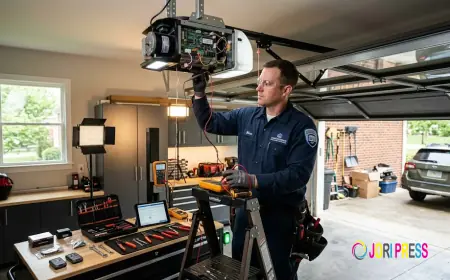




Why Your Appliance Repair Website Gets Traffic but No Service Calls
Learn why your appliance repair website gets traffic but no calls and how better appliance repair lead generation can turn visitors into customers.

Getting visitors to an appliance repair website sounds like a success.
But what happens when the traffic increases and the phone still does not ring?
This is a common problem for local service businesses. A website can rank for keywords, receive organic traffic, and generate clicks without producing enough actual customers.
The problem may not be traffic.
It may be conversion.
Effective appliance repair lead generation requires more than getting people to your website. You need to attract people with service intent, answer their questions, build trust, and make it extremely easy for them to contact your business.
Here are the most common reasons appliance repair websites get traffic but fail to generate enough service calls.
1. You Are Targeting Informational Traffic Instead of Buyers
Not every searcher is looking for an appliance repair company.
Someone searching for:
"How to clean a refrigerator"
has a different intent from someone searching for:
"Refrigerator repair near me."
The first person may want to fix the problem themselves.
The second person is much closer to hiring a professional.
This is why appliance repair SEO needs to target different levels of search intent.
Informational Keywords
Examples include:
-
Why is my refrigerator leaking?
-
Why is my dryer not heating?
-
How to clean a dishwasher
-
Why is my washing machine noisy?
Commercial Keywords
Examples include:
-
Refrigerator repair
-
Dryer repair service
-
Dishwasher repair company
-
Appliance repair technician
High-Intent Local Keywords
Examples include:
-
Appliance repair near me
-
Refrigerator repair near me
-
Dryer repair in [city]
-
Dishwasher repair in [city]
Your content can attract informational visitors, but your service pages should focus heavily on commercial and local intent.
2. Your Website Does Not Make the Next Step Obvious
Imagine a homeowner's refrigerator stops cooling.
They search Google, find your website, and land on your refrigerator repair page.
Now what?
If the visitor has to search for your phone number, navigate through multiple pages, or figure out how to request service, you have created unnecessary friction.
Your website should make the next step obvious.
Use clear calls to action such as:
-
Call Now
-
Schedule Appliance Repair
-
Request Service
-
Book a Repair
-
Get Appliance Service
Your phone number should be highly visible, particularly on mobile devices.
3. Your Service Pages Are Too Generic
A single page called "Appliance Repair" may not be enough.
Customers search for specific appliances.
Your website should have dedicated pages for the services you actually provide.
For example:
-
Refrigerator Repair
-
Freezer Repair
-
Dishwasher Repair
-
Dryer Repair
-
Washer Repair
-
Oven Repair
-
Stove Repair
-
Microwave Repair
-
Ice Maker Repair
Each page should explain the problems your technicians solve and make it easy for visitors to request service.
This creates more opportunities to rank for specific searches while improving the relevance of the visitor's experience.
4. Your Website Does Not Clearly Explain Your Service Area
Appliance repair is local.
Someone looking for refrigerator repair usually wants a company that can come to their home.
If your website does not clearly explain where you operate, visitors may leave because they are unsure whether you serve their location.
Your website should clearly mention your primary service area.
For businesses serving multiple communities, location pages can help target searches such as:
-
Appliance repair in Atlanta
-
Refrigerator repair in Decatur
-
Dishwasher repair in Marietta
-
Dryer repair in Sandy Springs
However, every location page should contain useful, original information rather than simply changing the city name.
5. Your Website Does Not Build Enough Trust
Appliance repair customers are allowing a technician into their home.
Trust matters.
A professional website should make it easy for visitors to understand why they should choose your company.
Useful trust signals may include:
-
Customer reviews
-
Years of experience
-
Service guarantees
-
Warranty information
-
Technician experience
-
Brand expertise
-
Professional affiliations
-
Service area
-
Project photos
-
Clear business information
You can also include testimonials near your calls to action.
The closer a visitor gets to making a decision, the more important trust becomes.
6. Your Google Business Profile Is Not Being Used Properly
Your website is only one part of local search.
For many appliance repair companies, Google Maps and the local search results are critical sources of potential customers.
Your Google Business Profile should accurately represent your business.
Pay attention to:
-
Business category
-
Services
-
Service areas
-
Business description
-
Photos
-
Customer reviews
-
Posts
-
Business information
Keep information accurate and consistent.
A strong local presence can help your company compete for searches where customers are ready to call.
7. Your Website Is Not Designed for Mobile Visitors
A customer with a broken washing machine may search for a repair company from their phone.
If your website is difficult to use on mobile, you can lose the lead before they ever contact you.
Check whether visitors can easily:
-
Read your content
-
Find your phone number
-
Tap to call
-
Submit a form
-
Navigate service pages
-
View reviews
-
Understand your service area
Your website should be fast, responsive, and simple.
Do not make a customer pinch and zoom just to find your phone number.
8. Your Content Answers Questions but Does Not Guide Visitors Toward Services
Blog content can generate significant traffic.
But a blog visitor is not automatically a lead.
Suppose you publish an article called:
"Why Is My Dryer Not Heating?"
Someone finds the article through Google.
The article answers the question.
Then the visitor leaves.
You generated traffic but missed an opportunity.
Instead, the article should naturally guide readers toward your dryer repair service.
For example, after explaining common causes, you can add a relevant call to action:
If your dryer is still not heating after basic troubleshooting, professional diagnosis may be necessary. Contact our appliance repair team to schedule service.
This connects informational content to commercial intent.
9. Your Contact Forms Are Too Complicated
A service business does not need a 15-field contact form.
The more information you require, the more opportunities visitors have to abandon the process.
Keep forms simple.
Depending on your business, you may only need:
-
Name
-
Phone number
-
Email
-
Appliance type
-
Service location
-
Brief description of the problem
You can collect additional information later.
The first goal is to start the conversation.
10. Your Calls Are Not Being Tracked
If your company receives phone calls but you cannot determine where those calls came from, you are missing valuable marketing data.
Call tracking can help identify whether leads are coming from:
-
Organic search
-
Google Ads
-
Google Business Profile
-
Social media
-
Direct traffic
-
Specific landing pages
This allows you to understand which channels are producing actual opportunities.
For example, if your SEO campaign generates 30 qualified calls while another campaign generates 200 low-quality clicks, the SEO campaign may be delivering significantly more business value.
11. You Are Measuring Traffic Instead of Appliance Repair Leads
Website traffic is an important metric, but it should not be your primary business KPI.
Your appliance repair lead generation strategy should focus on:
-
Qualified calls
-
Service requests
-
Booked appointments
-
Cost per lead
-
Conversion rate
-
Revenue
-
Customer acquisition cost
This changes the way you evaluate marketing.
Instead of asking:
"How many people visited my website?"
Ask:
"How many visitors became qualified appliance repair leads?"
That is the number that matters.
12. Your Paid Ads Are Sending Visitors to the Wrong Page
Paid advertising can generate high-intent traffic quickly.
But poor landing pages can waste the budget.
If someone searches:
"Dishwasher repair near me"
and your ad sends them to a generic homepage, the visitor now has to find the dishwasher repair service themselves.
A dedicated dishwasher repair landing page is usually a better experience.
The page should immediately reinforce the search intent with:
-
Dishwasher repair headline
-
Service information
-
Service area
-
Reviews
-
Trust signals
-
Phone number
-
Contact form
-
Strong call to action
The message should match what the customer searched for.
13. You Are Not Following Up Fast Enough
Lead generation does not end when someone submits a form.
Speed matters.
If a potential customer submits a service request and waits hours for a response, they may contact another appliance repair company.
Create a clear lead follow-up process.
Depending on your systems, this could include:
-
Immediate confirmation emails
-
Automated SMS responses
-
Call-back notifications
-
CRM lead assignment
-
Appointment reminders
-
Missed-call follow-up
Iynix Digital's current service offering includes business automation and CRM management designed to improve follow-up and help prevent leads from slipping through the cracks.
14. Build a Complete Appliance Repair Marketing Funnel
A successful appliance repair marketing strategy should connect multiple stages.
Stage 1: Visibility
SEO, local SEO, Google Business Profile, Google Ads, and content bring potential customers to your business.
Stage 2: Trust
Reviews, testimonials, service information, brand expertise, and professional website design help visitors evaluate your company.
Stage 3: Conversion
Clear phone numbers, forms, landing pages, and calls to action turn visitors into leads.
Stage 4: Follow-Up
Fast responses, scheduling systems, and CRM workflows help turn leads into appointments.
Stage 5: Retention
Follow-up communication and excellent service can encourage repeat business and referrals.
This is much stronger than simply publishing blogs and hoping someone calls.
How Iynix Digital Helps Appliance Repair Businesses Generate Leads
Iynix Digital Solutions focuses on measurable marketing outcomes rather than traffic alone.
Its services include SEO, local SEO, Google Ads and performance marketing, content marketing, website design and development, and business automation and CRM management.
The agency's existing appliance repair marketing content also emphasizes local SEO, Google Ads, lead tracking, conversion-focused websites, and strategies designed around booked service calls.
For appliance repair businesses, the right approach is to connect these channels into one lead-generation system.
That means attracting high-intent searches, creating pages that match customer needs, building trust, making contact easy, and tracking what happens after the lead arrives.
Final Thoughts
If your appliance repair website receives traffic but does not generate enough service calls, the answer is not always "get more traffic."
You may need better traffic.
You may need stronger service pages.
You may need clearer calls to action.
You may need better local SEO, landing pages, reviews, or lead follow-up.
The strongest appliance repair lead generation strategy combines visibility with conversion.
Getting someone to your website is only the first step.
The real goal is to turn that visitor into a qualified lead, a booked appointment, and eventually a repeat customer.
If your website is getting visitors but your phone is not ringing, it may be time to look beyond traffic and start optimizing the entire customer journey.
What's Your Reaction?
 Like
0
Like
0
 Dislike
0
Dislike
0
 Love
0
Love
0
 Funny
0
Funny
0
 Angry
0
Angry
0
 Sad
0
Sad
0
 Wow
0
Wow
0