





































Animal Body Incinerator Machine: Reliable Solutions for Safe Animal Waste Disposal

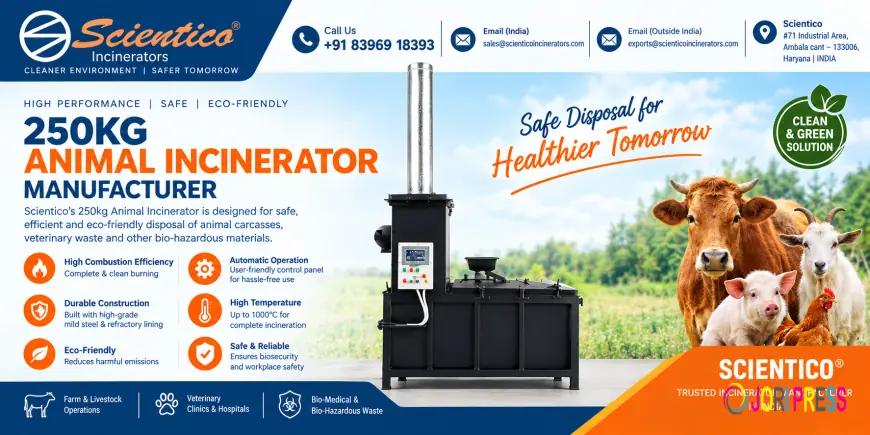
Proper disposal of animal carcasses is essential for maintaining hygiene, protecting public health, and supporting environmental safety. Veterinary hospitals, livestock farms, poultry farms, animal shelters, research facilities, and municipal authorities often require reliable systems to manage deceased animals responsibly. An advanced animal body incinerator machine provides a practical solution by using controlled high-temperature combustion to treat suitable animal carcasses and reduce their volume.
Scientico Incinerators offers animal incineration equipment designed to support different animal waste management requirements. With a focus on durable construction, operational efficiency, and reliable performance, these systems can help organizations establish an organized carcass disposal process. Selecting the right equipment depends on animal size, daily waste volume, operating conditions, fuel availability, and applicable environmental regulations.
What Is an Animal Body Incinerator Machine?
An animal body incinerator machine is specialized equipment designed to thermally treat animal carcasses and other approved animal-derived waste materials. The process involves controlled combustion inside a purpose-built chamber, converting suitable organic material into ash and combustion gases. Depending on the system design, additional combustion chambers and emission-control equipment may be required to manage emissions effectively.
These machines are particularly useful in locations where animal carcasses must be handled promptly to reduce hygiene risks and prevent improper disposal. Compared with unsuitable open-burning practices, a properly designed and operated incinerator provides a more controlled waste treatment process.
Scientico develops incineration solutions for organizations seeking dependable equipment for veterinary, agricultural, livestock, and related applications. Before purchasing, operators should confirm that the selected model is appropriate for the intended animal species, carcass size, and waste category.
Key Features of an Animal Body Incinerator Machine
When selecting an animal carcass disposal system, businesses should evaluate the equipment's construction, combustion technology, safety provisions, and maintenance requirements.
1. Durable Construction
A robust chamber and suitable refractory lining help withstand repeated exposure to high temperatures. Durable construction can support long-term operation when the machine is installed, maintained, and operated according to the manufacturer's instructions.
2. Controlled Combustion
A properly designed combustion system helps maintain the required operating temperature for effective treatment of suitable animal waste. Primary and secondary combustion arrangements may be used to support the treatment process and improve the combustion of gases.
3. Practical Operation
Depending on the model, control panels and automated operating features can help operators monitor important operating parameters. Clear operating procedures and appropriate safety controls are essential for reliable day-to-day use.
4. Suitable Processing Capacity
Different facilities generate different amounts of animal waste. Selecting the appropriate capacity helps organizations manage their expected workload without unnecessarily increasing equipment and operating costs.
5. Emission-Control Options
Appropriate pollution-control equipment is important for reducing harmful emissions and supporting compliance with applicable environmental requirements. The required system depends on local regulations, the waste being treated, and the incinerator's design.
Applications of an Animal Incinerator
An Animal Incinerator can support animal carcass management across several industries. Its suitability depends on the equipment specification and the waste materials permitted under relevant regulations.
-
Veterinary hospitals and clinics: For the disposal of eligible animal carcasses generated during veterinary care.
-
Livestock farms: For managing deceased livestock where incineration is an approved disposal method.
-
Poultry farms: For treating suitable poultry carcasses as part of farm biosecurity and waste management procedures.
-
Animal shelters: For handling deceased animals through an appropriate, controlled disposal process.
-
Research facilities: For treating permitted animal remains generated by approved research activities.
-
Municipal and animal care services: For supporting organized animal carcass disposal operations where suitable.
Using purpose-built equipment can help facilities maintain consistent procedures and reduce dependence on inappropriate disposal methods. Operators must still follow requirements for carcass collection, storage, transportation, and treatment.
Benefits of Choosing the Right Animal Incinerator
Investing in a suitable animal incinerator can provide several operational benefits when the equipment is properly specified and managed.
Improved hygiene: Prompt, appropriate carcass treatment can help reduce exposure to decomposing animal remains and associated biological hazards.
Reduced waste volume: Thermal treatment can substantially reduce the volume of suitable organic material, although the remaining ash must be handled and disposed of according to applicable rules.
Organized waste management: Dedicated equipment enables facilities to establish defined procedures for carcass handling and disposal.
Operational flexibility: Models with different capacities allow organizations to select equipment that matches their animal waste generation levels and operational requirements.
Support for biosecurity: A properly managed disposal process can form part of a wider biosecurity program, alongside cleaning, disinfection, and disease-control measures.
Actual results depend on the machine's specifications, waste characteristics, operating practices, and regulatory requirements.
How to Select the Best Animal Body Incinerator Machine
Choosing the right machine requires more than comparing purchase prices. Organizations should first estimate their average and peak daily carcass volume and identify the largest animals the system must accommodate. They should also evaluate chamber dimensions, loading arrangements, fuel consumption, cycle duration, and maintenance access.
Emission performance is another important consideration. Buyers should verify the applicable installation approvals, emission limits, monitoring requirements, and pollution-control provisions before purchasing equipment. If the facility handles infectious animal remains or regulated veterinary waste, it should confirm which treatment methods are legally permitted for those materials.
Reliable after-sales support, operator training, availability of spare parts, and clear maintenance instructions can also influence long-term operating performance. A well-matched system can help organizations manage their waste disposal responsibilities more consistently.
Why Consider Scientico Incinerators?
Scientico Incinerators provides specialized incineration equipment for businesses and institutions seeking practical waste treatment solutions. Organizations evaluating an animal carcass disposal system can explore its product range to understand the available equipment and identify a model suited to their requirements.
Whether the application involves a veterinary clinic, livestock operation, poultry facility, or animal care organization, selecting an appropriately designed machine is an important step toward responsible waste management. Buyers should discuss their required capacity, animal types, fuel preferences, installation conditions, and environmental compliance needs with the manufacturer before making a decision.
Explore Scientico's animal body incinerator machine solutions to learn more about available equipment for animal carcass disposal.
Conclusion
An animal body incinerator machine can play an important role in safe and organized animal carcass management. By providing controlled thermal treatment for suitable waste, the right equipment can support hygiene, biosecurity, and operational efficiency across veterinary, agricultural, and animal care facilities.
Scientico Incinerators offers equipment for organizations looking to evaluate their animal waste treatment options. Careful capacity selection, appropriate emission controls, trained operation, regular maintenance, and compliance with local regulations are essential for achieving reliable and environmentally responsible results.
What's Your Reaction?
 Like
0
 Dislike
0
 Love
0
 Funny
0
 Angry
0
 Sad
0
 Wow
0