
































Anchor Bolts in Critical Infrastructure: What Makes a Reliable Connection?

Learn how Anchor Bolts ensure reliable connections in critical infrastructure through proper material selection, corrosion resistance, precise installation, and quality control.
Oct 9, 2026 - 17:51
 0  937
Anchor Bolts in Critical Infrastructure: What Makes a Reliable Connection?

Critical infrastructure depends on strong, stable, and durable connections. From power plants and oil and gas facilities to bridges, industrial buildings, and water treatment plants, every structural component must perform reliably under demanding conditions. One essential element that supports this stability is Anchor Bolts. These fasteners connect structural steel, machinery, and equipment to concrete foundations, helping transfer loads and maintain structural integrity.

Although they may appear to be small components compared with massive steel structures or concrete foundations, Anchor bolts play a significant role in overall safety. Their performance depends on material quality, design specifications, installation accuracy, and resistance to environmental conditions. Understanding these factors helps engineers, contractors, and procurement teams select dependable fastening solutions for critical infrastructure projects.

Why Reliable Connections Matter in Critical Infrastructure

Critical infrastructure facilities often operate under continuous loads, vibration, temperature changes, and environmental exposure. A weak connection can affect equipment alignment, structural stability, and long-term operational performance.

Anchor bolts help secure important components, including:

  • Steel columns and structural frames

  • Industrial machinery and equipment

  • Pipe supports and processing systems

  • Electrical substations and power generation equipment

  • Tanks, platforms, and supporting structures

  • Bridges and other infrastructure installations

These connections must withstand the loads anticipated in the project design. Depending on the application, they may experience tension, shear, bending effects, vibration, or combinations of different forces.

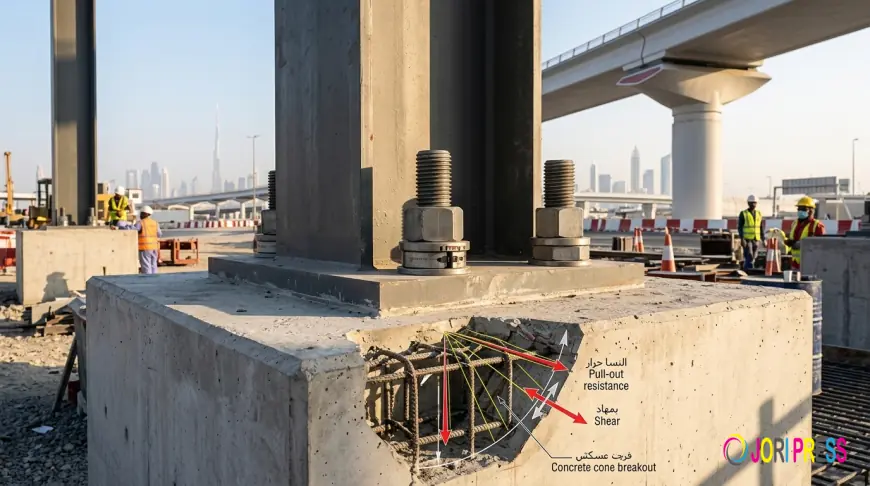
For example, a steel column connected to a concrete foundation must transfer the loads specified by the structural design. If the anchorage system is incorrectly designed or installed, the connection may not perform as intended.

Reliable connections therefore begin with proper engineering, suitable materials, and careful installation rather than relying on the fastener alone.

What Makes Anchor Bolts Strong and Dependable?

The reliability of an anchoring system depends on several interconnected factors. Each one contributes to the ability of the connection to perform under operating conditions.

1. Material quality and strength

Material selection is one of the first considerations when specifying anchor bolts. The fastener must provide suitable mechanical properties for the intended loads and service environment.

Depending on project requirements, manufacturers may supply anchor bolts in different steel grades and material specifications. Tensile strength, yield strength, ductility, and material traceability are important considerations.

Engineers should verify that the selected material meets the relevant project specifications and applicable standards. Using a higher-strength bolt without checking the complete connection design isn't necessarily safer, because the surrounding concrete, embedment, and anchorage details must also be suitable.

2. Corrosion resistance

Critical infrastructure is frequently exposed to moisture, chemicals, industrial pollutants, coastal air, or other corrosive conditions. Over time, corrosion can reduce the effective cross-section of a fastener and affect its performance.

Appropriate corrosion protection may include hot-dip galvanizing, suitable protective coatings, or corrosion-resistant materials, depending on the application.

The correct solution depends on environmental exposure, temperature, chemical compatibility, and maintenance requirements. Coatings must also be suitable for the specified fastener grade and installation conditions.

For infrastructure projects in demanding industrial environments, suppliers such as Petrofast Middle East FZC can be considered when sourcing fastening products that meet defined project specifications and quality requirements.

3. Accurate dimensions and manufacturing consistency

Reliable connections require fasteners with dimensions that match the approved drawings and installation requirements.

Important dimensional characteristics include bolt diameter, length, thread size, thread length, bend geometry where applicable, and the position of the anchoring section.

Manufacturing consistency is particularly important when large numbers of fasteners are required across a project. Incorrect dimensions can complicate installation, affect alignment, or prevent components from fitting correctly.

Quality checks and appropriate documentation help confirm that supplied products match the specified requirements.

How Design Determines Connection Performance

Even a high-quality fastener can fail to perform properly if the anchoring system is poorly designed. Engineers must consider the complete connection rather than selecting bolts based on diameter or strength alone.

Key design considerations include:

  • Applied loads: Expected tension, shear, and other relevant forces.

  • Embedment depth: The length of the anchor embedded in concrete.

  • Concrete strength: The capacity of the supporting foundation material.

  • Edge distance: The distance between the anchor and the concrete edge.

  • Anchor spacing: The distance between neighboring anchors.

  • Base plate design: The arrangement and thickness of the connected plate.

  • Environmental conditions: Exposure to corrosion, temperature, and vibration.

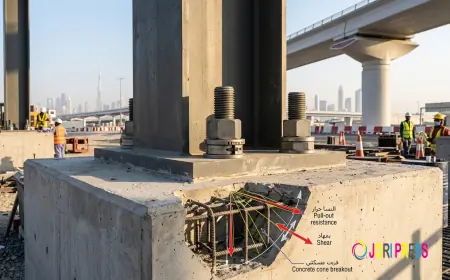
Concrete anchorage can be governed by different failure modes, including steel failure, concrete breakout, pullout, and side-face blowout where applicable. The controlling mode depends on the design and installation conditions.

Engineers must evaluate the relevant failure mechanisms using applicable design standards and project requirements. Adequate concrete reinforcement, suitable foundation dimensions, and correct anchor placement are also important.

Installation Practices That Protect Structural Integrity

Correct installation is essential because even properly designed anchor bolts can underperform when installed incorrectly.

The installation process generally begins with reviewing approved drawings and confirming the location, orientation, dimensions, and required projection of each bolt.

Essential installation checks

Before installation:

  • Confirm the specified bolt grade, dimensions, and coating.

  • Inspect the bolts for damage or visible defects.

  • Check the anchor layout against approved drawings.

  • Verify the required embedment and foundation details.

During installation:

  • Use suitable templates or positioning fixtures where specified.

  • Maintain the required spacing and alignment.

  • Protect threads from concrete contamination.

  • Ensure the anchoring components remain in the intended position during concrete placement.

After installation:

  • Inspect bolt projection, alignment, and thread condition.

  • Confirm that concrete has achieved the required condition before loading or tightening.

  • Install nuts, washers, and connected components according to project requirements.

  • Record inspections and address deviations before proceeding.

Where post-installed anchors are used, the specified drilling, hole cleaning, installation, curing, and inspection procedures must be followed. These requirements vary by anchoring system and should not be replaced with a generic installation method.

The Role of Quality Assurance and Testing

Quality assurance provides evidence that fastening products and installed connections meet the required specifications.

For critical infrastructure, procurement and inspection teams should review relevant documentation before accepting supplied products.

Depending on project requirements, quality checks may include:

Quality Check

Purpose

Material certificates

Verify material identification and specified properties

Dimensional inspection

Confirm compliance with drawings

Mechanical testing

Assess specified mechanical properties

Coating inspection

Check protective coating requirements

Thread inspection

Verify thread condition and dimensional conformity

Installation inspection

Confirm correct positioning and installation

Traceability records

Link supplied products to relevant documentation

Not every project requires every test. Inspection and testing should follow the approved quality plan, applicable standards, and contractual requirements.

Traceability is particularly valuable in large infrastructure projects because it helps teams identify which materials were supplied, inspected, and installed in particular locations.

Managing Vibration, Loads, and Harsh Operating Conditions

Industrial facilities may expose connections to repeated loading, rotating equipment, wind forces, or operational vibration. These conditions can place additional demands on the anchoring system.

Engineers should assess the type and magnitude of the loads, the equipment manufacturer's requirements, and the behavior of the complete supporting structure.

Where vibration is significant, the design may need suitable locking arrangements, equipment isolation, or other measures specified by the responsible engineer. Simply tightening a nut more aggressively isn't a reliable substitute for proper design.

Temperature is another consideration. Extreme heat or cold can affect material behavior, coatings, and the performance of connected components. Fastener selection should account for the actual service conditions.

Regular inspections and appropriate maintenance help identify corrosion, damage, loosening, or other signs that require investigation.

Common Mistakes That Reduce Reliability

Several avoidable mistakes can compromise anchoring performance.

Choosing fasteners on price alone: Lower initial cost may not reflect material suitability, documentation quality, or service life.

Ignoring the environment: A fastener suitable for an indoor building may not be appropriate for a corrosive industrial facility.

Changing specifications without approval: Substituting a different grade, diameter, or coating can affect connection performance.

Incorrect positioning: Misaligned bolts may cause installation difficulties or unintended stresses.

Overlooking concrete conditions: Concrete strength, edge distances, reinforcement, and embedment influence anchorage capacity.

Skipping inspections: Missing documentation or installation defects may remain undetected until the connection is loaded.

Preventing these problems requires coordination between designers, suppliers, contractors, and inspection personnel.

Selecting the Right Anchor Bolts for Infrastructure Projects

Choosing suitable anchor bolts involves more than identifying a required size. Procurement teams should understand the operating environment, engineering specifications, applicable standards, and installation method before placing an order.

A practical selection process includes:

  1. Review the approved drawings and technical specifications.

  2. Confirm required material grade and mechanical properties.

  3. Determine the required dimensions and configuration.

  4. Assess corrosion protection and environmental exposure.

  5. Verify documentation and traceability requirements.

  6. Confirm delivery schedules and quantity requirements.

  7. Coordinate any proposed substitutions with the responsible engineer.

Reliable sourcing supports project consistency, but supplier selection should always be based on verified compliance with the required specifications.

Conclusion

Reliable connections are essential to the safety and performance of critical infrastructure. Anchor Bolts help secure structural steel, machinery, equipment, and supporting systems to concrete foundations, making their selection and installation important parts of construction quality.

Material strength, corrosion resistance, accurate dimensions, sound engineering design, correct installation, and thorough quality assurance all contribute to connection reliability. No single factor can guarantee performance; the complete anchoring system must be suitable for its intended application.

By following approved specifications, maintaining traceability, inspecting installation work, and coordinating effectively across project teams, infrastructure stakeholders can reduce avoidable risks and support long-term structural performance. In demanding industrial environments, these careful decisions help create connections that remain dependable throughout the facility's intended service life.

What's Your Reaction?

Like Like 0
Dislike Dislike 0
Love Love 0
Funny Funny 0
Angry Angry 0
Sad Sad 0
Wow Wow 0
Petrofast Middle East FZC Petrofast Middle East FZC is an ISO 9001:2015 certified UAE manufacturer of engineered fastening solutions, supplying industrial and structural fasteners, coatings and application-specific solutions worldwide for oil & gas, energy, power, construction and infrastructure.
\