




































AI Coding Classes for Kids: A Complete Guide to Learning AI and Programming
Explore AI Coding Classes for Kids at MasterJi Coding Classes. Help children learn coding, artificial intelligence, and problem-solving through fun, hands-on projects.
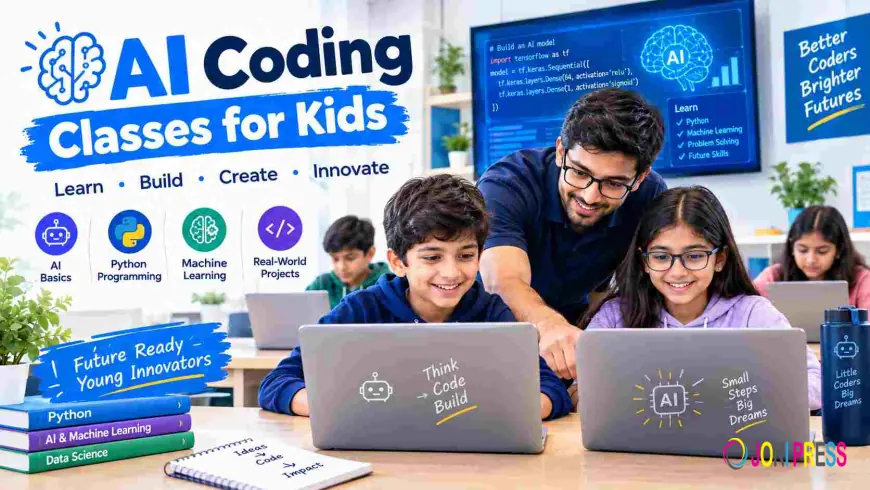
Artificial intelligence is changing how people learn, work, and interact with technology. From smart assistants and educational applications to computer games and recommendation systems, AI is becoming a part of everyday life. Introducing children to these technologies can help them understand how digital tools work and inspire them to create their own projects.
AI Coding Classes for Kids provide an opportunity for young learners to explore programming, artificial intelligence, logical thinking, and problem-solving through practical activities. With the right guidance, children can develop technical skills while enjoying the process of learning.
At MasterJi Coding Classes, students can begin their technology learning journey by exploring coding fundamentals and gradually discovering how artificial intelligence can be used to solve real-world problems.
What Are AI Coding Classes for Kids?
AI coding classes are educational programs that introduce children to programming and the basic concepts of artificial intelligence. These classes combine coding practice with activities that explain how computers process information, recognize patterns, and perform specific tasks.
Depending on their age and experience, students may learn visual programming, Python, algorithms, data handling, and introductory machine learning concepts.
For beginners, lessons often start with simple exercises and interactive projects. As children gain confidence, they can progress toward more challenging programming tasks and AI applications.
The main objective is to help children understand technology through exploration rather than memorizing complicated concepts.
Why Is AI Education Important for Children?
Children are naturally curious about how things work. AI education gives them an opportunity to explore the technology behind many tools they already use.
Learning about artificial intelligence can also support the development of valuable skills.
1. Develops Logical Thinking
Coding teaches children to organize instructions and solve problems step by step. They learn to identify patterns, follow sequences, and understand how different parts of a program work together.
2. Encourages Creativity
Children can use coding to create simple games, animations, applications, chatbots, and interactive projects. This allows them to turn their ideas into working digital experiences.
3. Improves Problem-Solving Skills
Programming does not always work perfectly on the first attempt. Students learn to identify errors, test different solutions, and improve their code through practice.
4. Builds Technology Awareness
Learning AI helps children understand that computers do not automatically think like humans. AI systems use data, algorithms, and programmed processes to perform particular tasks.
5. Builds Confidence
Completing a coding project gives children a chance to see the results of their efforts. Small achievements can encourage them to explore more challenging topics.
What Is AI for Kids?
AI for Kids means introducing artificial intelligence through simple explanations, age-appropriate activities, and practical examples that children can understand.
Instead of beginning with complicated mathematics, teachers can explain AI using familiar experiences.
For example, children can explore how a recommendation system suggests videos, how speech recognition converts spoken words into text, or how an image-recognition tool identifies objects.
Students can also learn that AI systems sometimes make mistakes and that their results depend on the data and methods used to develop them.
This introduction helps children become informed technology users while encouraging them to explore how AI works.
What Do Children Learn in AI Coding Classes?
A structured course should introduce technical concepts gradually, allowing students to practice each skill before moving forward.
Basic Programming Concepts
Children begin by learning fundamental coding concepts such as variables, loops, conditions, functions, and instructions. Younger students may use visual programming tools, while older learners can explore text-based coding.
Python Programming
Python is widely used in artificial intelligence, machine learning, automation, and data science. It is a useful language for students who want to move from basic coding toward more advanced technology projects.
Students can practice writing programs, working with data, and building simple applications.
Introduction to Machine Learning
Machine learning is a branch of AI that enables computer systems to identify patterns in data and make predictions.
Children can explore introductory examples, such as classifying objects or making simple predictions, without immediately needing to understand advanced mathematical theories.
Data and Pattern Recognition
Students can learn how information is collected, organized, and analyzed. Simple activities can demonstrate how patterns in data help computers perform certain tasks.
AI-Based Projects
Practical projects make lessons more engaging. Depending on their experience, students may create a basic chatbot, an image-classification activity, a prediction program, or another beginner-friendly AI application.
How to Choose the Right AI Coding Classes for Kids
Parents should consider several factors when selecting a coding program for their children.
Age-Appropriate Lessons
The curriculum should match the child's age, interests, and previous experience. Younger learners may benefit from visual activities, while older students can explore Python and introductory machine learning.
Practical Learning Opportunities
Look for classes that include coding exercises, projects, and opportunities to experiment. Practical experience helps students apply concepts rather than simply memorize definitions.
Supportive Instructors
Teachers should explain technical ideas clearly and encourage students to ask questions. A supportive learning environment can make challenging topics easier to understand.
Structured Progression
A good program should move from foundational concepts toward more advanced skills. Children should have time to practice and strengthen their knowledge before moving to difficult projects.
Safe and Responsible AI Education
Children should learn that AI tools can produce incorrect or misleading information. They should also understand the importance of privacy, responsible technology use, and checking information rather than accepting every AI-generated answer.
Benefits of Online AI Coding Classes for Kids
Online learning allows children to explore coding and AI from home. Students can participate in lessons, complete exercises, and work on projects using a computer and an internet connection.
Online classes can offer several advantages:
- Flexible access: Children can learn without travelling to a physical classroom.
- Interactive practice: Students can follow demonstrations and apply concepts during exercises.
- Project-based learning: Learners can build and improve their own programs.
- Progressive development: Students can strengthen foundational skills before moving to advanced subjects.
- Broader learning opportunities: Families can explore programs that may not be available locally.
Parents should select a course that fits their child's learning style and provide suitable support, particularly for younger beginners.
Fun Project Ideas for Kids Learning AI
Projects help children connect programming concepts with practical results. Suitable activities depend on the student's age and experience.
Here are some beginner-friendly ideas:
- Simple chatbot: Create a program that responds to basic questions using predefined rules.
- Image recognition activity: Explore how an AI tool can distinguish between selected categories of images.
- Prediction project: Use a small dataset to explore how patterns can support simple predictions.
- Interactive game: Combine coding logic with an AI-related feature.
- Data visualization: Display information in charts and discuss the patterns shown.
These projects can encourage experimentation and help students understand that creating technology involves testing, learning, and making improvements.
Why Choose MasterJi Coding Classes?
MasterJi Coding Classes supports students who want to explore programming and develop their technology skills through structured learning.
For children interested in artificial intelligence, building a foundation in coding can make advanced topics easier to understand. Students can progress from basic programming toward Python, data concepts, and introductory AI projects according to their experience and learning goals.
A gradual learning approach gives children opportunities to ask questions, practice new skills, and gain confidence as they work on increasingly challenging tasks.
Parents should review the available course curriculum and select a program that matches their child's needs and interests.
Conclusion
AI is becoming an important part of modern technology, making it valuable for children to understand its basic principles. AI Coding Classes for Kids introduce young learners to programming, artificial intelligence, data, creativity, and problem-solving through structured lessons and practical activities.
Learning AI for Kids should be an enjoyable experience that encourages curiosity rather than placing unnecessary pressure on students. By starting with simple concepts and progressing gradually, children can develop useful technical skills and discover new interests.
With suitable guidance, consistent practice, and opportunities to build projects, MasterJi Coding Classes can be part of a child's journey toward understanding coding and exploring the possibilities of artificial intelligence.
Frequently Asked Questions (FAQs)
1. At what age can children start learning AI coding?
Children can begin learning basic coding concepts at a young age through visual activities and simple games. More advanced topics, such as Python and machine learning, can be introduced as their skills develop.
2. Does my child need previous programming experience?
No. Beginners can start with basic programming concepts and gradually learn more advanced skills. Previous experience may be useful for higher-level courses but is not always necessary for introductory classes.
3. What is the best programming language for AI for Kids?
Python is a popular choice for older children and teenagers because it is widely used in AI and machine learning. Younger beginners may benefit from visual programming before learning a text-based language.
4. What can children build after learning AI coding?
Depending on their age and experience, children can create simple chatbots, interactive games, data visualizations, prediction programs, and introductory AI projects.
5. Are online AI coding classes suitable for beginners?
Yes. Online classes can be suitable for beginners when they provide clear explanations, interactive exercises, instructor support, and practical projects. Parents should choose a program that matches their child's learning needs.
What's Your Reaction?
 Like
0
Like
0
 Dislike
0
Dislike
0
 Love
0
Love
0
 Funny
0
Funny
0
 Angry
0
Angry
0
 Sad
0
Sad
0
 Wow
0
Wow
0