








































Adventure Bike Tyres Explained: Road vs Dual-Sport vs Off-Road
Understand road, dual-sport and off-road adventure bike tyres and learn how to choose the right option for highways, trails and everyday riding.
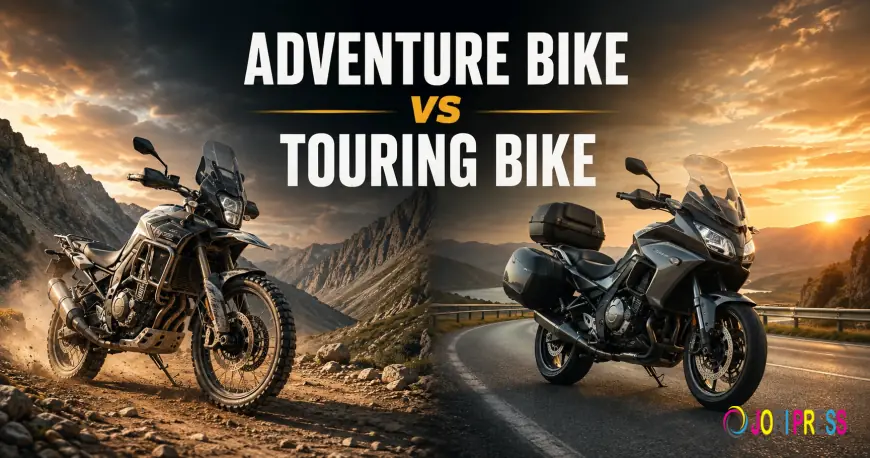
Tyres are among the most important components of an adventure motorcycle. They influence braking, steering, comfort and stability across every type of surface. However, many riders choose tyres based mainly on their rugged appearance without considering where the motorcycle will actually be used.
An aggressive off-road tyre may look suitable for adventure riding but feel noisy or unstable during regular highway travel. Similarly, a road-focused tyre may provide excellent grip on tarmac but struggle when the route includes mud, sand or loose gravel.
Understanding the main tyre categories can help riders make a safer and more practical decision.
Why Adventure-Bike Tyres Are Different
An adventure motorcycle may encounter smooth highways, damaged roads and unpaved sections during a single journey. Its tyres must therefore balance several competing requirements.
A suitable tyre should offer:
-
Predictable grip during braking and cornering
-
Stability while carrying luggage
-
Sufficient traction on the intended terrain
-
Acceptable durability
-
Effective water displacement
-
Comfortable road behaviour
No tyre can deliver maximum performance on every surface. Riders must prioritise the conditions they encounter most often.
Road-Focused Adventure Tyres
Road-focused tyres are intended primarily for tarmac. They usually have a less aggressive tread pattern with a larger contact area against the road.
These tyres can provide confident cornering, controlled braking and lower noise during highway travel. They may also feel smoother than tyres designed for extensive off-road use.
Road-focused adventure tyres are generally suitable for riders who:
-
Spend most of their time on highways and city roads
-
Occasionally encounter broken or gravel-covered sections
-
Prioritise road handling and comfort
-
Do not intend to explore demanding trails
Their principal limitation is reduced traction on deep mud, loose sand and difficult unpaved terrain.
Dual-Sport Tyres
Dual-sport tyres attempt to balance paved-road performance with moderate off-road capability. Their tread blocks are usually more pronounced than those of road tyres but less aggressive than those of dedicated off-road options.
This category can be useful for riders whose journeys combine highways, village roads and occasional trails. Nevertheless, “dual-sport” is a broad description. One model may be strongly road-biased, while another may prioritise unpaved surfaces.
Riders comparing motorcycles, terrain capabilities and touring requirements can explore additional adventure-bike guides and information through Khelo24race.
Dual-sport tyres may suit riders who:
-
Frequently travel on mixed road surfaces
-
Need acceptable highway stability
-
Occasionally explore gravel and moderate trails
-
Prefer one versatile tyre instead of specialised sets
They remain a compromise and may not match a dedicated tyre at either extreme.
Off-Road Adventure Tyres
Off-road tyres feature larger and more widely separated tread blocks. These blocks are designed to find traction on loose surfaces and clear away mud.
They can provide better control on dirt, gravel and difficult trails. However, the same tread design may create additional noise and vibration on paved roads. Road grip, braking behaviour and durability may also differ from those of highway-focused tyres.
Off-road tyres are more appropriate for riders who regularly enter demanding unpaved terrain and understand how these tyres behave on tarmac.
Fitting them only for their appearance is not a good strategy if nearly all riding takes place on normal roads.
Tread Pattern and Water Displacement
The grooves in a tyre help move water away from its contact area. Effective water displacement is particularly important during rain because standing water can reduce the tyre’s connection with the road.
A tyre suitable for dry trails may not necessarily provide the best wet-road behaviour. Riders who travel during the monsoon should consider wet-grip performance and inspect whether the tread has sufficient depth.
Worn tyres cannot displace water as effectively, even if they still appear usable from a distance.
Tube-Type vs Tubeless Tyres
Adventure motorcycles may use tube-type or tubeless tyre arrangements.
Tubeless tyres can make certain punctures easier to repair temporarily without removing the wheel. However, they require compatible wheels and properly sealed rims.
Tube-type tyres are common on motorcycles using traditional spoke wheels. Repairing a puncture normally requires removing the affected wheel and replacing or patching the inner tube.
Neither arrangement prevents punctures. Riders should carry the correct repair equipment and understand the system fitted to their motorcycle.
Select the Correct Tyre Size
Always use a tyre size approved for the motorcycle unless a qualified professional recommends an appropriate alternative.
Installing an incorrect size can affect:
-
Steering response
-
Suspension behaviour
-
Ground clearance
-
Speedometer readings
-
Stability
-
Clearance around the wheel and swingarm
A wider tyre does not automatically provide better grip. It may slow steering or create fitment problems if the motorcycle was not designed for it.
Check the Load and Speed Ratings
Every tyre has specified load and speed capabilities. These ratings must be appropriate for the motorcycle, rider, passenger and luggage.
Adventure touring often involves carrying panniers, camping equipment or a passenger. Excess weight can increase heat and place additional stress on the tyres.
Riders should remain within the motorcycle and tyre manufacturers’ stated limits.
Maintain the Correct Tyre Pressure
Tyre pressure affects grip, handling, comfort and tyre life. An underinflated tyre may overheat and feel unstable, while excessive pressure can reduce comfort and alter the available contact area.
Check the pressure when the tyres are cold and follow the motorcycle manufacturer’s recommendations. Different pressures may be specified for:
-
Solo riding
-
Riding with a passenger
-
Carrying luggage
-
Extended highway travel
Some experienced riders alter pressure for particular off-road conditions, but beginners should not make significant changes without appropriate knowledge.
Inspect Tyres Before Every Long Ride
A simple inspection can identify problems before they become dangerous.
Look for:
-
Cuts and cracks
-
Embedded nails or sharp objects
-
Uneven wear
-
Damaged sidewalls
-
Low tread depth
-
Unusual bulges
-
Air-pressure loss
Tyres also deteriorate with age, even when their tread remains visible. Replace any tyre that shows structural damage or concerning deterioration.
Final Thoughts
The best adventure-bike tyre is not necessarily the one with the most aggressive tread. It is the tyre that matches the surfaces on which the motorcycle spends most of its time.
Road-focused tyres suit riders who primarily use tarmac. Dual-sport options provide versatility for mixed journeys, while off-road tyres are intended for riders who regularly tackle demanding trails.
Consider your real riding pattern, weather conditions, luggage requirements and repair options before making a decision. Correct selection and regular maintenance will provide greater value than choosing a tyre purely for its appearance.
What's Your Reaction?
 Like
0
Like
0
 Dislike
0
Dislike
0
 Love
0
Love
0
 Funny
0
Funny
0
 Angry
0
Angry
0
 Sad
0
Sad
0
 Wow
0
Wow
0