






































A3 UV Printer: 5 Technical Benchmarks for Compact Industrial Printing
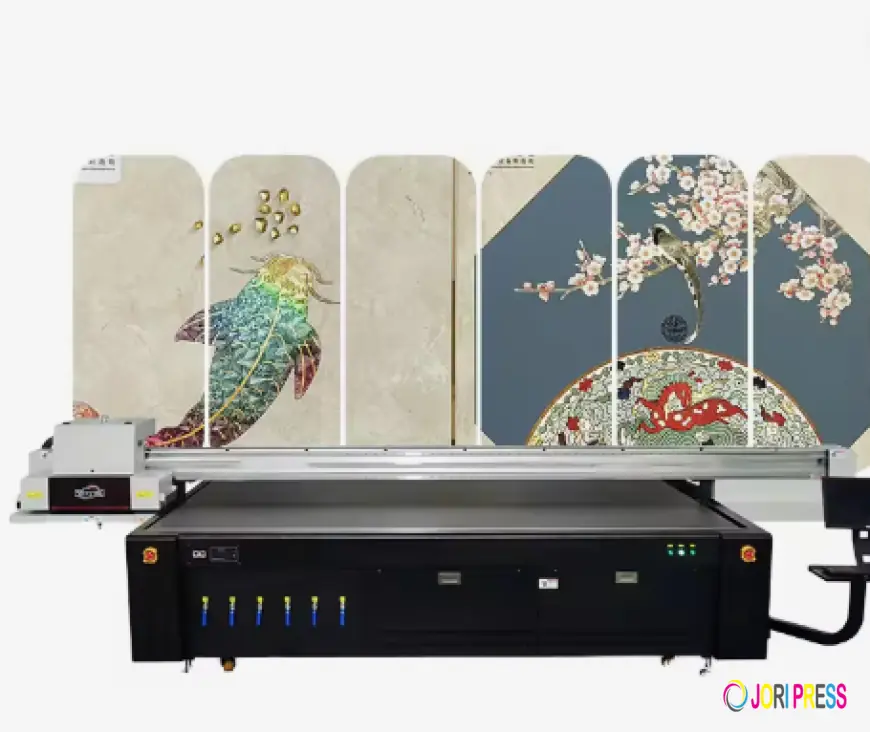
Integrating a high-precision A3 UV Printer allows custom manufacturers, promotional product decorators, and prototype labs to produce industrial-grade prints within a compact desktop footprint. Modern 2026 digital print audits show that desktop A3 UV flatbeds deliver up to 2880 DPI resolution on rigid substrates while cutting initial capital expenditure by over 60% compared to large-format machinery. This technical guide outlines the essential benchmarks—including Z-axis height clearance, micro-stepping accuracy, white ink circulation, and rotary attachment integration—needed to evaluate small-format UV printing hardware.
1. Z-Axis Clearance and Automated Surface Height Sensing
Unlike standard flatbed graphics printers designed purely for flat sheet stock, an industrial desktop UV system must accommodate three-dimensional objects of varying thickness.
Achieving sharp dot placement on items such as phone cases, electronic enclosures, personalized awards, or small metal housings requires precise distance management between the printhead faceplate and the substrate surface. High-tier machines incorporate automated laser or infrared height sensors that scan the workpiece before the gantry moves, automatically setting the optimal 2 to 3 mm throw distance. Selecting an engine with at least 150 mm to 200 mm of Z-axis clearance ensures your facility can process thick industrial parts without head-strike risks. You can evaluate compact industrial jetting platforms by visiting
jetvoraprint.com
2. Micro-Stepping Motor Motion and Ball-Screw Lead Precision
In compact desktop flatbeds, physical bed motion replaces the heavy gantry movement seen in wide-format systems, making axis drive mechanics critical to image sharpness.
Cheaper entry-level desktop printers rely on belt-driven Y-axis beds that stretch over time, leading to micro-stepping errors and visible horizontal banding. Industrial-grade setups utilize precision ground ball-screws paired with closed-loop servo motors or micro-stepping stepper drives. This mechanical setup ensures sub-0.02 mm positional repeatability across continuous print runs, enabling ultra-fine micro-text printing and crisp vector line art down to 2 pt fonts.
3. Dual Printhead Configuration for Single-Pass Layering
To maximize production efficiency on an
Single-head machines must print white base coats on dark media first, return the bed to the home position, and then execute a second pass for CMYK color. Dual-head configurations dedicate one printhead exclusively to White and Varnish (Clear) channels and the second head to CMYK. Key advantages of dual-pass architecture include:
-
Single-Pass Printing: Jets White under-base, CMYK color, and Varnish top-coat simultaneously in a single carriage stroke.
-
Tactile 3D Relief: Builds localized gloss highlights or raised tactile textures by laying down high-density clear coat layers.
-
Opaque White Coverage: Delivers dense white backing layers on transparent acrylics or black substrates without reducing throughput speed.
jetvoraprint.com/products/a3-uv-printer/
4. White Ink Agitation and Compact Line Recirculation
Due to the high specific gravity of titanium dioxide particles in white UV ink, pigment settling is the leading cause of nozzle loss and ink starvation in small-format systems.
Because desktop UV printers are often operated in short bursts or batch production environments rather than 24/7 continuous cycles, ink stagnation risks are elevated. High-performance A3 printers integrate continuous fluid circulation loops that move white ink through the main reservoir and damper assembly. Combined with automated timed agitation cycles, this feature keeps pigments uniformly suspended, ensuring instant nozzle readiness even after overnight idle periods.
5. Rotary Attachment Synchronization for Cylindrical Printing
Extending an A3 flatbed’s versatility beyond flat items requires seamless firmware integration with specialized rotary fixtures.
By plugging a synchronized rotary attachment into the Y-axis motor port, the printer converts linear bed motion into rotational movement. This allows 360-degree continuous direct-to-object printing on tapered or straight cylindrical items such as stainless steel drinkware, glass bottles, and cosmetic tubes. Evaluating the controller's ability to adjust step pulses for varying cylinder diameters ensures seam-free artwork wrapping without distortion or image overlap.
Mastering the selection of an A3 UV Printer requires balancing compact spatial footprints with industrial-grade mechanical components. By prioritizing automated Z-axis sensing, dual-printhead channel configuration, and ball-screw motion control, small-scale operations can achieve commercial print durability and high color fidelity across diverse product lines.
What's Your Reaction?
 Like
0
Like
0
 Dislike
0
Dislike
0
 Love
0
Love
0
 Funny
0
Funny
0
 Angry
0
Angry
0
 Sad
0
Sad
0
 Wow
0
Wow
0