







































White Label Taxi App Development: A Startup's Path to Building a Successful Taxi Business
Explore white label taxi app development for startups to launch faster, build a branded taxi business, reduce costs, and unlock scalable revenue opportunities.

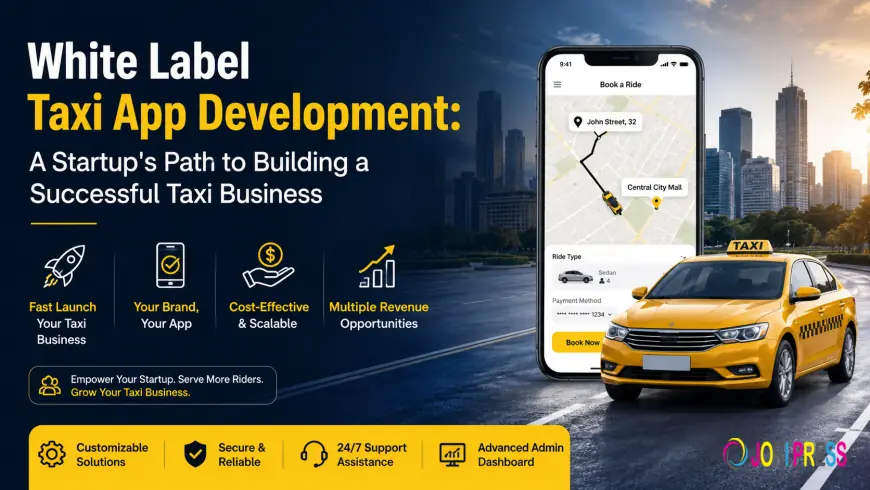
Ride-hailing is no longer a niche bet; it's the default way millions of people move around cities every day. That shift has opened the door for entrepreneurs everywhere to launch their own taxi brand, without needing Uber's engineering budget or timeline. The tool making that possible is white label taxi app development.
This guide breaks down what a white label taxi app actually is, why it's become the go-to launch strategy for startups, the features your platform can't launch without, and how to pick a taxi app development company that won't leave you stuck six months in.
What Is a White Label Taxi App?
A white label taxi app is a pre-built, fully functional ride-hailing platform that a business can rebrand as its own: logo, colors, pricing rules, and operational workflows included. Instead of writing code from scratch, you're customizing a proven system that already handles the hard parts: dispatch logic, live tracking, payments, and driver management.
Every solid white label setup is built around three core apps:
-
Passenger app: where riders book trips, track drivers, and pay
-
Driver app: where drivers accept rides, navigate, and manage earnings
-
Admin dashboard: where the business owner controls fares, drivers, zones, and reporting
Because this infrastructure already exists, startups can go from idea to live app in weeks rather than the year-plus timeline custom builds often demand.
Get More information: hello@spotnrides.com
Why Startups Are Choosing White Label Over Custom Development
Building a taxi app from the ground up means hiring a full engineering team, testing dispatch algorithms from zero, and absorbing months of delay before you ever onboard a single driver. For most founders, that math doesn't work.
White label taxi app development flips the equation:
-
Faster launch — weeks instead of months or years
-
Lower upfront cost — no need to fund a dev team from scratch
-
Proven, tested infrastructure — dispatch, GPS tracking, and payments already work
-
Room to customize — branding, fare rules, and features still match your business model
-
Scalability built in — most platforms are designed to grow from one city to many
Custom development still makes sense for businesses inventing an entirely new transportation model with unique technical requirements. But for the vast majority of taxi, ride-share, and fleet startups, a white label on-demand taxi app gets you to market before a competitor does.
Features To Integrate In A White Label Taxi App to Boost ROI
Not every white label provider offers the same depth. Before you commit, make sure the platform covers these essentials:
Instant & Scheduled Ride Booking
Enable riders to book rides instantly or schedule them for later. This adds convenience and can encourage repeat bookings.
Live Driver Tracking & Accurate ETAs
Give riders real-time visibility into their driver’s location and arrival time. It builds trust and reduces uncertainty during the ride.
Multiple Vehicle Categories
Offer vehicle choices based on passenger needs and budgets. Upfront fare estimates also make the booking experience more transparent.
Flexible Payment Options
Support cards, digital wallets, and cash to accommodate different payment preferences. More choices can reduce checkout friction and abandoned bookings.
Real-Time Earnings Tracking
Allow drivers to monitor earnings, completed trips, and payouts in real time. Greater financial transparency can improve driver satisfaction and retention.
In-App Support & Safety Tools
Provide quick access to support, emergency assistance, and essential safety features. This helps drivers feel more secure and supported on the road.
Fleet, Driver & Zone Management
Manage drivers, vehicles, and service areas from a centralized admin dashboard. This simplifies daily operations and supports business expansion.
Dynamic Pricing & Promo Controls
Adjust fares based on demand and create targeted promotions when needed. These tools can help attract riders while improving revenue potential.
Revenue Reporting & Analytics
Track bookings, revenue, driver performance, and customer behavior through detailed analytics. These insights help businesses make smarter, data-driven decisions.
Multi-Region & Multi-Language Support
Prepare the platform to operate across different locations and languages. This makes entering new markets easier as the business grows.
AI-Powered Features
Smart Dispatch
Automatically match riders with the most suitable nearby driver. This can reduce waiting times while improving driver utilization.
Demand-Based Pricing
Use real-time demand patterns to adjust fares dynamically. This helps businesses respond to peak periods and optimize earning potential.
Voice-Based Booking
Allow users to book rides through simple voice commands. It creates a faster, more accessible booking experience for customers.
AI-Powered Insights
Use AI to analyze customer behavior, demand patterns, and operational data. These insights can uncover opportunities to improve efficiency and boost ROI.
Increasingly, startups are also looking for AI-powered taxi app capabilities, smart dispatch that matches riders to the nearest available driver, demand-based pricing, and even voice-based booking. These features used to be enterprise-only; they're now standard in the better white label platforms on the market.
Why Choosing the Right White Label Taxi App Development Company Is Essential
This is the decision that determines whether your launch is smooth or painful. A few things worth checking before you sign anything:
-
Source code ownership. Some vendors lease you access; others hand over full source code so you truly own your platform long-term.
-
Customization depth. Can the branding, fare logic, and feature set actually be shaped around your business model, or are you stuck with a generic template?
-
Post-launch support. Bugs happen and markets change. A provider that disappears after deployment leaves you exposed.
-
Regional flexibility. If you plan to expand beyond one city, you need multi-currency, multi-language, and multi-region support built in from day one.
-
Track record. Look for a company that has shipped taxi, delivery, and mobility apps across different markets, not just a portfolio of one or two projects.
This is where a white label platform from SpotnRides tends to stand out in market comparisons — it's built specifically around AI-enabled dispatch, voice booking, and multi-region readiness, and it gives businesses full access to their source code rather than locking them into a rented license. For founders comparing options, that combination of ownership, customization, and AI-driven features is often the deciding factor between a platform that scales with the business and one that gets outgrown within a year.
Common Mistakes Taxi Startups Make in App Development
-
Overbuilding on day one. Launching with every possible feature delays your go-live date and inflates cost. Start lean, prove demand, then expand.
-
Ignoring scalability. A system that works for ten cars should still perform at a hundred. Check this before committing, not after.
-
Underestimating driver experience. Riders judge the app; drivers judge the business. If the driver app is clunky, retention suffers fast.
-
Skipping compliance and data ownership questions. Confirm upfront who owns customer data and how privacy is handled in your agreement.
The Bottom Line
The ride-hailing market is only getting bigger, and the barrier to entry has never been lower, provided you choose the right technology partner. White-label taxi app development lets startups skip the riskiest, slowest part of building a mobility business and go straight to what actually grows it: recruiting drivers, acquiring riders, and building a brand people trust.
For founders evaluating providers, it's worth requesting a demo from a few established players, including SpotnRides, to compare source code ownership terms, AI capabilities, and how much real customization is on the table before you commit.
What's Your Reaction?
 Like
0
Like
0
 Dislike
0
Dislike
0
 Love
0
Love
0
 Funny
0
Funny
0
 Angry
0
Angry
0
 Sad
0
Sad
0
 Wow
0
Wow
0